
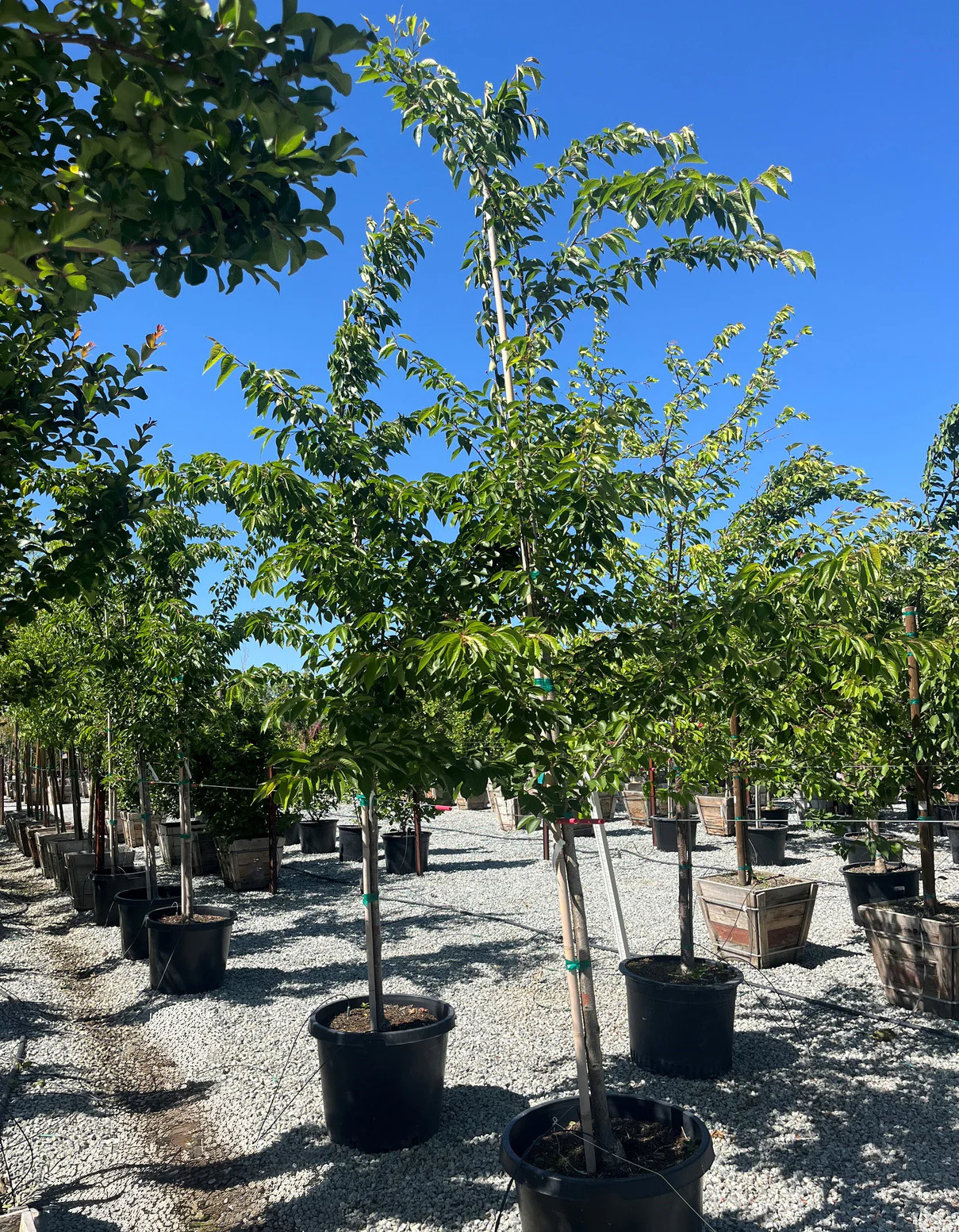
Akebono Cherry Tree (Prunus x yedoensis 'Akebono')
Transform Your Yard into a Spring Wonderland with Stunning Pink Blossoms
The Akebono Cherry Tree gives your landscape a dramatic early spring show, covering bare branches with soft pink flowers before the green leaves appear.
This ornamental flowering cherry transforms a front yard, patio view, walkway, or garden border with a rounded crown of showy cherry blossom color. The pink flowers open in early spring, gradually fade to white, and create the kind of seasonal display often associated with classic Yoshino cherry plantings near the Tidal Basin.
Designed for beauty beyond bloom season, Prunus x yedoensis Akebono also delivers glossy dark green summer foliage, golden yellow fall color with orange highlights, attractive bark with prominent lenticels, and winter interest during the winter months. It gives you the spectacle of flowering cherry trees without the higher disease pressure common in many ornamental cherry varieties, making it an excellent choice if you’re comparing different flowering trees for your landscape.
Why You’ll Love It
-
Spectacular Spring Display – The Akebono cherry tree is known for its spectacular display of pink flowersthat cover its branches in early spring, making it a popular choice for ornamental landscaping.
-
Low Maintenance Beauty – Once fully established, the Akebono cherry tree is remarkably drought-tolerant. The Akebono cherry tree exhibits moderate drought tolerance but prefers consistent moisture during dry periods once established, so occasional watering in dry weather keeps the tree healthy.
-
Multi-Season Interest – The foliage of the Akebono cherry tree is glossy dark green and turns vibrant shades of golden yellow and orange in the fall, providing seasonal interest. The Akebono cherry tree features glossy dark green leaves that turn vibrant shades of golden yellow and orange in the fall, providing year-round interest in landscaping designs.
-
Perfect Size – Akebono cherry trees are typically sold in various sizes, with mature heights ranging from 20 to 35 feet and spreads of 25 to 40 feet. This tree typically grows to a height of 23-35 feet and has a spread of 25-40 feet, making it suitable for various landscaping applications such as lining driveways and walkways.
-
Disease Resistant – The Akebono cherry tree is considered one of the most disease-resistant flowering cherries, giving customers a stronger, more reliable ornamental cherry option for residential landscapes.
What Makes It Different
Most flowering cherry trees offer a brief bloom window, and many require close disease monitoring, frequent watering, or careful protection from common cherry problems.
Akebono Flowering Cherry provides:
-
Semi-Double Pink Blooms – The akebono flowering cherry produces soft pink, showy blooms that may appear as semi double flowers or lightly semi double blossoms. When fully open, the spring flowers create a larger, fuller look than many standard single-bloom flowering cherry varieties.
-
Extended Bloom Period – The buds open rose-pink, the blossoms soften, and the flowers gradually fade to white, making the cherry blossom display feel longer and more layered. This color shift helps double the visual impact of the bloom season, even though peak bloom still depends on spring weather.
-
California Climate Adapted – The daybreak Yoshino cherry, also called daybreak cherry or Akebono Yoshino cherry, performs well in full sun with well drained soil. The Akebono cherry tree is highly adaptable and can tolerate sand or clay if the drainage is adequate.
Selected in San Jose, California, this Prunus x yedoensis cultivar fits many California landscapes when planted with the right sun, soil, and watering plan. It can work as a specimen tree, street tree, patio accent, driveway liner, or focal point among shrubs and other garden plantings, and pairs beautifully with California native shade trees like the California Sycamore.
How To Grow The Akebono Cherry Tree
-
Plant in Fall or Early Spring
Choose a full sun location with well-drained soil. This tree thrives in full sun and requires watering when the top 2 inches of soil are dry, indicating its need for well-drained, moist conditions. -
Establish Root System
Water regularly through the first growing season while the tree adapts to your yard. Once established, the Akebono cherry becomes drought tolerant, though it still benefits from occasional watering during dry weather and extended heat. -
Enjoy Seasonal Beauty
Each spring, the tree blooms on bare branches with fragrant, soft pink flowers. Summer brings moderately dense foliage and glossy dark green leaves that provide shade. In fall, the foliage turns golden yellow with orange highlights, and in winter, the tree’s branching shape, bark, and prominent lenticels add structure, similar to the dramatic fall display of an Osakazuki Japanese Maple with its crimson foliage.
Pruning of the Akebono cherry tree should be done mainly to remove dead, diseased, or crossing branches and should occur in mid-to-late summer after flowering.
Product Details
-
Scientific name: Prunus × yedoensis ‘Akebono’
-
Also known as: Akebono cherry, Akebono Yoshino cherry, daybreak cherry, daybreak Yoshino cherry, yedoensis Akebono
-
Plant type: Deciduous ornamental cherry tree
-
Mature size: The Akebono cherry tree (Prunus x yedoensis ‘Akebono’) is a fast-growing tree that can reach heights of 23 to 35 feet and a spread of 25 to 40 feet
-
Typical retail sizing: Akebono cherry trees are typically sold in various sizes, with mature heights ranging from 20 to 35 feet and spreads of 25 to 40 feet
-
Growth rate: The Akebono cherry tree has a medium-to-fast growth rate, adding about 1.5 to 2 feet per year, comparable to compact shade trees such as the Rocky Mountain Glow Maple with its vibrant fall color
-
USDA zones: The Akebono cherry tree is well-suited for USDA Hardiness Zones 5a through 8b
-
Bloom time: Early spring, often March-April depending on climate
-
Flower color: Soft pink buds and pink flowers that fade to white
-
Foliage: Glossy dark green leaves with serrate margins; fall color turns golden yellow and orange
-
Soil requirements: Well drained soil; adaptable to sand, loam, or clay when drainage is adequate
-
Sun exposure: Full sun is best for strong blooms, much like sun-loving ornamentals such as the California Pepper Tree used in warm, drought-tolerant landscapes
-
Wildlife value: The Akebono cherry tree is highly attractive to bees, butterflies, and hummingbirds during its early bloom, similar to Carolina Cherry Laurel hedges that support pollinators and birds
-
Fruit: The Akebono cherry tree produces small black fruits in winter that feed local birds, much like Brush Cherry hedges that offer berries and year-round cover
-
Price note: The price of an Akebono cherry tree can vary, with some retailers offering them for around $114.99 for a 2 to 4-foot tree
-
Availability note: Availability of Akebono cherry trees may vary by location, with some retailers indicating no stock within a certain radius, while others offer shipping options, and you may also find complementary trees like the California Pepper Tree and other landscape staples for sale
Who It’s For
Ideal for:
-
Homeowners who want a stunning focal point tree for the front yard
-
Garden enthusiasts who want low-maintenance spring color
-
Property owners looking to increase curb appeal and home value
-
Designers and landscapers planning a flowering cherry allee, street tree planting, walkway border, or patio-view specimen
-
Customers who want a showy ornamental tree with spring flowers, summer shade, fall color, and winter interest, or who are comparing other statement trees such as the Bloodgood Japanese Maple with deep burgundy foliage
If you want a perfect tree for seasonal beauty without high-maintenance upkeep, the Akebono cherry is a strong choice. It offers the classic romance of a cherry blossom tree, the practical size of a residential landscape tree, and the resilience of one of the more disease-resistant flowering cherries.
Frequently Asked Questions
How long until it blooms?
The Akebono cherry tree can produce blooms within 1-2 years of planting, with a fuller spring display as the tree becomes established. Under good care, the canopy and blossom show become more impressive over the next few seasons.
Does it need special care?
Minimal care is required once the tree is established. Plant it in full sun, use well drained soil, water when the top 2 inches of soil are dry, and prune mainly to remove dead, diseased, or crossing branches in mid-to-late summer after flowering.
Will it work in my California yard?
Yes, in the right microclimate. The Akebono cherry tree is well-suited for USDA Hardiness Zones 5a through 8b, and it performs well in many California gardens with proper soil preparation, irrigation during establishment, and expert planting guidance.
Is the fruit messy?
The fruit is small and black, and the Akebono cherry tree produces small black fruits in winter that feed local birds. The fruit is not the main ornamental feature; the tree is valued most for its blossoms, foliage, shape, and seasonal color.
Can I order it if it is not stocked nearby?
Availability of Akebono cherry trees may vary by location, with some retailers indicating no stock within a certain radius, while others offer shipping options. Yardwork can help customers review current availability, delivery options, and the best size to plant for their landscape.
Ready to Transform Your Landscape?
Stop settling for a flat landscape with no seasonal interest. Choose the Akebono Cherry Tree and experience soft pink spring blooms, glossy green summer foliage, golden yellow fall color, and graceful winter structure.
Yardwork can help with consultation, soil testing, expert delivery, California delivery coordination, planting guidance, and plant guarantee support so your tree starts healthy and stays strong.
[CTA Button: Shop Akebono Cherry Tree / Schedule a Consultation]
Secure checkout. Expert shipping. California planting support. Satisfaction guaranteed.
Original: $1,250.00
-65%$1,250.00
$437.50Akebono Cherry Tree (Prunus x yedoensis 'Akebono')
Transform Your Yard into a Spring Wonderland with Stunning Pink Blossoms
The Akebono Cherry Tree gives your landscape a dramatic early spring show, covering bare branches with soft pink flowers before the green leaves appear.
This ornamental flowering cherry transforms a front yard, patio view, walkway, or garden border with a rounded crown of showy cherry blossom color. The pink flowers open in early spring, gradually fade to white, and create the kind of seasonal display often associated with classic Yoshino cherry plantings near the Tidal Basin.
Designed for beauty beyond bloom season, Prunus x yedoensis Akebono also delivers glossy dark green summer foliage, golden yellow fall color with orange highlights, attractive bark with prominent lenticels, and winter interest during the winter months. It gives you the spectacle of flowering cherry trees without the higher disease pressure common in many ornamental cherry varieties, making it an excellent choice if you’re comparing different flowering trees for your landscape.
Why You’ll Love It
-
Spectacular Spring Display – The Akebono cherry tree is known for its spectacular display of pink flowersthat cover its branches in early spring, making it a popular choice for ornamental landscaping.
-
Low Maintenance Beauty – Once fully established, the Akebono cherry tree is remarkably drought-tolerant. The Akebono cherry tree exhibits moderate drought tolerance but prefers consistent moisture during dry periods once established, so occasional watering in dry weather keeps the tree healthy.
-
Multi-Season Interest – The foliage of the Akebono cherry tree is glossy dark green and turns vibrant shades of golden yellow and orange in the fall, providing seasonal interest. The Akebono cherry tree features glossy dark green leaves that turn vibrant shades of golden yellow and orange in the fall, providing year-round interest in landscaping designs.
-
Perfect Size – Akebono cherry trees are typically sold in various sizes, with mature heights ranging from 20 to 35 feet and spreads of 25 to 40 feet. This tree typically grows to a height of 23-35 feet and has a spread of 25-40 feet, making it suitable for various landscaping applications such as lining driveways and walkways.
-
Disease Resistant – The Akebono cherry tree is considered one of the most disease-resistant flowering cherries, giving customers a stronger, more reliable ornamental cherry option for residential landscapes.
What Makes It Different
Most flowering cherry trees offer a brief bloom window, and many require close disease monitoring, frequent watering, or careful protection from common cherry problems.
Akebono Flowering Cherry provides:
-
Semi-Double Pink Blooms – The akebono flowering cherry produces soft pink, showy blooms that may appear as semi double flowers or lightly semi double blossoms. When fully open, the spring flowers create a larger, fuller look than many standard single-bloom flowering cherry varieties.
-
Extended Bloom Period – The buds open rose-pink, the blossoms soften, and the flowers gradually fade to white, making the cherry blossom display feel longer and more layered. This color shift helps double the visual impact of the bloom season, even though peak bloom still depends on spring weather.
-
California Climate Adapted – The daybreak Yoshino cherry, also called daybreak cherry or Akebono Yoshino cherry, performs well in full sun with well drained soil. The Akebono cherry tree is highly adaptable and can tolerate sand or clay if the drainage is adequate.
Selected in San Jose, California, this Prunus x yedoensis cultivar fits many California landscapes when planted with the right sun, soil, and watering plan. It can work as a specimen tree, street tree, patio accent, driveway liner, or focal point among shrubs and other garden plantings, and pairs beautifully with California native shade trees like the California Sycamore.
How To Grow The Akebono Cherry Tree
-
Plant in Fall or Early Spring
Choose a full sun location with well-drained soil. This tree thrives in full sun and requires watering when the top 2 inches of soil are dry, indicating its need for well-drained, moist conditions. -
Establish Root System
Water regularly through the first growing season while the tree adapts to your yard. Once established, the Akebono cherry becomes drought tolerant, though it still benefits from occasional watering during dry weather and extended heat. -
Enjoy Seasonal Beauty
Each spring, the tree blooms on bare branches with fragrant, soft pink flowers. Summer brings moderately dense foliage and glossy dark green leaves that provide shade. In fall, the foliage turns golden yellow with orange highlights, and in winter, the tree’s branching shape, bark, and prominent lenticels add structure, similar to the dramatic fall display of an Osakazuki Japanese Maple with its crimson foliage.
Pruning of the Akebono cherry tree should be done mainly to remove dead, diseased, or crossing branches and should occur in mid-to-late summer after flowering.
Product Details
-
Scientific name: Prunus × yedoensis ‘Akebono’
-
Also known as: Akebono cherry, Akebono Yoshino cherry, daybreak cherry, daybreak Yoshino cherry, yedoensis Akebono
-
Plant type: Deciduous ornamental cherry tree
-
Mature size: The Akebono cherry tree (Prunus x yedoensis ‘Akebono’) is a fast-growing tree that can reach heights of 23 to 35 feet and a spread of 25 to 40 feet
-
Typical retail sizing: Akebono cherry trees are typically sold in various sizes, with mature heights ranging from 20 to 35 feet and spreads of 25 to 40 feet
-
Growth rate: The Akebono cherry tree has a medium-to-fast growth rate, adding about 1.5 to 2 feet per year, comparable to compact shade trees such as the Rocky Mountain Glow Maple with its vibrant fall color
-
USDA zones: The Akebono cherry tree is well-suited for USDA Hardiness Zones 5a through 8b
-
Bloom time: Early spring, often March-April depending on climate
-
Flower color: Soft pink buds and pink flowers that fade to white
-
Foliage: Glossy dark green leaves with serrate margins; fall color turns golden yellow and orange
-
Soil requirements: Well drained soil; adaptable to sand, loam, or clay when drainage is adequate
-
Sun exposure: Full sun is best for strong blooms, much like sun-loving ornamentals such as the California Pepper Tree used in warm, drought-tolerant landscapes
-
Wildlife value: The Akebono cherry tree is highly attractive to bees, butterflies, and hummingbirds during its early bloom, similar to Carolina Cherry Laurel hedges that support pollinators and birds
-
Fruit: The Akebono cherry tree produces small black fruits in winter that feed local birds, much like Brush Cherry hedges that offer berries and year-round cover
-
Price note: The price of an Akebono cherry tree can vary, with some retailers offering them for around $114.99 for a 2 to 4-foot tree
-
Availability note: Availability of Akebono cherry trees may vary by location, with some retailers indicating no stock within a certain radius, while others offer shipping options, and you may also find complementary trees like the California Pepper Tree and other landscape staples for sale
Who It’s For
Ideal for:
-
Homeowners who want a stunning focal point tree for the front yard
-
Garden enthusiasts who want low-maintenance spring color
-
Property owners looking to increase curb appeal and home value
-
Designers and landscapers planning a flowering cherry allee, street tree planting, walkway border, or patio-view specimen
-
Customers who want a showy ornamental tree with spring flowers, summer shade, fall color, and winter interest, or who are comparing other statement trees such as the Bloodgood Japanese Maple with deep burgundy foliage
If you want a perfect tree for seasonal beauty without high-maintenance upkeep, the Akebono cherry is a strong choice. It offers the classic romance of a cherry blossom tree, the practical size of a residential landscape tree, and the resilience of one of the more disease-resistant flowering cherries.
Frequently Asked Questions
How long until it blooms?
The Akebono cherry tree can produce blooms within 1-2 years of planting, with a fuller spring display as the tree becomes established. Under good care, the canopy and blossom show become more impressive over the next few seasons.
Does it need special care?
Minimal care is required once the tree is established. Plant it in full sun, use well drained soil, water when the top 2 inches of soil are dry, and prune mainly to remove dead, diseased, or crossing branches in mid-to-late summer after flowering.
Will it work in my California yard?
Yes, in the right microclimate. The Akebono cherry tree is well-suited for USDA Hardiness Zones 5a through 8b, and it performs well in many California gardens with proper soil preparation, irrigation during establishment, and expert planting guidance.
Is the fruit messy?
The fruit is small and black, and the Akebono cherry tree produces small black fruits in winter that feed local birds. The fruit is not the main ornamental feature; the tree is valued most for its blossoms, foliage, shape, and seasonal color.
Can I order it if it is not stocked nearby?
Availability of Akebono cherry trees may vary by location, with some retailers indicating no stock within a certain radius, while others offer shipping options. Yardwork can help customers review current availability, delivery options, and the best size to plant for their landscape.
Ready to Transform Your Landscape?
Stop settling for a flat landscape with no seasonal interest. Choose the Akebono Cherry Tree and experience soft pink spring blooms, glossy green summer foliage, golden yellow fall color, and graceful winter structure.
Yardwork can help with consultation, soil testing, expert delivery, California delivery coordination, planting guidance, and plant guarantee support so your tree starts healthy and stays strong.
[CTA Button: Shop Akebono Cherry Tree / Schedule a Consultation]
Secure checkout. Expert shipping. California planting support. Satisfaction guaranteed.
Product Information
Product Information
Shipping & Returns
Shipping & Returns
Description
Transform Your Yard into a Spring Wonderland with Stunning Pink Blossoms
The Akebono Cherry Tree gives your landscape a dramatic early spring show, covering bare branches with soft pink flowers before the green leaves appear.
This ornamental flowering cherry transforms a front yard, patio view, walkway, or garden border with a rounded crown of showy cherry blossom color. The pink flowers open in early spring, gradually fade to white, and create the kind of seasonal display often associated with classic Yoshino cherry plantings near the Tidal Basin.
Designed for beauty beyond bloom season, Prunus x yedoensis Akebono also delivers glossy dark green summer foliage, golden yellow fall color with orange highlights, attractive bark with prominent lenticels, and winter interest during the winter months. It gives you the spectacle of flowering cherry trees without the higher disease pressure common in many ornamental cherry varieties, making it an excellent choice if you’re comparing different flowering trees for your landscape.
Why You’ll Love It
-
Spectacular Spring Display – The Akebono cherry tree is known for its spectacular display of pink flowersthat cover its branches in early spring, making it a popular choice for ornamental landscaping.
-
Low Maintenance Beauty – Once fully established, the Akebono cherry tree is remarkably drought-tolerant. The Akebono cherry tree exhibits moderate drought tolerance but prefers consistent moisture during dry periods once established, so occasional watering in dry weather keeps the tree healthy.
-
Multi-Season Interest – The foliage of the Akebono cherry tree is glossy dark green and turns vibrant shades of golden yellow and orange in the fall, providing seasonal interest. The Akebono cherry tree features glossy dark green leaves that turn vibrant shades of golden yellow and orange in the fall, providing year-round interest in landscaping designs.
-
Perfect Size – Akebono cherry trees are typically sold in various sizes, with mature heights ranging from 20 to 35 feet and spreads of 25 to 40 feet. This tree typically grows to a height of 23-35 feet and has a spread of 25-40 feet, making it suitable for various landscaping applications such as lining driveways and walkways.
-
Disease Resistant – The Akebono cherry tree is considered one of the most disease-resistant flowering cherries, giving customers a stronger, more reliable ornamental cherry option for residential landscapes.
What Makes It Different
Most flowering cherry trees offer a brief bloom window, and many require close disease monitoring, frequent watering, or careful protection from common cherry problems.
Akebono Flowering Cherry provides:
-
Semi-Double Pink Blooms – The akebono flowering cherry produces soft pink, showy blooms that may appear as semi double flowers or lightly semi double blossoms. When fully open, the spring flowers create a larger, fuller look than many standard single-bloom flowering cherry varieties.
-
Extended Bloom Period – The buds open rose-pink, the blossoms soften, and the flowers gradually fade to white, making the cherry blossom display feel longer and more layered. This color shift helps double the visual impact of the bloom season, even though peak bloom still depends on spring weather.
-
California Climate Adapted – The daybreak Yoshino cherry, also called daybreak cherry or Akebono Yoshino cherry, performs well in full sun with well drained soil. The Akebono cherry tree is highly adaptable and can tolerate sand or clay if the drainage is adequate.
Selected in San Jose, California, this Prunus x yedoensis cultivar fits many California landscapes when planted with the right sun, soil, and watering plan. It can work as a specimen tree, street tree, patio accent, driveway liner, or focal point among shrubs and other garden plantings, and pairs beautifully with California native shade trees like the California Sycamore.
How To Grow The Akebono Cherry Tree
-
Plant in Fall or Early Spring
Choose a full sun location with well-drained soil. This tree thrives in full sun and requires watering when the top 2 inches of soil are dry, indicating its need for well-drained, moist conditions. -
Establish Root System
Water regularly through the first growing season while the tree adapts to your yard. Once established, the Akebono cherry becomes drought tolerant, though it still benefits from occasional watering during dry weather and extended heat. -
Enjoy Seasonal Beauty
Each spring, the tree blooms on bare branches with fragrant, soft pink flowers. Summer brings moderately dense foliage and glossy dark green leaves that provide shade. In fall, the foliage turns golden yellow with orange highlights, and in winter, the tree’s branching shape, bark, and prominent lenticels add structure, similar to the dramatic fall display of an Osakazuki Japanese Maple with its crimson foliage.
Pruning of the Akebono cherry tree should be done mainly to remove dead, diseased, or crossing branches and should occur in mid-to-late summer after flowering.
Product Details
-
Scientific name: Prunus × yedoensis ‘Akebono’
-
Also known as: Akebono cherry, Akebono Yoshino cherry, daybreak cherry, daybreak Yoshino cherry, yedoensis Akebono
-
Plant type: Deciduous ornamental cherry tree
-
Mature size: The Akebono cherry tree (Prunus x yedoensis ‘Akebono’) is a fast-growing tree that can reach heights of 23 to 35 feet and a spread of 25 to 40 feet
-
Typical retail sizing: Akebono cherry trees are typically sold in various sizes, with mature heights ranging from 20 to 35 feet and spreads of 25 to 40 feet
-
Growth rate: The Akebono cherry tree has a medium-to-fast growth rate, adding about 1.5 to 2 feet per year, comparable to compact shade trees such as the Rocky Mountain Glow Maple with its vibrant fall color
-
USDA zones: The Akebono cherry tree is well-suited for USDA Hardiness Zones 5a through 8b
-
Bloom time: Early spring, often March-April depending on climate
-
Flower color: Soft pink buds and pink flowers that fade to white
-
Foliage: Glossy dark green leaves with serrate margins; fall color turns golden yellow and orange
-
Soil requirements: Well drained soil; adaptable to sand, loam, or clay when drainage is adequate
-
Sun exposure: Full sun is best for strong blooms, much like sun-loving ornamentals such as the California Pepper Tree used in warm, drought-tolerant landscapes
-
Wildlife value: The Akebono cherry tree is highly attractive to bees, butterflies, and hummingbirds during its early bloom, similar to Carolina Cherry Laurel hedges that support pollinators and birds
-
Fruit: The Akebono cherry tree produces small black fruits in winter that feed local birds, much like Brush Cherry hedges that offer berries and year-round cover
-
Price note: The price of an Akebono cherry tree can vary, with some retailers offering them for around $114.99 for a 2 to 4-foot tree
-
Availability note: Availability of Akebono cherry trees may vary by location, with some retailers indicating no stock within a certain radius, while others offer shipping options, and you may also find complementary trees like the California Pepper Tree and other landscape staples for sale
Who It’s For
Ideal for:
-
Homeowners who want a stunning focal point tree for the front yard
-
Garden enthusiasts who want low-maintenance spring color
-
Property owners looking to increase curb appeal and home value
-
Designers and landscapers planning a flowering cherry allee, street tree planting, walkway border, or patio-view specimen
-
Customers who want a showy ornamental tree with spring flowers, summer shade, fall color, and winter interest, or who are comparing other statement trees such as the Bloodgood Japanese Maple with deep burgundy foliage
If you want a perfect tree for seasonal beauty without high-maintenance upkeep, the Akebono cherry is a strong choice. It offers the classic romance of a cherry blossom tree, the practical size of a residential landscape tree, and the resilience of one of the more disease-resistant flowering cherries.
Frequently Asked Questions
How long until it blooms?
The Akebono cherry tree can produce blooms within 1-2 years of planting, with a fuller spring display as the tree becomes established. Under good care, the canopy and blossom show become more impressive over the next few seasons.
Does it need special care?
Minimal care is required once the tree is established. Plant it in full sun, use well drained soil, water when the top 2 inches of soil are dry, and prune mainly to remove dead, diseased, or crossing branches in mid-to-late summer after flowering.
Will it work in my California yard?
Yes, in the right microclimate. The Akebono cherry tree is well-suited for USDA Hardiness Zones 5a through 8b, and it performs well in many California gardens with proper soil preparation, irrigation during establishment, and expert planting guidance.
Is the fruit messy?
The fruit is small and black, and the Akebono cherry tree produces small black fruits in winter that feed local birds. The fruit is not the main ornamental feature; the tree is valued most for its blossoms, foliage, shape, and seasonal color.
Can I order it if it is not stocked nearby?
Availability of Akebono cherry trees may vary by location, with some retailers indicating no stock within a certain radius, while others offer shipping options. Yardwork can help customers review current availability, delivery options, and the best size to plant for their landscape.
Ready to Transform Your Landscape?
Stop settling for a flat landscape with no seasonal interest. Choose the Akebono Cherry Tree and experience soft pink spring blooms, glossy green summer foliage, golden yellow fall color, and graceful winter structure.
Yardwork can help with consultation, soil testing, expert delivery, California delivery coordination, planting guidance, and plant guarantee support so your tree starts healthy and stays strong.
[CTA Button: Shop Akebono Cherry Tree / Schedule a Consultation]
Secure checkout. Expert shipping. California planting support. Satisfaction guaranteed.