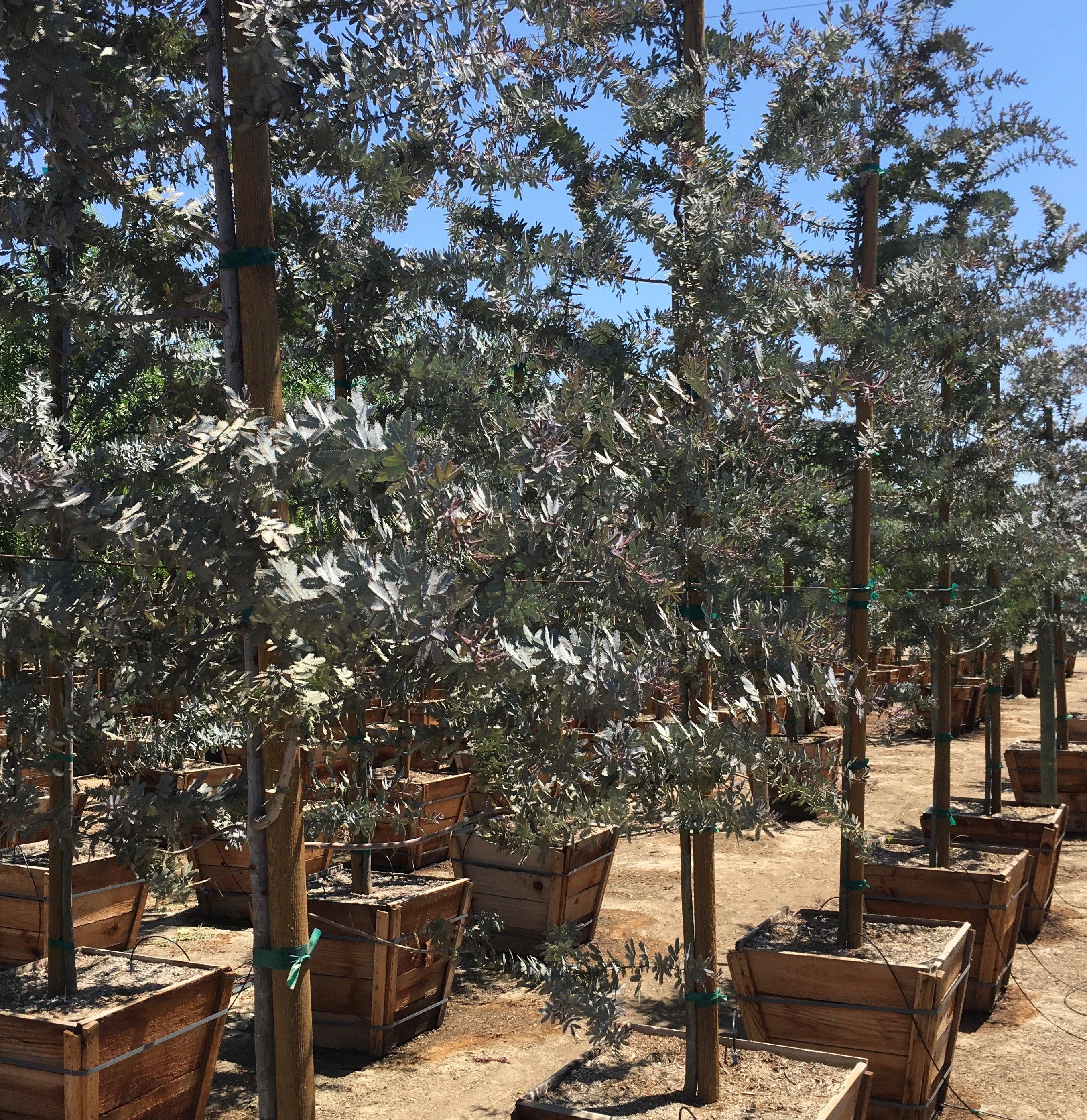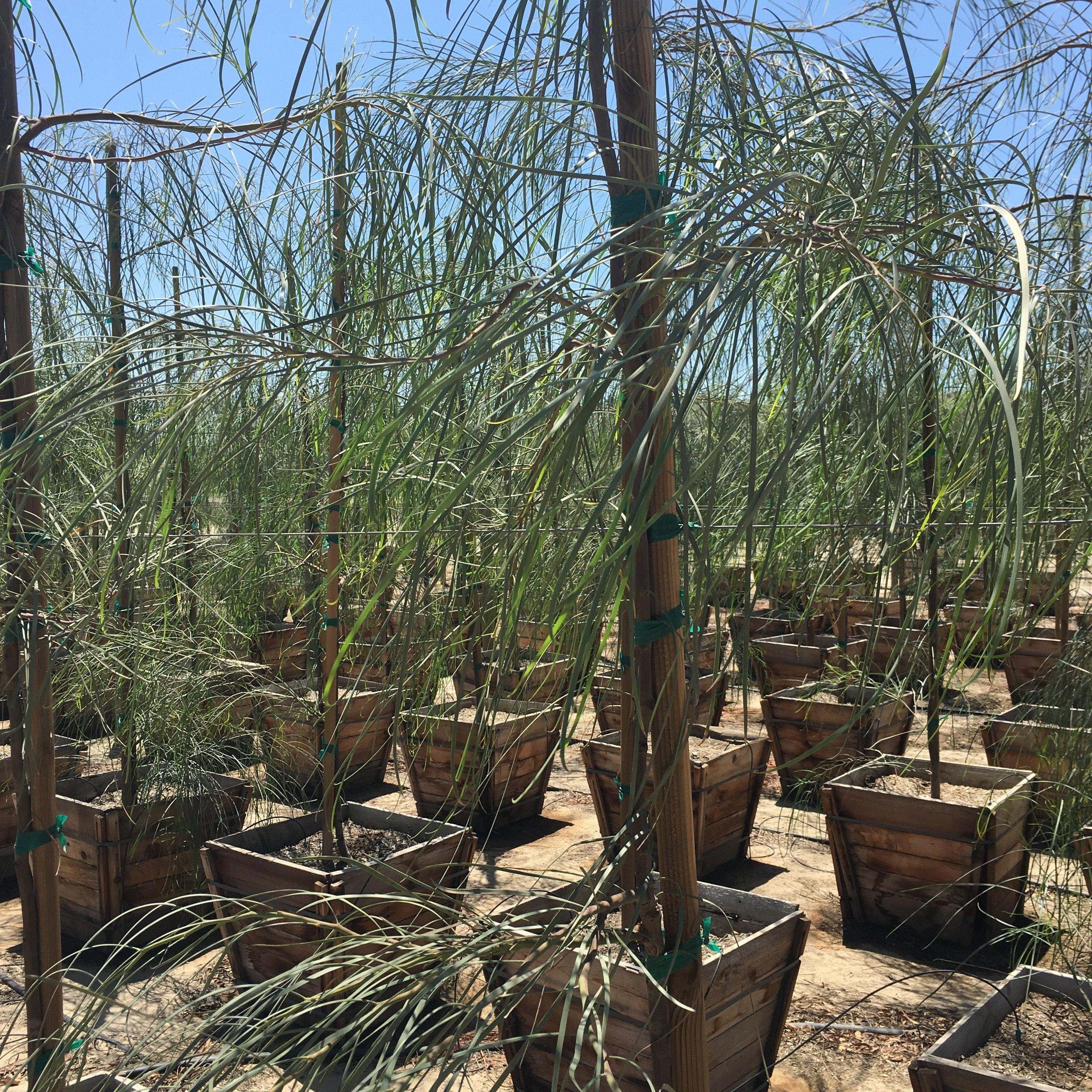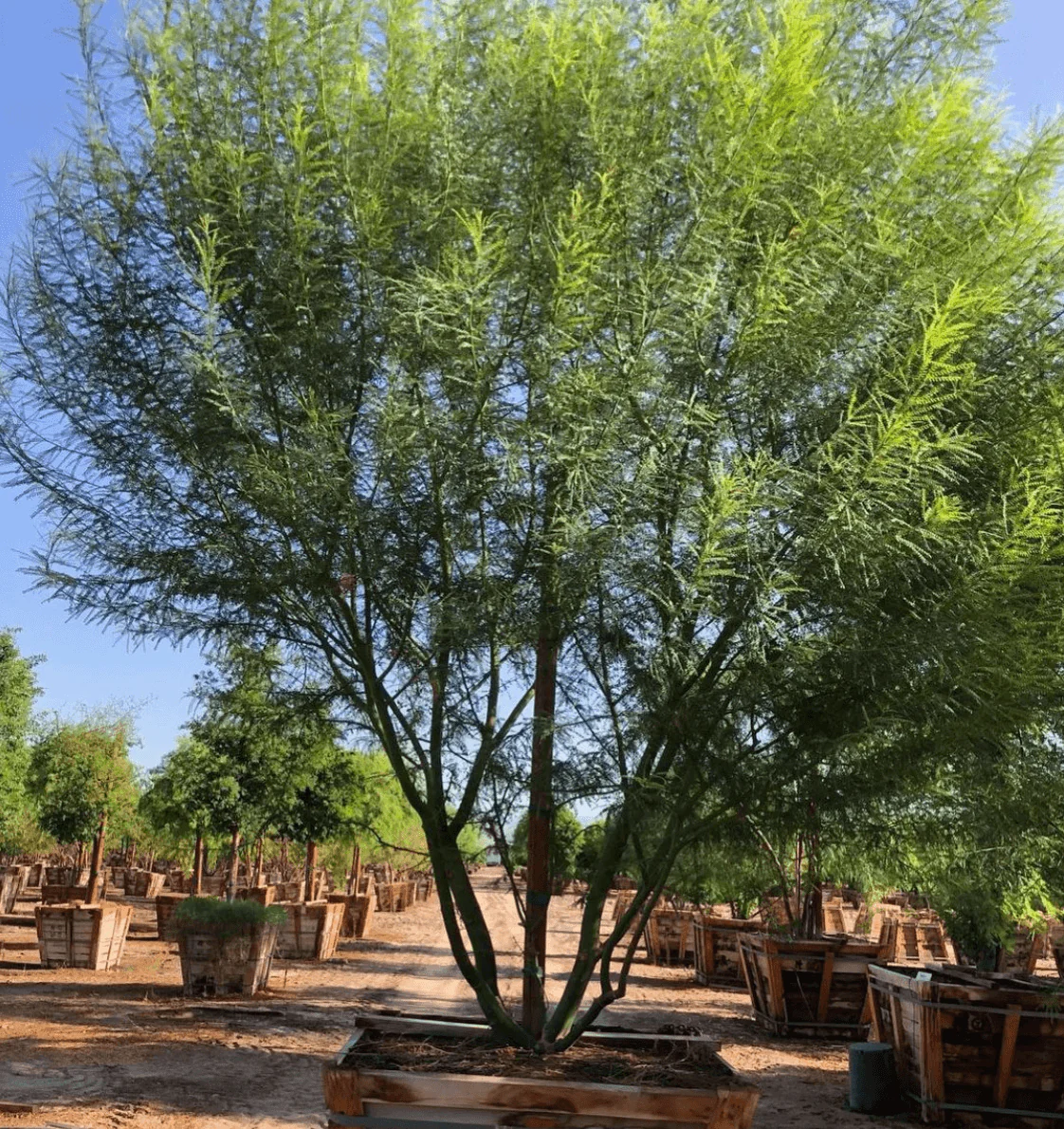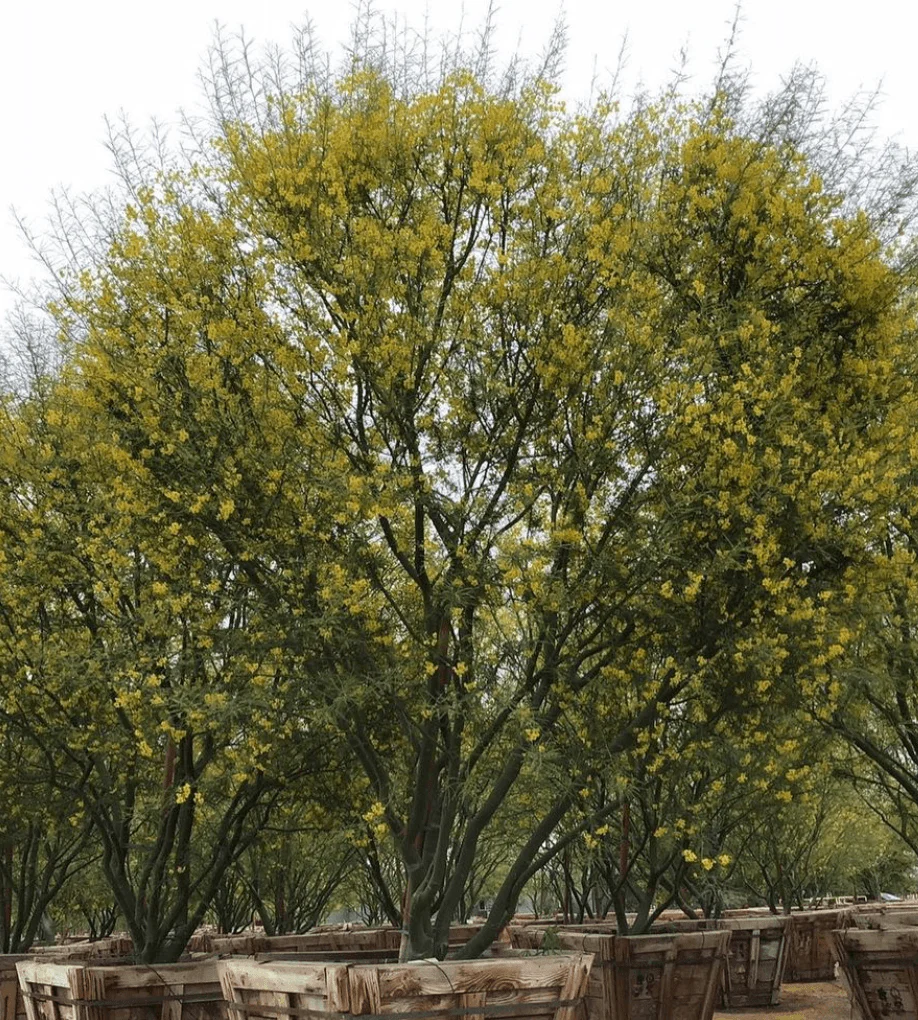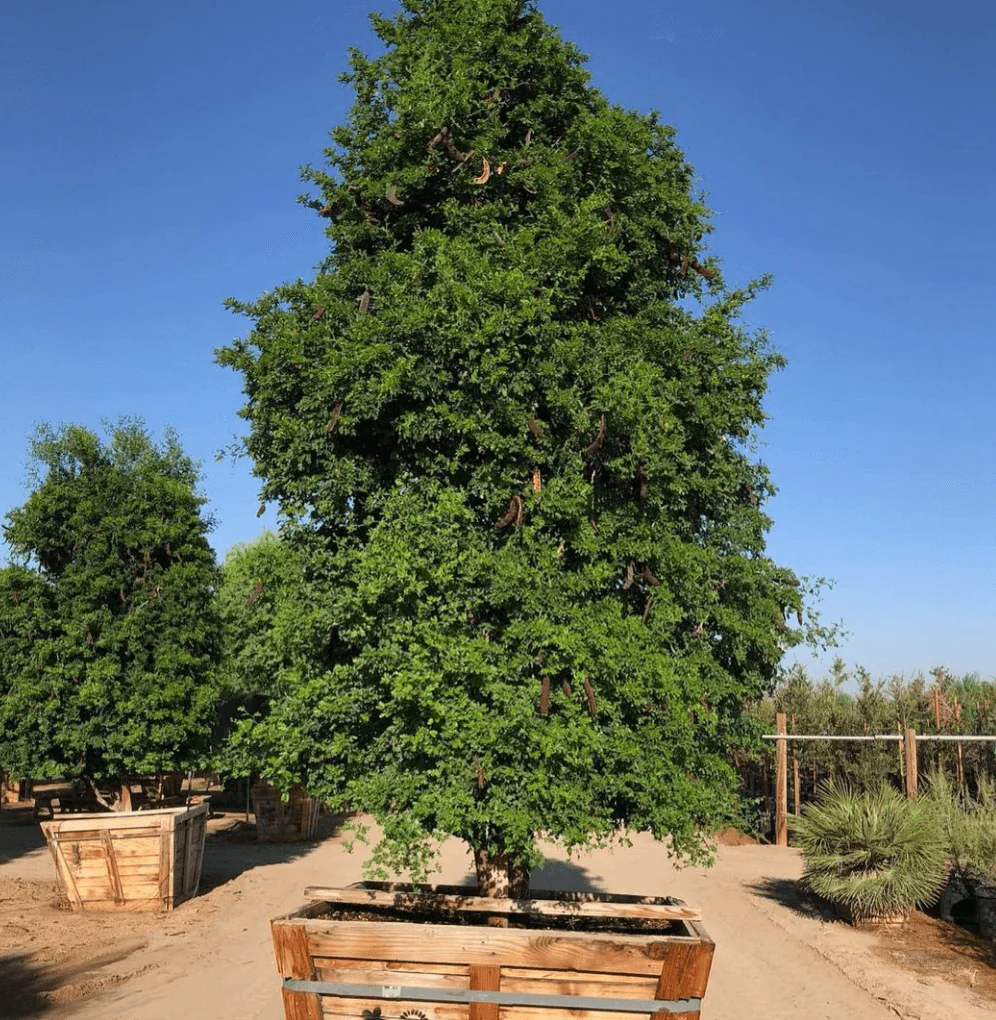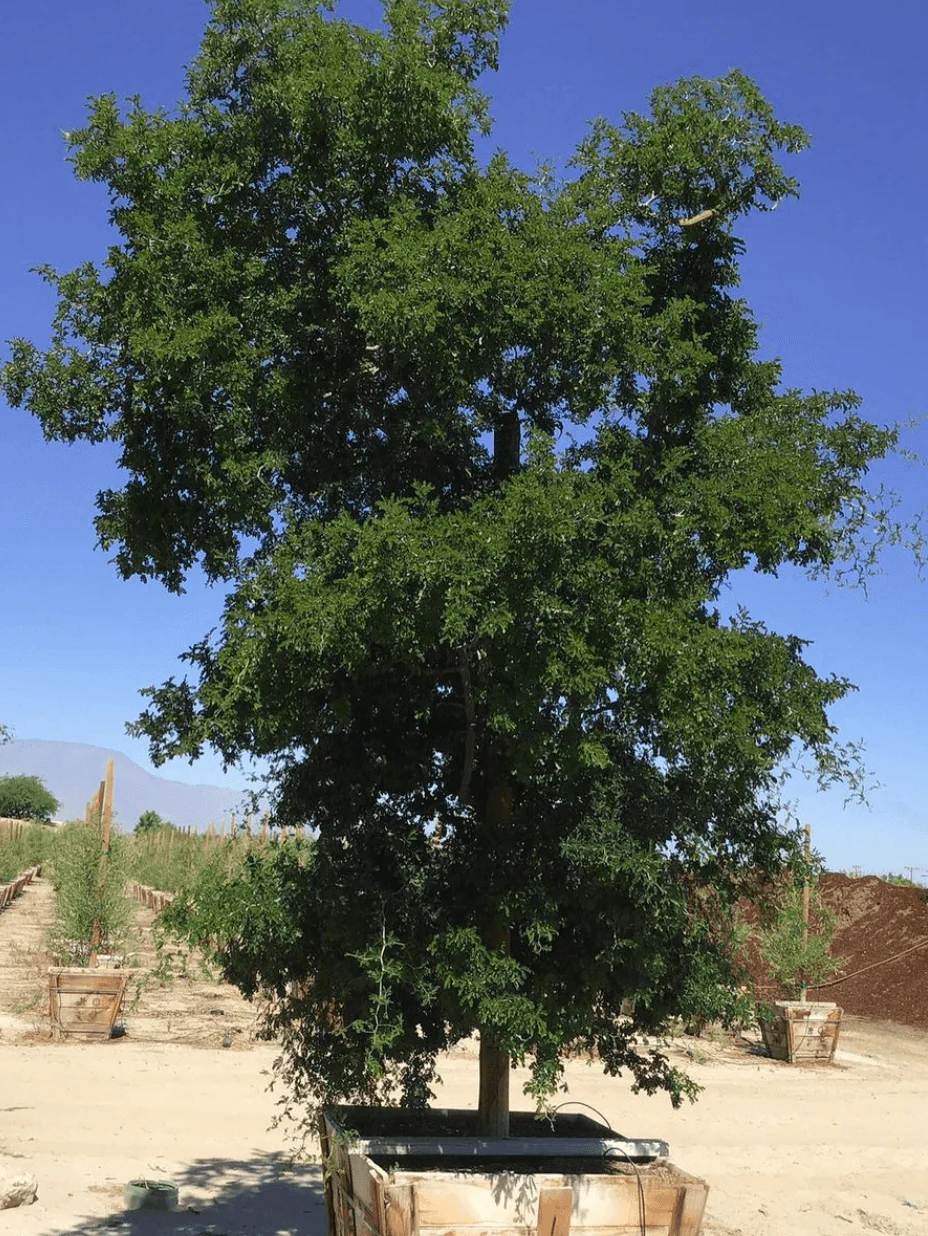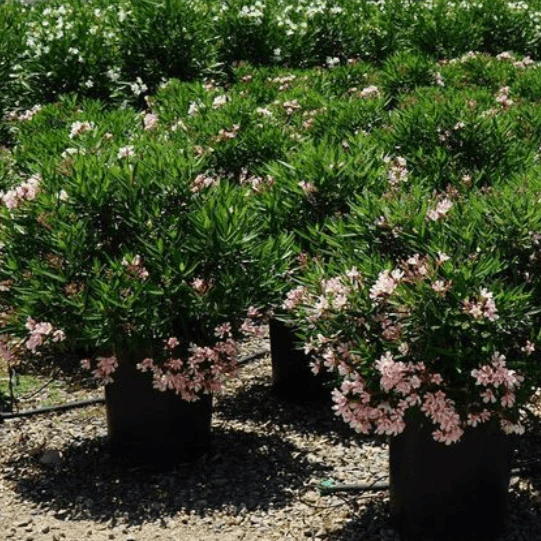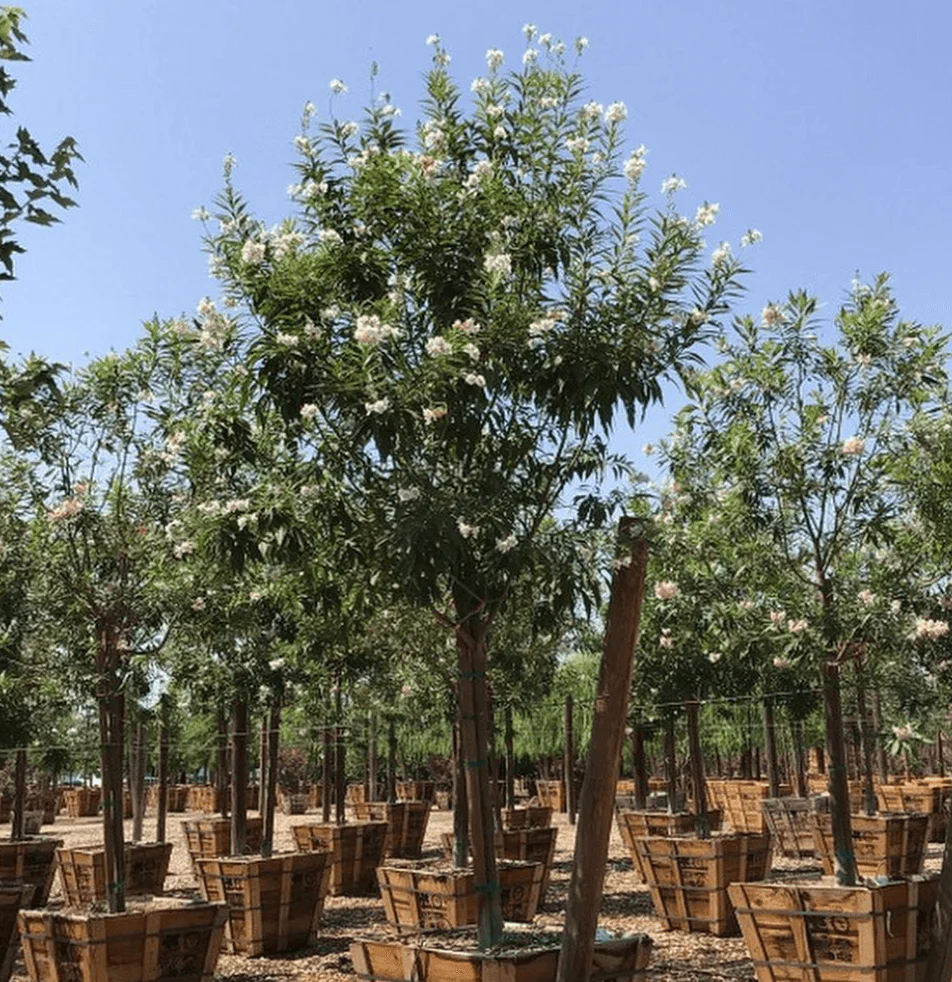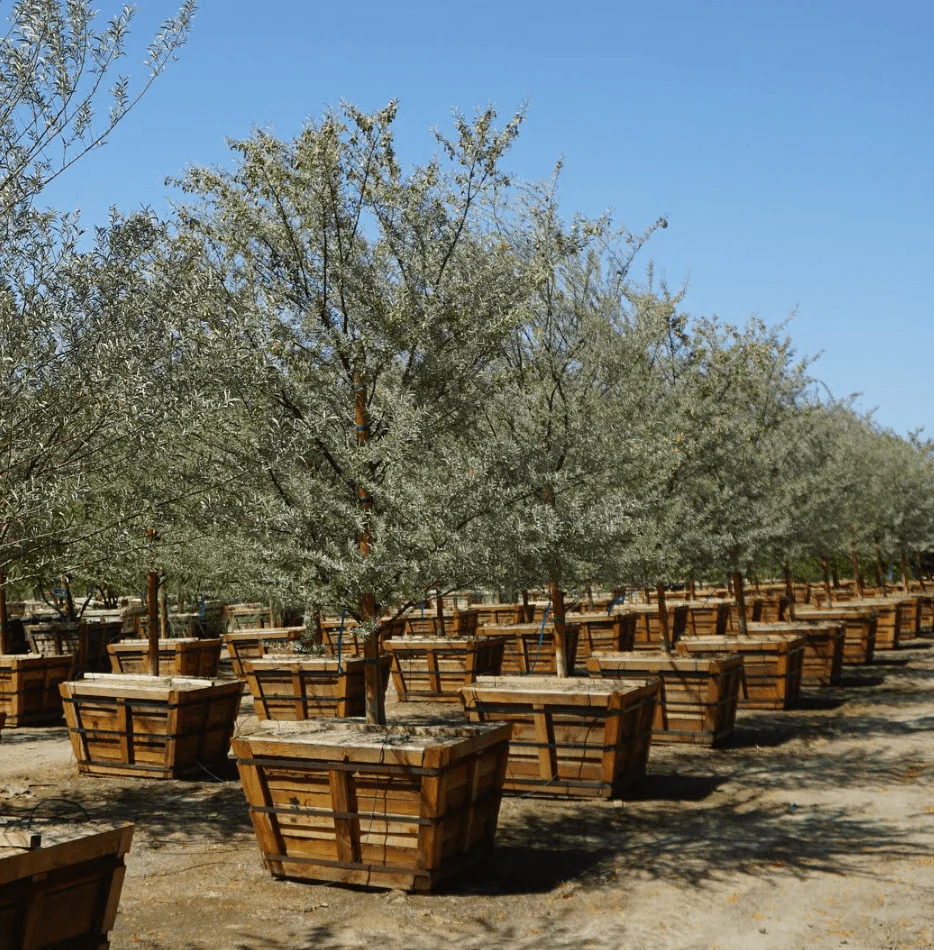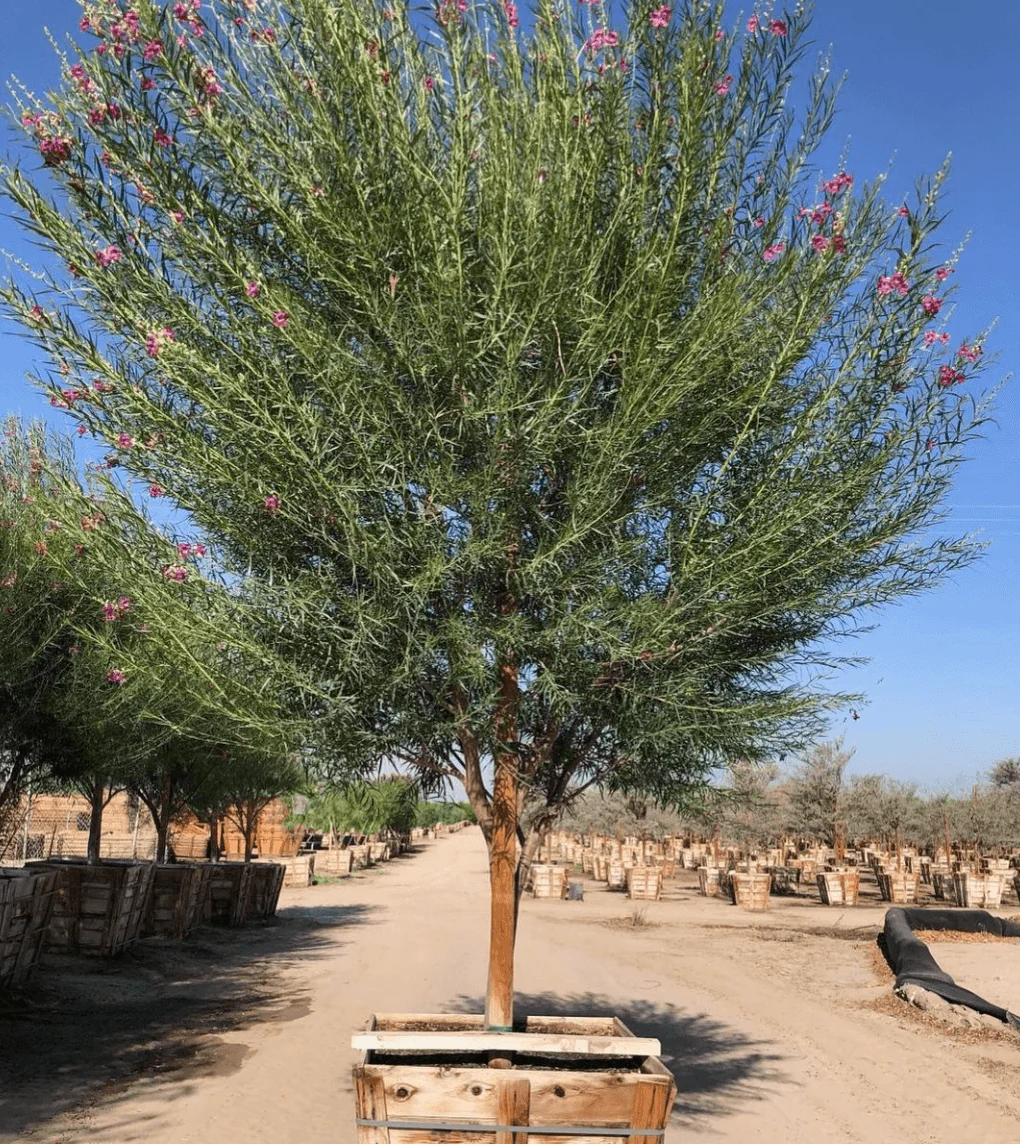
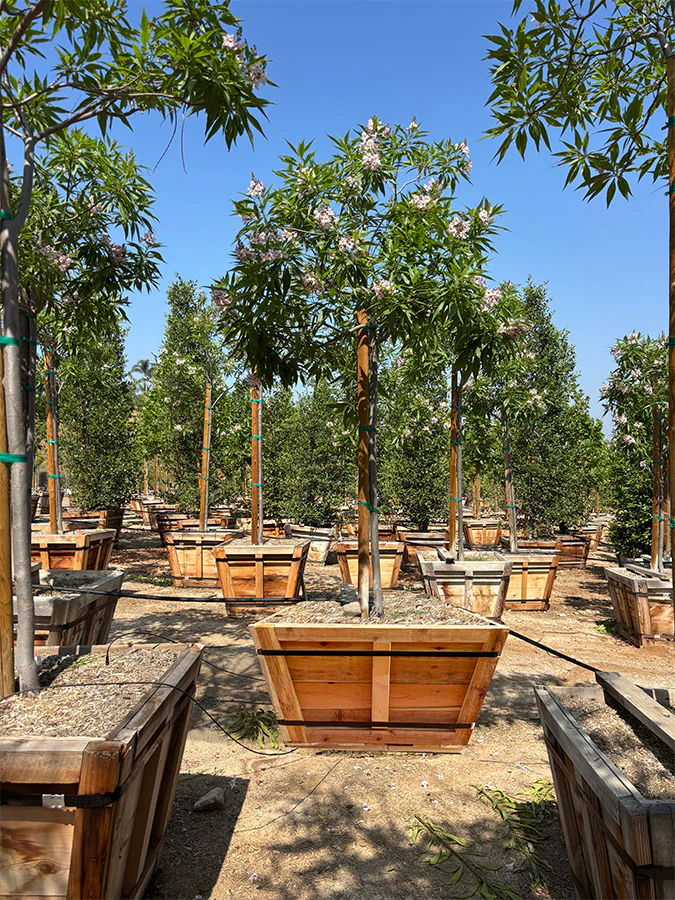
Chitalpa tashkentensis 'Pink Dawn' - Pink Dawn Chitalpa
The Perfect Drought-Tolerant Flowering Tree for California Gardens
Chitalpa tashkentensis gives California gardens a long bloom season, light shade, and strong drought tolerance without the constant water demand of many flowering trees. This rapid-growing, deciduous tree is especially valuable where homeowners want summer color, filtered canopy coverage, and lower-maintenance landscaping, especially when compared with other flowering trees for California gardens.
Designed for arid and semi-arid climates, the chitalpa tree produces abundant frilly, trumpet-shaped blooms from late spring through autumn, appealing to wildlife such as hummingbirds, butterflies, and bees. In warm California settings, its pink to pale pink flowers can carry the garden from mid-summer into early autumn, often when many spring-flowering trees have already finished.
Why You’ll Love It
-
Exceptional drought tolerance – The tree thrives in arid and semi-arid climates and is highly heat-resistant and drought-tolerant, making it ideally suited for water-wise California landscapes.
-
Long bloom season – Chitalpa tashkentensis produces bell-shaped flowers that bloom in summer, with each flower being approximately 1 inch across and arranged in upright racemes containing 15-40 flowers.
-
Light shade for better planting design – Its open branching casts light shade, helping underplanting areas stay usable instead of creating dark dead zones.
-
Cleaner than many flowering trees – Both ‘Pink Dawn’ and ‘Morning Cloud’ cultivars are sterile and do not produce seed pods, making them a cleaner choice for landscaping.
-
Fast growing and low maintenance – Chitalpa tashkentensis is a rapid-growing, deciduous tree that typically reaches heights of 20-35 feet with a dense, spreading, oval crown.
The flowers of Chitalpa tashkentensis are appealing to various pollinators due to their long, nectar-rich blooming season. Bees, butterflies, and hummingbirds visit the fragrant blooms throughout the growing season, adding movement and wildlife value to the garden.
What Makes It Different
Most flowering trees either need too much irrigation, bloom for only a short window in spring, or create cleanup from fruit and seed pods, which is why many homeowners explore other desert trees for hot, dry climates.
Chitalpa Tashkentensis provides:
-
Rare hybrid performance – It is a rare intergeneric cross between Catalpa bignonioides and Chilopsis linearis, both native to North America, combining desert willow drought tolerance with catalpa-style flower presence, similar in spirit to how California lilac (Ceanothus) supports dry-climate landscapes.
-
Two cultivars for different looks – Popular cultivars of Chitalpa tashkentensis include ‘Pink Dawn’, which has soft pink flowers, and ‘Morning Cloud’, which features pale pink to near white flowers with purple streaks in the corolla throat.
-
Sterile, cleaner growth – Unlike southern catalpa and many parent species, this sterile hybrid produces virtually no fruit pods or volunteer seedlings.
Chitalpa tashkentensis was successfully hybridized in 1964 by Soviet geneticist Nikolai F. Rusanov at a botanical garden in Tashkent, Uzbekistan, then introduced to the United States in 1977 through the Cary Arboretum of the New York Botanical Garden. You may also see historical references to the New York Botanic Garden, york botanical garden, york botanic garden, Rancho Santa Ana Botanic Garden, Santa Ana Botanic Garden, Thomas Elias, Walter Wisura, and Robert Hebb in discussions of chitalpa, botanic garden records, and plant introductions. The specific epithet “tashkentensis” refers to Tashkent, formerly in the Soviet Union.
How To Grow Chitalpa Tashkentensis
-
Plant in sun with sharp drainage
Choose a full sun location whenever possible. This hybrid tree thrives in full sun to part shade and prefers well-drained soils, performing best with consistent moisture, although it is drought tolerant once established. Avoid winter-wet sites, compacted basins, or low areas where root rot can develop. -
Establish with regular water, then reduce irrigation
Water consistently during the first growing season so roots can move several feet into the surrounding soils. It is highly drought-tolerant once established and thrives best in sandy substrates, but occasional deep summer irrigation helps maintain stronger bloom and foliage quality. -
Enjoy continuous summer-to-autumn flowers
Once established, expect pink flowers, light pink flowers, pale pink, or near white flowers depending on cultivar. Chitalpa tashkentensis produces abundant frilly, trumpet-shaped blooms from late spring through autumn, with showy clusters that bring color through summer and often toward late fall in mild climates.
Short pruning sessions can guide the branches into a small tree, multi-trunk form, or street tree shape. Ascending branches and open branching make it attractive as a stunning single specimen, along property lines, or near patios where light shade is preferred, much like other mature landscape trees that provide instant structure.
Product Details
-
Scientific name: x Chitalpa tashkentensis, also written as ×Chitalpa tashkentensis
-
Plant type: Fast growing deciduous tree / small tree
-
Hybrid background: Rare intergeneric hybrid cross involving desert willow and catalpa; commonly associated with Catalpa bignonioides, also misspelled as catalpa bignonoides
-
Available cultivars: ‘Pink Dawn’ and ‘Morning Cloud’
-
‘Pink Dawn’: Soft pink to light pink flowers, broader spreading habit, popular for warm garden designs
-
‘Morning Cloud’: Pale pink to near white flowers with purple streaks in the corolla throat and a more upright habit
-
Mature size: Often maintained around 15-25 feet tall and wide in residential gardens; Chitalpa tashkentensis is a rapid-growing, deciduous tree that typically reaches heights of 20-35 feet with a dense, spreading, oval crown
-
Flower details: Bell-shaped to trumpet-shaped flowers; each flower is approximately 1 inch across and arranged in upright racemes containing 15-40 flowers, creating showy 3-5 inch flower displays in terminal clusters
-
Bloom season: Late spring through autumn, with strong summer performance and excellent mid-summer to early-autumn color
-
Sun exposure: Full sun is best; part shade is tolerated, though insufficient sunlight can increase disease pressure
-
Soil needs: Chitalpa tashkentensis adapts easily to poor, alkaline, or heavy clay soils but requires sharp drainage
-
Best substrates: Performs especially well in sandy, well drained soils
-
Water needs: Consistent moisture during establishment; low to moderate water after establishment
-
Hardiness: Chitalpa tashkentensis is hardy in USDA Zones 6 to 9 and is not well-suited for high humidity areas
-
Cold performance: Chitalpa tashkentensis may experience die-back to the ground in colder, Zone 6 winters but can rebound as a large shrubby perennial
-
Climate fit: Excellent for hot inland California climates, dry city gardens, and water-wise landscapes, where it can be paired with other drought-tolerant options like the California pepper tree
-
Disease notes: Powdery mildew can be a significant problem for Chitalpa tashkentensis, especially in areas with high summer humidity and insufficient sunlight
-
Additional disease issues: Other disease issues affecting Chitalpa tashkentensis include verticillium wilt, root rot, and leaf spots
-
Pest notes: Chitalpa tashkentensis is susceptible to pests such as aphids, mealybugs, scale, and whiteflies, which can affect its health and growth, making thoughtful companion choices like resilient privacy and screening treesespecially useful in a broader planting plan
-
Cleaner landscaping: Both main cultivars are sterile and do not produce seed pods
Its thin leaves are medium to dull green, giving the plant a finer texture than many catalpa species while still holding a lush garden presence. With the right soils, sun, and drainage, chitalpa becomes a durable flowering tree for dry climates and can complement other feature trees like the California pepper tree for sale.
Who It’s For
Ideal for:
-
California homeowners seeking drought tolerant landscaping solutions and looking for a convenient plant nursery and landscape partner
-
Gardeners who want a long bloom season after spring color fades
-
Property owners needing light shade for patios, walkways, underplanting, or property lines
-
Landscape designers creating Mediterranean, desert, cottage, pollinator, or low-water gardens
-
Cities and homeowners looking for a compact street tree with attractive summer flowers alongside larger canopy options like Engelmann oak and other native trees
If you want a flowering tree that handles heat, reduces water dependence, and still delivers a soft pink or white summer bloom, Chitalpa tashkentensis fits your needs, especially when combined with other heat-loving flowering trees like Tuscarora crape myrtle. It is especially useful in Inland Empire, Central Valley, Santa Ana, and other warm California climates where many ornamental trees struggle with heat and dry soil.
It is not the best choice for high humidity areas, poorly drained winter soils, or shaded sites with poor airflow. In those conditions, powdery mildew, leaf spots, root rot, and general decline become more likely.
Frequently Asked Questions
How much water does it need once established?
It needs regular watering during establishment, especially in the first year. After that, Chitalpa tashkentensis is highly drought-tolerant once established, but minimal summer irrigation improves flowering, foliage quality, and long-term performance.
Will it create a mess with dropped flowers or pods?
It will drop spent flowers like most flowering trees, but both ‘Pink Dawn’ and ‘Morning Cloud’ cultivars are sterile and do not produce seed pods, making them a cleaner choice for landscaping than many catalpa relatives.
What’s the difference between the two cultivars?
‘Pink Dawn’ has soft pink flowers and a broader, more spreading form. ‘Morning Cloud’ has pale pink to near white flowers with purple streaks in the corolla throat and is noted for its increased resistance to powdery mildew compared to other cultivars of Chitalpa tashkentensis.
How long until it starts blooming?
Young plants often begin blooming once established and actively growing. With full sun, well drained soils, and proper first-year watering, the tree can develop quickly and produce summer flowers while still maturing into its full canopy.
Can it grow in clay soil?
Yes. Chitalpa tashkentensis adapts easily to poor, alkaline, or heavy clay soils but requires sharp drainage. If your soil holds winter water, plant on a slight mound, amend for structure, or choose a raised planting area.
Is it safe for humid climates?
It can grow in some humid regions, but it is not well-suited for high humidity areas. Powdery mildew can be a significant problem for Chitalpa tashkentensis, especially in areas with high summer humidity and insufficient sunlight.
Ready to Transform Your Garden?
Stop struggling with water-hungry flowering trees that bloom briefly and disappoint by summer.
Choose Chitalpa Tashkentensis for months of pink, pale pink, or near white flowers, light shade, and dependable drought tolerance in California landscapes. Yardwork can help you select the right cultivar, place it where drainage and sun support long-term health, and plan care that keeps the tree performing through summer heat.
Chitalpa tashkentensis 'Pink Dawn' - Pink Dawn Chitalpa
The Perfect Drought-Tolerant Flowering Tree for California Gardens
Chitalpa tashkentensis gives California gardens a long bloom season, light shade, and strong drought tolerance without the constant water demand of many flowering trees. This rapid-growing, deciduous tree is especially valuable where homeowners want summer color, filtered canopy coverage, and lower-maintenance landscaping, especially when compared with other flowering trees for California gardens.
Designed for arid and semi-arid climates, the chitalpa tree produces abundant frilly, trumpet-shaped blooms from late spring through autumn, appealing to wildlife such as hummingbirds, butterflies, and bees. In warm California settings, its pink to pale pink flowers can carry the garden from mid-summer into early autumn, often when many spring-flowering trees have already finished.
Why You’ll Love It
-
Exceptional drought tolerance – The tree thrives in arid and semi-arid climates and is highly heat-resistant and drought-tolerant, making it ideally suited for water-wise California landscapes.
-
Long bloom season – Chitalpa tashkentensis produces bell-shaped flowers that bloom in summer, with each flower being approximately 1 inch across and arranged in upright racemes containing 15-40 flowers.
-
Light shade for better planting design – Its open branching casts light shade, helping underplanting areas stay usable instead of creating dark dead zones.
-
Cleaner than many flowering trees – Both ‘Pink Dawn’ and ‘Morning Cloud’ cultivars are sterile and do not produce seed pods, making them a cleaner choice for landscaping.
-
Fast growing and low maintenance – Chitalpa tashkentensis is a rapid-growing, deciduous tree that typically reaches heights of 20-35 feet with a dense, spreading, oval crown.
The flowers of Chitalpa tashkentensis are appealing to various pollinators due to their long, nectar-rich blooming season. Bees, butterflies, and hummingbirds visit the fragrant blooms throughout the growing season, adding movement and wildlife value to the garden.
What Makes It Different
Most flowering trees either need too much irrigation, bloom for only a short window in spring, or create cleanup from fruit and seed pods, which is why many homeowners explore other desert trees for hot, dry climates.
Chitalpa Tashkentensis provides:
-
Rare hybrid performance – It is a rare intergeneric cross between Catalpa bignonioides and Chilopsis linearis, both native to North America, combining desert willow drought tolerance with catalpa-style flower presence, similar in spirit to how California lilac (Ceanothus) supports dry-climate landscapes.
-
Two cultivars for different looks – Popular cultivars of Chitalpa tashkentensis include ‘Pink Dawn’, which has soft pink flowers, and ‘Morning Cloud’, which features pale pink to near white flowers with purple streaks in the corolla throat.
-
Sterile, cleaner growth – Unlike southern catalpa and many parent species, this sterile hybrid produces virtually no fruit pods or volunteer seedlings.
Chitalpa tashkentensis was successfully hybridized in 1964 by Soviet geneticist Nikolai F. Rusanov at a botanical garden in Tashkent, Uzbekistan, then introduced to the United States in 1977 through the Cary Arboretum of the New York Botanical Garden. You may also see historical references to the New York Botanic Garden, york botanical garden, york botanic garden, Rancho Santa Ana Botanic Garden, Santa Ana Botanic Garden, Thomas Elias, Walter Wisura, and Robert Hebb in discussions of chitalpa, botanic garden records, and plant introductions. The specific epithet “tashkentensis” refers to Tashkent, formerly in the Soviet Union.
How To Grow Chitalpa Tashkentensis
-
Plant in sun with sharp drainage
Choose a full sun location whenever possible. This hybrid tree thrives in full sun to part shade and prefers well-drained soils, performing best with consistent moisture, although it is drought tolerant once established. Avoid winter-wet sites, compacted basins, or low areas where root rot can develop. -
Establish with regular water, then reduce irrigation
Water consistently during the first growing season so roots can move several feet into the surrounding soils. It is highly drought-tolerant once established and thrives best in sandy substrates, but occasional deep summer irrigation helps maintain stronger bloom and foliage quality. -
Enjoy continuous summer-to-autumn flowers
Once established, expect pink flowers, light pink flowers, pale pink, or near white flowers depending on cultivar. Chitalpa tashkentensis produces abundant frilly, trumpet-shaped blooms from late spring through autumn, with showy clusters that bring color through summer and often toward late fall in mild climates.
Short pruning sessions can guide the branches into a small tree, multi-trunk form, or street tree shape. Ascending branches and open branching make it attractive as a stunning single specimen, along property lines, or near patios where light shade is preferred, much like other mature landscape trees that provide instant structure.
Product Details
-
Scientific name: x Chitalpa tashkentensis, also written as ×Chitalpa tashkentensis
-
Plant type: Fast growing deciduous tree / small tree
-
Hybrid background: Rare intergeneric hybrid cross involving desert willow and catalpa; commonly associated with Catalpa bignonioides, also misspelled as catalpa bignonoides
-
Available cultivars: ‘Pink Dawn’ and ‘Morning Cloud’
-
‘Pink Dawn’: Soft pink to light pink flowers, broader spreading habit, popular for warm garden designs
-
‘Morning Cloud’: Pale pink to near white flowers with purple streaks in the corolla throat and a more upright habit
-
Mature size: Often maintained around 15-25 feet tall and wide in residential gardens; Chitalpa tashkentensis is a rapid-growing, deciduous tree that typically reaches heights of 20-35 feet with a dense, spreading, oval crown
-
Flower details: Bell-shaped to trumpet-shaped flowers; each flower is approximately 1 inch across and arranged in upright racemes containing 15-40 flowers, creating showy 3-5 inch flower displays in terminal clusters
-
Bloom season: Late spring through autumn, with strong summer performance and excellent mid-summer to early-autumn color
-
Sun exposure: Full sun is best; part shade is tolerated, though insufficient sunlight can increase disease pressure
-
Soil needs: Chitalpa tashkentensis adapts easily to poor, alkaline, or heavy clay soils but requires sharp drainage
-
Best substrates: Performs especially well in sandy, well drained soils
-
Water needs: Consistent moisture during establishment; low to moderate water after establishment
-
Hardiness: Chitalpa tashkentensis is hardy in USDA Zones 6 to 9 and is not well-suited for high humidity areas
-
Cold performance: Chitalpa tashkentensis may experience die-back to the ground in colder, Zone 6 winters but can rebound as a large shrubby perennial
-
Climate fit: Excellent for hot inland California climates, dry city gardens, and water-wise landscapes, where it can be paired with other drought-tolerant options like the California pepper tree
-
Disease notes: Powdery mildew can be a significant problem for Chitalpa tashkentensis, especially in areas with high summer humidity and insufficient sunlight
-
Additional disease issues: Other disease issues affecting Chitalpa tashkentensis include verticillium wilt, root rot, and leaf spots
-
Pest notes: Chitalpa tashkentensis is susceptible to pests such as aphids, mealybugs, scale, and whiteflies, which can affect its health and growth, making thoughtful companion choices like resilient privacy and screening treesespecially useful in a broader planting plan
-
Cleaner landscaping: Both main cultivars are sterile and do not produce seed pods
Its thin leaves are medium to dull green, giving the plant a finer texture than many catalpa species while still holding a lush garden presence. With the right soils, sun, and drainage, chitalpa becomes a durable flowering tree for dry climates and can complement other feature trees like the California pepper tree for sale.
Who It’s For
Ideal for:
-
California homeowners seeking drought tolerant landscaping solutions and looking for a convenient plant nursery and landscape partner
-
Gardeners who want a long bloom season after spring color fades
-
Property owners needing light shade for patios, walkways, underplanting, or property lines
-
Landscape designers creating Mediterranean, desert, cottage, pollinator, or low-water gardens
-
Cities and homeowners looking for a compact street tree with attractive summer flowers alongside larger canopy options like Engelmann oak and other native trees
If you want a flowering tree that handles heat, reduces water dependence, and still delivers a soft pink or white summer bloom, Chitalpa tashkentensis fits your needs, especially when combined with other heat-loving flowering trees like Tuscarora crape myrtle. It is especially useful in Inland Empire, Central Valley, Santa Ana, and other warm California climates where many ornamental trees struggle with heat and dry soil.
It is not the best choice for high humidity areas, poorly drained winter soils, or shaded sites with poor airflow. In those conditions, powdery mildew, leaf spots, root rot, and general decline become more likely.
Frequently Asked Questions
How much water does it need once established?
It needs regular watering during establishment, especially in the first year. After that, Chitalpa tashkentensis is highly drought-tolerant once established, but minimal summer irrigation improves flowering, foliage quality, and long-term performance.
Will it create a mess with dropped flowers or pods?
It will drop spent flowers like most flowering trees, but both ‘Pink Dawn’ and ‘Morning Cloud’ cultivars are sterile and do not produce seed pods, making them a cleaner choice for landscaping than many catalpa relatives.
What’s the difference between the two cultivars?
‘Pink Dawn’ has soft pink flowers and a broader, more spreading form. ‘Morning Cloud’ has pale pink to near white flowers with purple streaks in the corolla throat and is noted for its increased resistance to powdery mildew compared to other cultivars of Chitalpa tashkentensis.
How long until it starts blooming?
Young plants often begin blooming once established and actively growing. With full sun, well drained soils, and proper first-year watering, the tree can develop quickly and produce summer flowers while still maturing into its full canopy.
Can it grow in clay soil?
Yes. Chitalpa tashkentensis adapts easily to poor, alkaline, or heavy clay soils but requires sharp drainage. If your soil holds winter water, plant on a slight mound, amend for structure, or choose a raised planting area.
Is it safe for humid climates?
It can grow in some humid regions, but it is not well-suited for high humidity areas. Powdery mildew can be a significant problem for Chitalpa tashkentensis, especially in areas with high summer humidity and insufficient sunlight.
Ready to Transform Your Garden?
Stop struggling with water-hungry flowering trees that bloom briefly and disappoint by summer.
Choose Chitalpa Tashkentensis for months of pink, pale pink, or near white flowers, light shade, and dependable drought tolerance in California landscapes. Yardwork can help you select the right cultivar, place it where drainage and sun support long-term health, and plan care that keeps the tree performing through summer heat.
Product Information
Product Information
Shipping & Returns
Shipping & Returns
Description
The Perfect Drought-Tolerant Flowering Tree for California Gardens
Chitalpa tashkentensis gives California gardens a long bloom season, light shade, and strong drought tolerance without the constant water demand of many flowering trees. This rapid-growing, deciduous tree is especially valuable where homeowners want summer color, filtered canopy coverage, and lower-maintenance landscaping, especially when compared with other flowering trees for California gardens.
Designed for arid and semi-arid climates, the chitalpa tree produces abundant frilly, trumpet-shaped blooms from late spring through autumn, appealing to wildlife such as hummingbirds, butterflies, and bees. In warm California settings, its pink to pale pink flowers can carry the garden from mid-summer into early autumn, often when many spring-flowering trees have already finished.
Why You’ll Love It
-
Exceptional drought tolerance – The tree thrives in arid and semi-arid climates and is highly heat-resistant and drought-tolerant, making it ideally suited for water-wise California landscapes.
-
Long bloom season – Chitalpa tashkentensis produces bell-shaped flowers that bloom in summer, with each flower being approximately 1 inch across and arranged in upright racemes containing 15-40 flowers.
-
Light shade for better planting design – Its open branching casts light shade, helping underplanting areas stay usable instead of creating dark dead zones.
-
Cleaner than many flowering trees – Both ‘Pink Dawn’ and ‘Morning Cloud’ cultivars are sterile and do not produce seed pods, making them a cleaner choice for landscaping.
-
Fast growing and low maintenance – Chitalpa tashkentensis is a rapid-growing, deciduous tree that typically reaches heights of 20-35 feet with a dense, spreading, oval crown.
The flowers of Chitalpa tashkentensis are appealing to various pollinators due to their long, nectar-rich blooming season. Bees, butterflies, and hummingbirds visit the fragrant blooms throughout the growing season, adding movement and wildlife value to the garden.
What Makes It Different
Most flowering trees either need too much irrigation, bloom for only a short window in spring, or create cleanup from fruit and seed pods, which is why many homeowners explore other desert trees for hot, dry climates.
Chitalpa Tashkentensis provides:
-
Rare hybrid performance – It is a rare intergeneric cross between Catalpa bignonioides and Chilopsis linearis, both native to North America, combining desert willow drought tolerance with catalpa-style flower presence, similar in spirit to how California lilac (Ceanothus) supports dry-climate landscapes.
-
Two cultivars for different looks – Popular cultivars of Chitalpa tashkentensis include ‘Pink Dawn’, which has soft pink flowers, and ‘Morning Cloud’, which features pale pink to near white flowers with purple streaks in the corolla throat.
-
Sterile, cleaner growth – Unlike southern catalpa and many parent species, this sterile hybrid produces virtually no fruit pods or volunteer seedlings.
Chitalpa tashkentensis was successfully hybridized in 1964 by Soviet geneticist Nikolai F. Rusanov at a botanical garden in Tashkent, Uzbekistan, then introduced to the United States in 1977 through the Cary Arboretum of the New York Botanical Garden. You may also see historical references to the New York Botanic Garden, york botanical garden, york botanic garden, Rancho Santa Ana Botanic Garden, Santa Ana Botanic Garden, Thomas Elias, Walter Wisura, and Robert Hebb in discussions of chitalpa, botanic garden records, and plant introductions. The specific epithet “tashkentensis” refers to Tashkent, formerly in the Soviet Union.
How To Grow Chitalpa Tashkentensis
-
Plant in sun with sharp drainage
Choose a full sun location whenever possible. This hybrid tree thrives in full sun to part shade and prefers well-drained soils, performing best with consistent moisture, although it is drought tolerant once established. Avoid winter-wet sites, compacted basins, or low areas where root rot can develop. -
Establish with regular water, then reduce irrigation
Water consistently during the first growing season so roots can move several feet into the surrounding soils. It is highly drought-tolerant once established and thrives best in sandy substrates, but occasional deep summer irrigation helps maintain stronger bloom and foliage quality. -
Enjoy continuous summer-to-autumn flowers
Once established, expect pink flowers, light pink flowers, pale pink, or near white flowers depending on cultivar. Chitalpa tashkentensis produces abundant frilly, trumpet-shaped blooms from late spring through autumn, with showy clusters that bring color through summer and often toward late fall in mild climates.
Short pruning sessions can guide the branches into a small tree, multi-trunk form, or street tree shape. Ascending branches and open branching make it attractive as a stunning single specimen, along property lines, or near patios where light shade is preferred, much like other mature landscape trees that provide instant structure.
Product Details
-
Scientific name: x Chitalpa tashkentensis, also written as ×Chitalpa tashkentensis
-
Plant type: Fast growing deciduous tree / small tree
-
Hybrid background: Rare intergeneric hybrid cross involving desert willow and catalpa; commonly associated with Catalpa bignonioides, also misspelled as catalpa bignonoides
-
Available cultivars: ‘Pink Dawn’ and ‘Morning Cloud’
-
‘Pink Dawn’: Soft pink to light pink flowers, broader spreading habit, popular for warm garden designs
-
‘Morning Cloud’: Pale pink to near white flowers with purple streaks in the corolla throat and a more upright habit
-
Mature size: Often maintained around 15-25 feet tall and wide in residential gardens; Chitalpa tashkentensis is a rapid-growing, deciduous tree that typically reaches heights of 20-35 feet with a dense, spreading, oval crown
-
Flower details: Bell-shaped to trumpet-shaped flowers; each flower is approximately 1 inch across and arranged in upright racemes containing 15-40 flowers, creating showy 3-5 inch flower displays in terminal clusters
-
Bloom season: Late spring through autumn, with strong summer performance and excellent mid-summer to early-autumn color
-
Sun exposure: Full sun is best; part shade is tolerated, though insufficient sunlight can increase disease pressure
-
Soil needs: Chitalpa tashkentensis adapts easily to poor, alkaline, or heavy clay soils but requires sharp drainage
-
Best substrates: Performs especially well in sandy, well drained soils
-
Water needs: Consistent moisture during establishment; low to moderate water after establishment
-
Hardiness: Chitalpa tashkentensis is hardy in USDA Zones 6 to 9 and is not well-suited for high humidity areas
-
Cold performance: Chitalpa tashkentensis may experience die-back to the ground in colder, Zone 6 winters but can rebound as a large shrubby perennial
-
Climate fit: Excellent for hot inland California climates, dry city gardens, and water-wise landscapes, where it can be paired with other drought-tolerant options like the California pepper tree
-
Disease notes: Powdery mildew can be a significant problem for Chitalpa tashkentensis, especially in areas with high summer humidity and insufficient sunlight
-
Additional disease issues: Other disease issues affecting Chitalpa tashkentensis include verticillium wilt, root rot, and leaf spots
-
Pest notes: Chitalpa tashkentensis is susceptible to pests such as aphids, mealybugs, scale, and whiteflies, which can affect its health and growth, making thoughtful companion choices like resilient privacy and screening treesespecially useful in a broader planting plan
-
Cleaner landscaping: Both main cultivars are sterile and do not produce seed pods
Its thin leaves are medium to dull green, giving the plant a finer texture than many catalpa species while still holding a lush garden presence. With the right soils, sun, and drainage, chitalpa becomes a durable flowering tree for dry climates and can complement other feature trees like the California pepper tree for sale.
Who It’s For
Ideal for:
-
California homeowners seeking drought tolerant landscaping solutions and looking for a convenient plant nursery and landscape partner
-
Gardeners who want a long bloom season after spring color fades
-
Property owners needing light shade for patios, walkways, underplanting, or property lines
-
Landscape designers creating Mediterranean, desert, cottage, pollinator, or low-water gardens
-
Cities and homeowners looking for a compact street tree with attractive summer flowers alongside larger canopy options like Engelmann oak and other native trees
If you want a flowering tree that handles heat, reduces water dependence, and still delivers a soft pink or white summer bloom, Chitalpa tashkentensis fits your needs, especially when combined with other heat-loving flowering trees like Tuscarora crape myrtle. It is especially useful in Inland Empire, Central Valley, Santa Ana, and other warm California climates where many ornamental trees struggle with heat and dry soil.
It is not the best choice for high humidity areas, poorly drained winter soils, or shaded sites with poor airflow. In those conditions, powdery mildew, leaf spots, root rot, and general decline become more likely.
Frequently Asked Questions
How much water does it need once established?
It needs regular watering during establishment, especially in the first year. After that, Chitalpa tashkentensis is highly drought-tolerant once established, but minimal summer irrigation improves flowering, foliage quality, and long-term performance.
Will it create a mess with dropped flowers or pods?
It will drop spent flowers like most flowering trees, but both ‘Pink Dawn’ and ‘Morning Cloud’ cultivars are sterile and do not produce seed pods, making them a cleaner choice for landscaping than many catalpa relatives.
What’s the difference between the two cultivars?
‘Pink Dawn’ has soft pink flowers and a broader, more spreading form. ‘Morning Cloud’ has pale pink to near white flowers with purple streaks in the corolla throat and is noted for its increased resistance to powdery mildew compared to other cultivars of Chitalpa tashkentensis.
How long until it starts blooming?
Young plants often begin blooming once established and actively growing. With full sun, well drained soils, and proper first-year watering, the tree can develop quickly and produce summer flowers while still maturing into its full canopy.
Can it grow in clay soil?
Yes. Chitalpa tashkentensis adapts easily to poor, alkaline, or heavy clay soils but requires sharp drainage. If your soil holds winter water, plant on a slight mound, amend for structure, or choose a raised planting area.
Is it safe for humid climates?
It can grow in some humid regions, but it is not well-suited for high humidity areas. Powdery mildew can be a significant problem for Chitalpa tashkentensis, especially in areas with high summer humidity and insufficient sunlight.
Ready to Transform Your Garden?
Stop struggling with water-hungry flowering trees that bloom briefly and disappoint by summer.
Choose Chitalpa Tashkentensis for months of pink, pale pink, or near white flowers, light shade, and dependable drought tolerance in California landscapes. Yardwork can help you select the right cultivar, place it where drainage and sun support long-term health, and plan care that keeps the tree performing through summer heat.