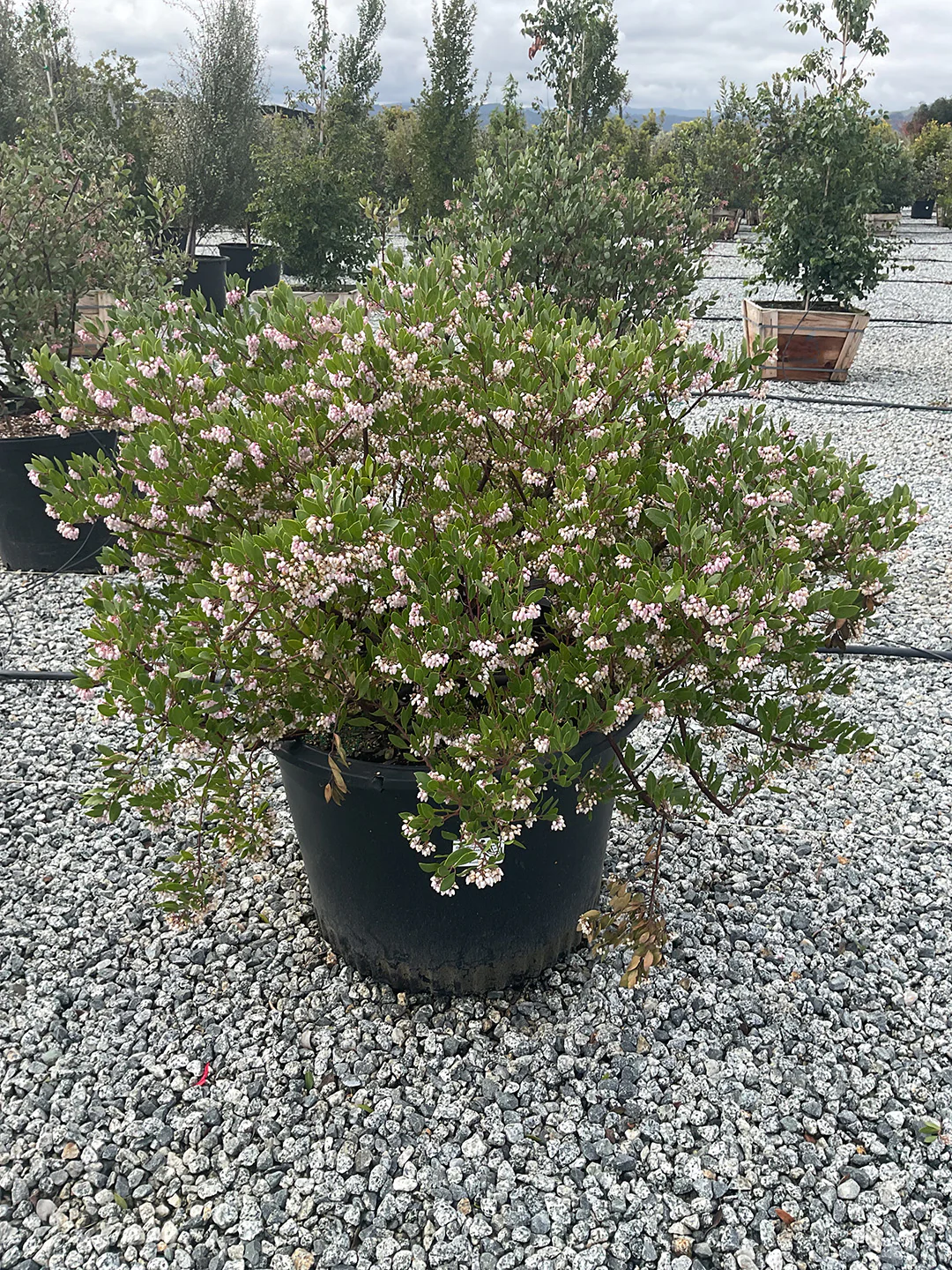
Howard McMinn Manzanita - Arctostaphylos densiflora 'Howard McMinn'
Howard McMinn Manzanita
Transform Your Garden with California’s Most Versatile Native Evergreen
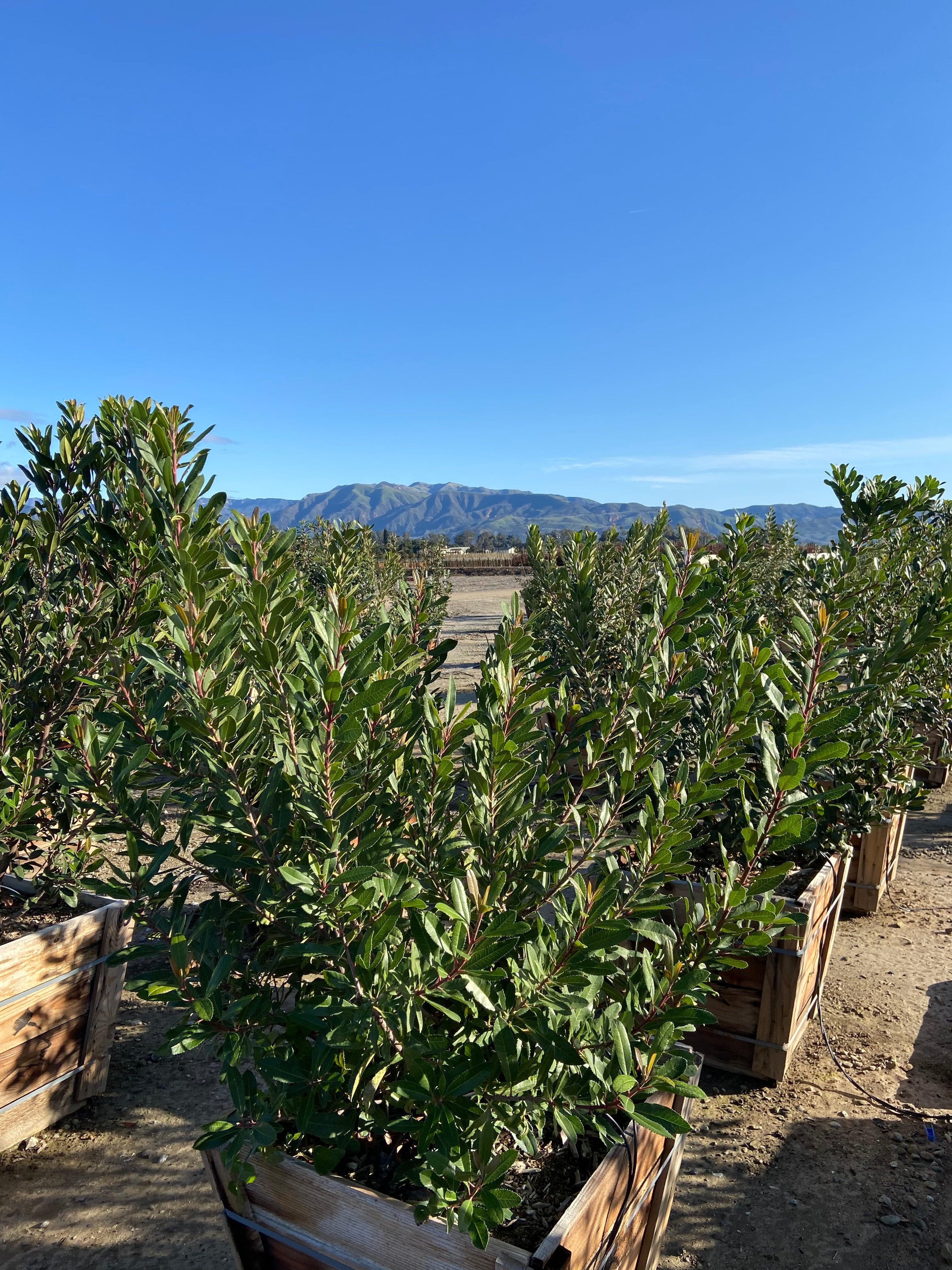
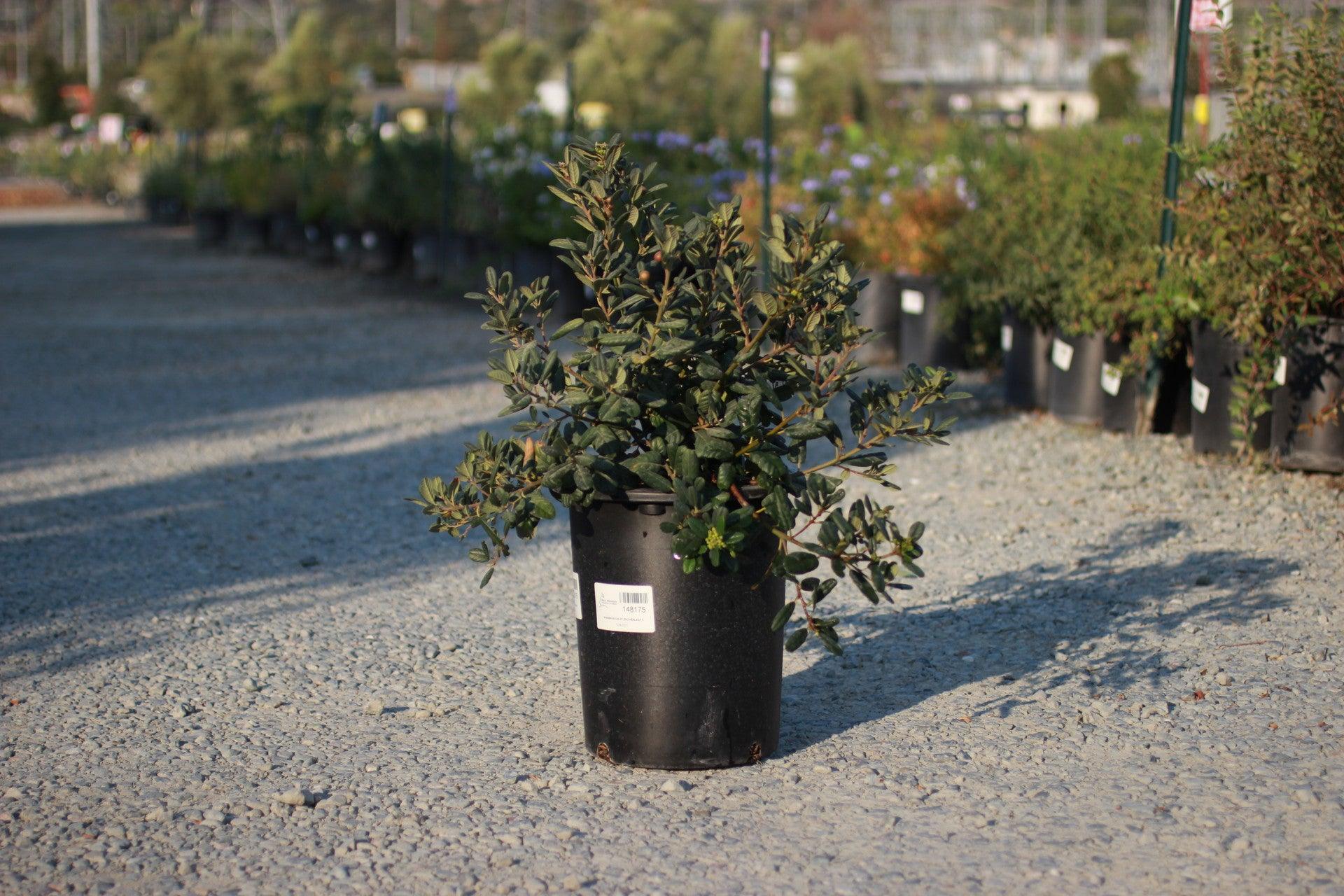
Howard McMinn Manzanita gives California gardens year-round structure, winter-to-spring bloom, sculptural red bark, and drought-tolerant performance in one low-maintenance evergreen shrub. This native plant is a strong choice when you want a garden that looks established, supports wildlife, and does not depend on constant irrigation.
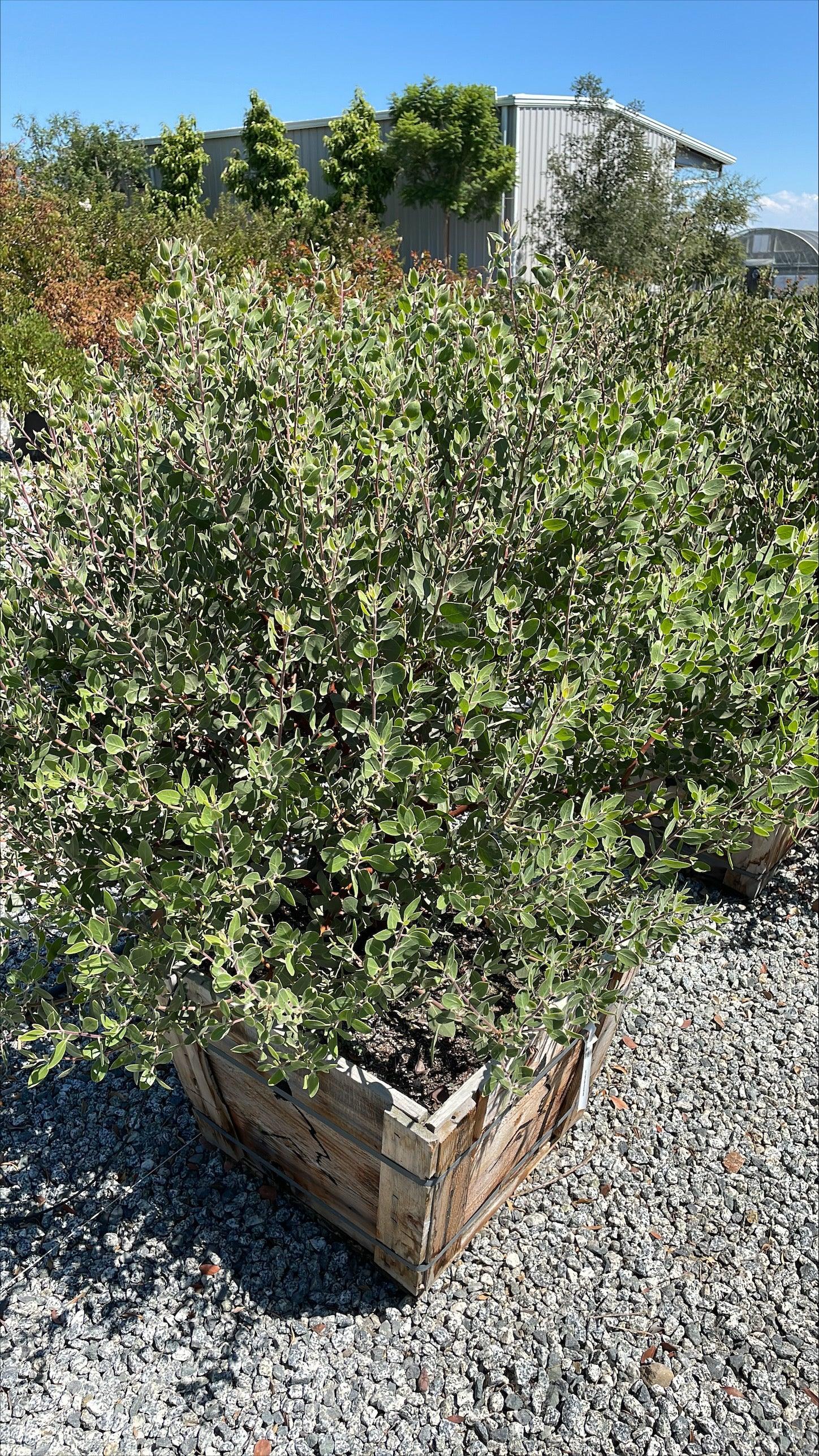
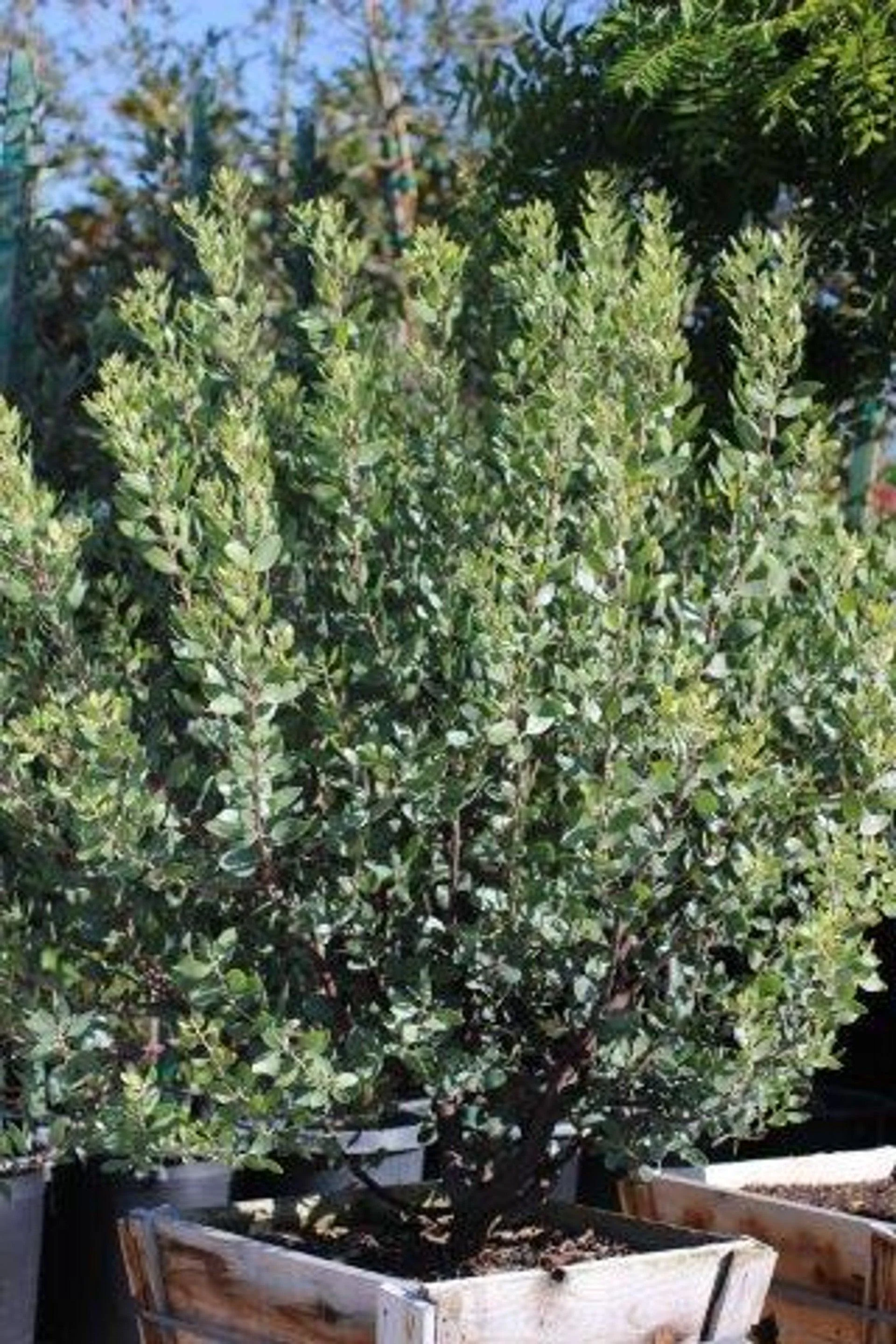
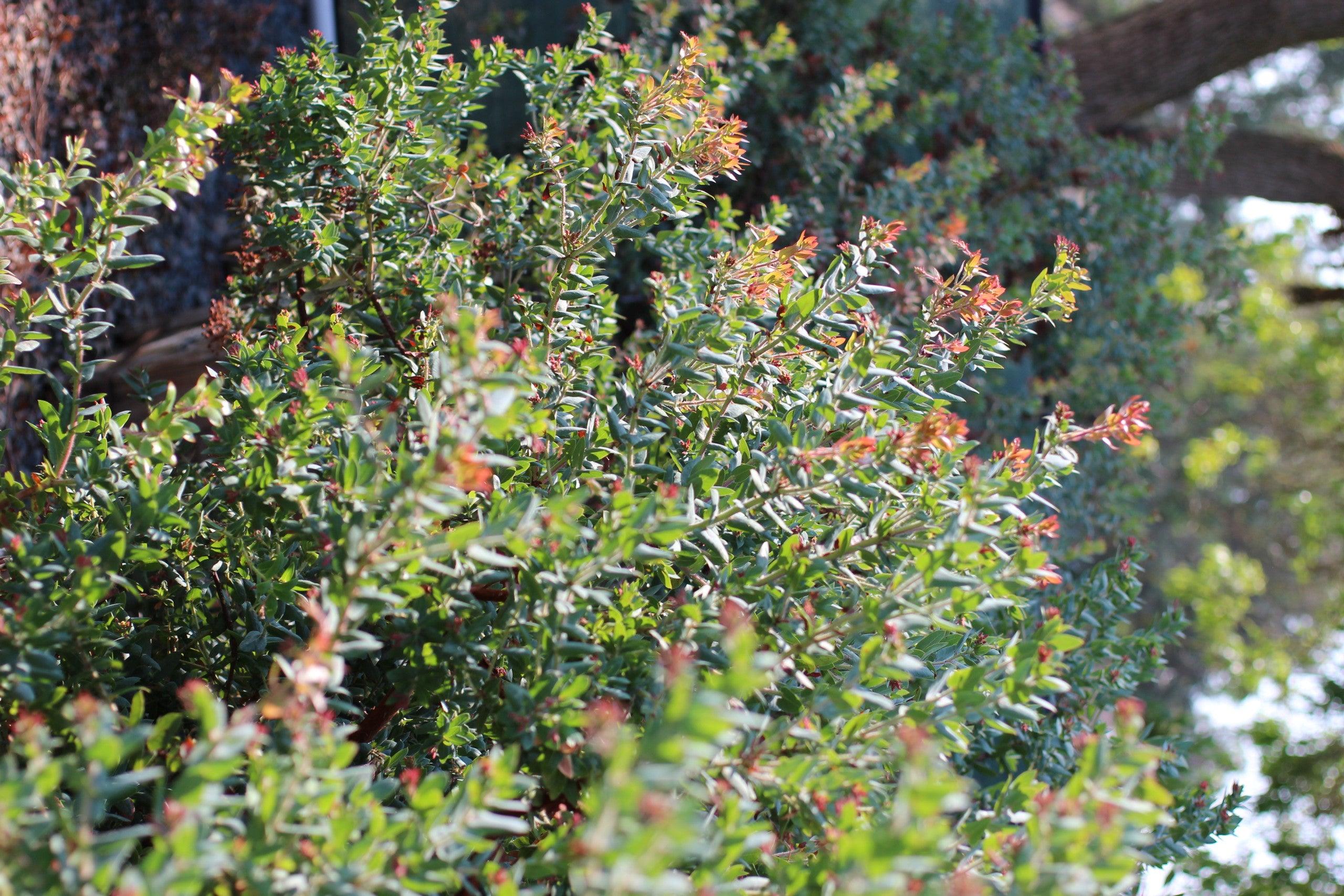
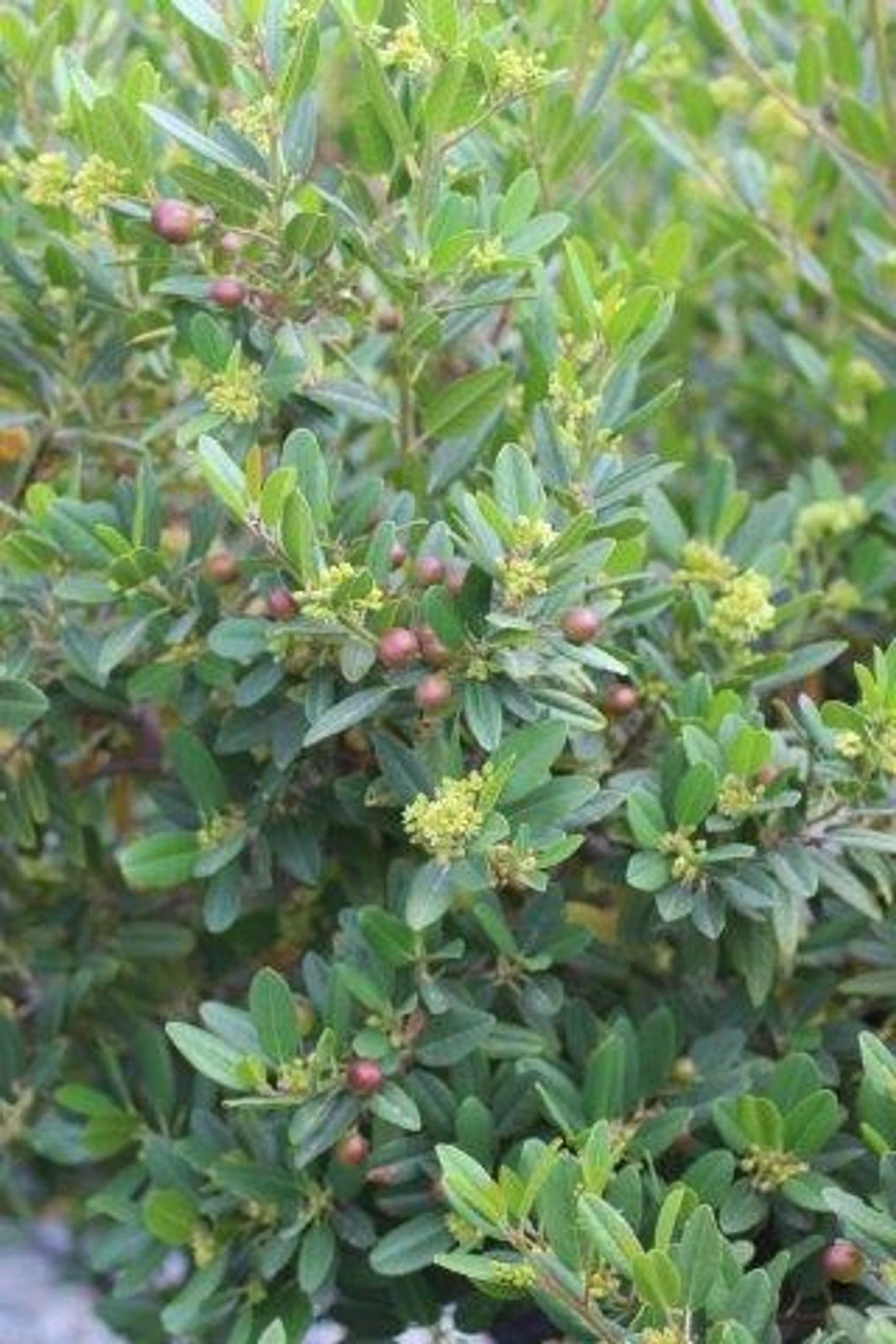
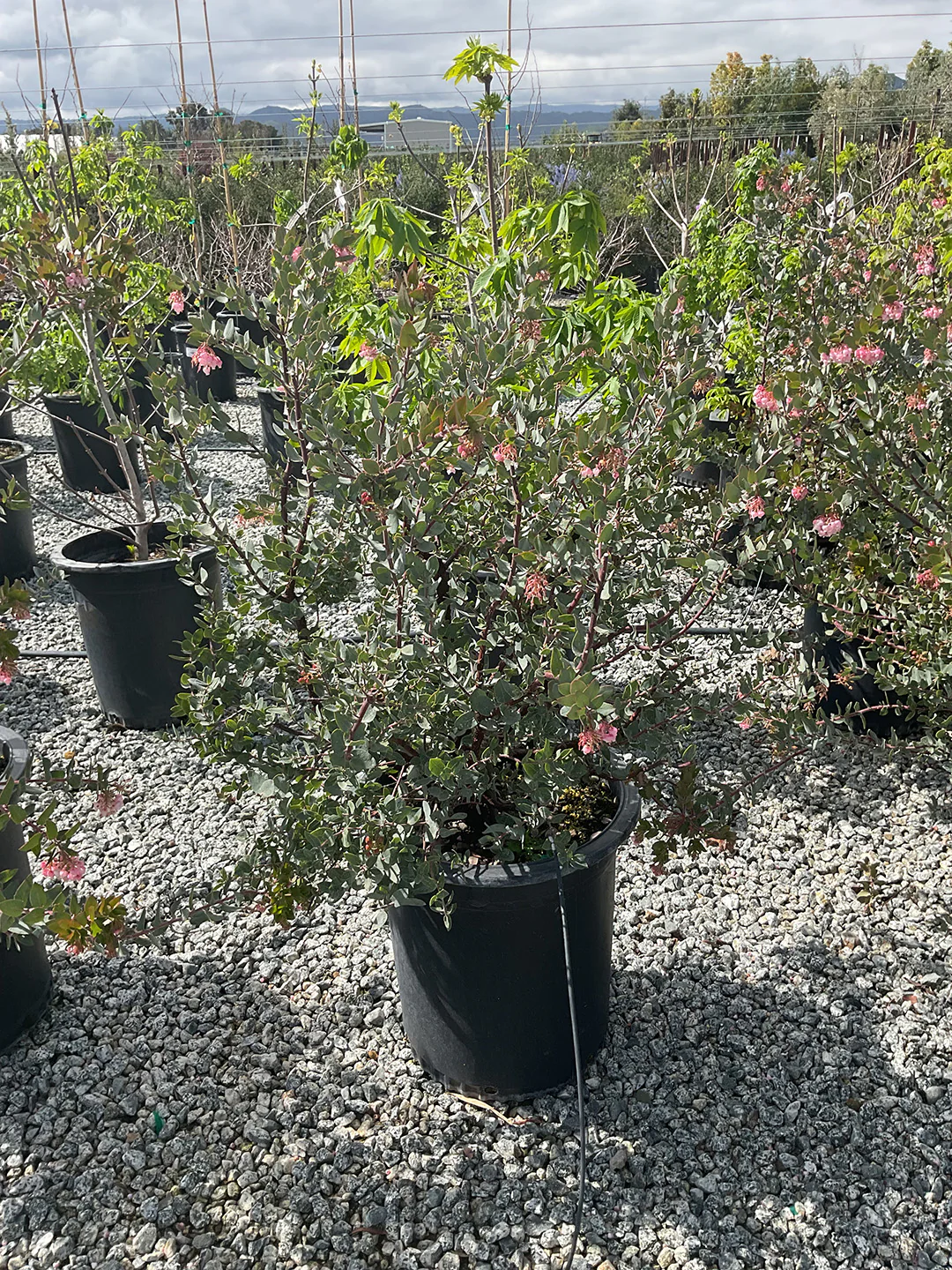
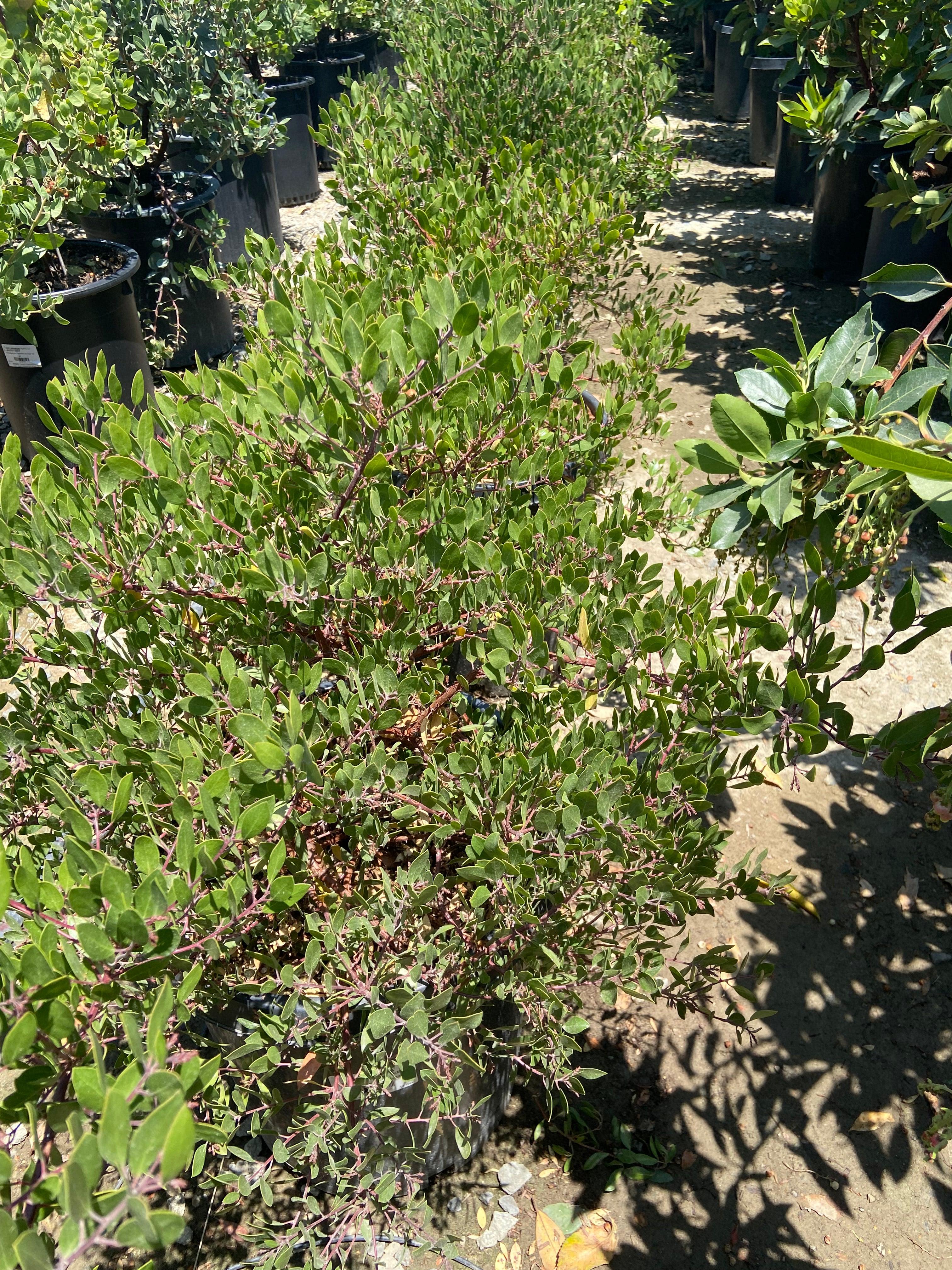
With dense growth, glossy green leaves, smooth mahogany-red stems, and clusters of small white flowers often touched with pink, Arctostaphylos densiflora ‘Howard McMinn’ adds immediate visual interest and becomes more character-rich over the years. Once established, it handles dry summer conditions with minimal water, making it ideal for water-wise California landscapes.
Why You’ll Love It
-
Striking winter bark – Smooth red to mahogany bark adds sculptural interest when many shrubs look flat or dormant.
-
Excellent hedge potential – Its dense, wide, mounding shape works beautifully as an informal hedge, privacy screen, backdrop plant, or specimen plant; if you need a faster-growing non-native alternative, consider an English Laurel hedge for privacy and screening.
-
Long flowering season – The plant produces dense clusters of urn-shaped white to soft pink flowers from late winter through spring, blooming later and longer than most other manzanitas.
-
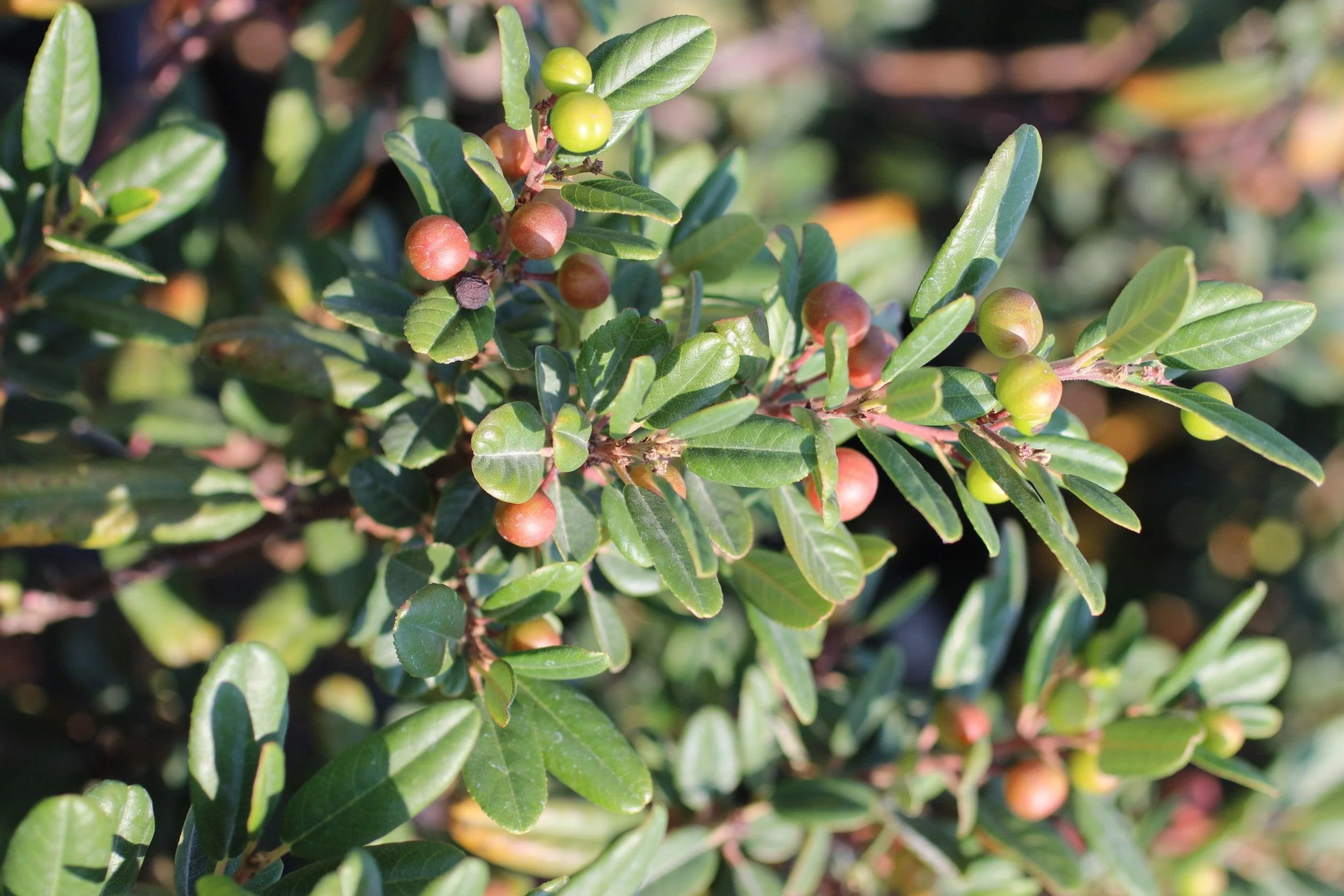
Pollinator and wildlife value – Howard McMinn Manzanita attracts hummingbirds, attracts butterflies, and draws bumblebees to its flowers; small brownish-red berries provide fruit for birds and other wildlife.
-
Water-saving once established – This drought-tolerant evergreen shrub requires minimal watering after establishment, typically once or twice a month during summer.
-
Built for California conditions – The Howard McMinn Manzanita is a woody evergreen shrub that thrives in USDA Zones 7 to 10 and Sunset Zones 7 to 9, 14 to 21; for a larger small-tree option with similar bark and drought performance, explore Dr. Hurd Manzanita for California landscapes.
-
Flexible sun exposure – This plant prefers full sun to partial shade, making it versatile for various garden settings, including sites with part shade in hotter inland areas.
-
Handles tougher soils – The Howard McMinn Manzanita is tolerant of serpentine or clay soils, which makes it suitable for challenging soil conditions when good drainage is present.
-
Low-maintenance shaping – Howard McMinn Manzanita responds well to light shearing and can be shaped into an informal hedge or specimen plant.
-
Deer resistant and dependable – In many California gardens, it is deer resistant and easier to maintain than thirsty non-native shrubs.
What Makes It Different
Most landscape shrubs used for screening or foundation planting need frequent water, repeated pruning, fertilizer, or pest management to stay presentable. Howard McMinn Manzanita delivers evergreen structure, seasonal flowers, smooth red bark, and strong drought performance while staying naturally beautiful with minimal intervention.
-
More adaptable than many manzanitas – It is adaptable, forgiving, and visually striking, unlike many wild manzanita species that fail in garden settings.
-
Better suited to real garden soils – This cultivar can handle various soil types, including clay and loam, but requires good drainage and will not tolerate standing water.
-
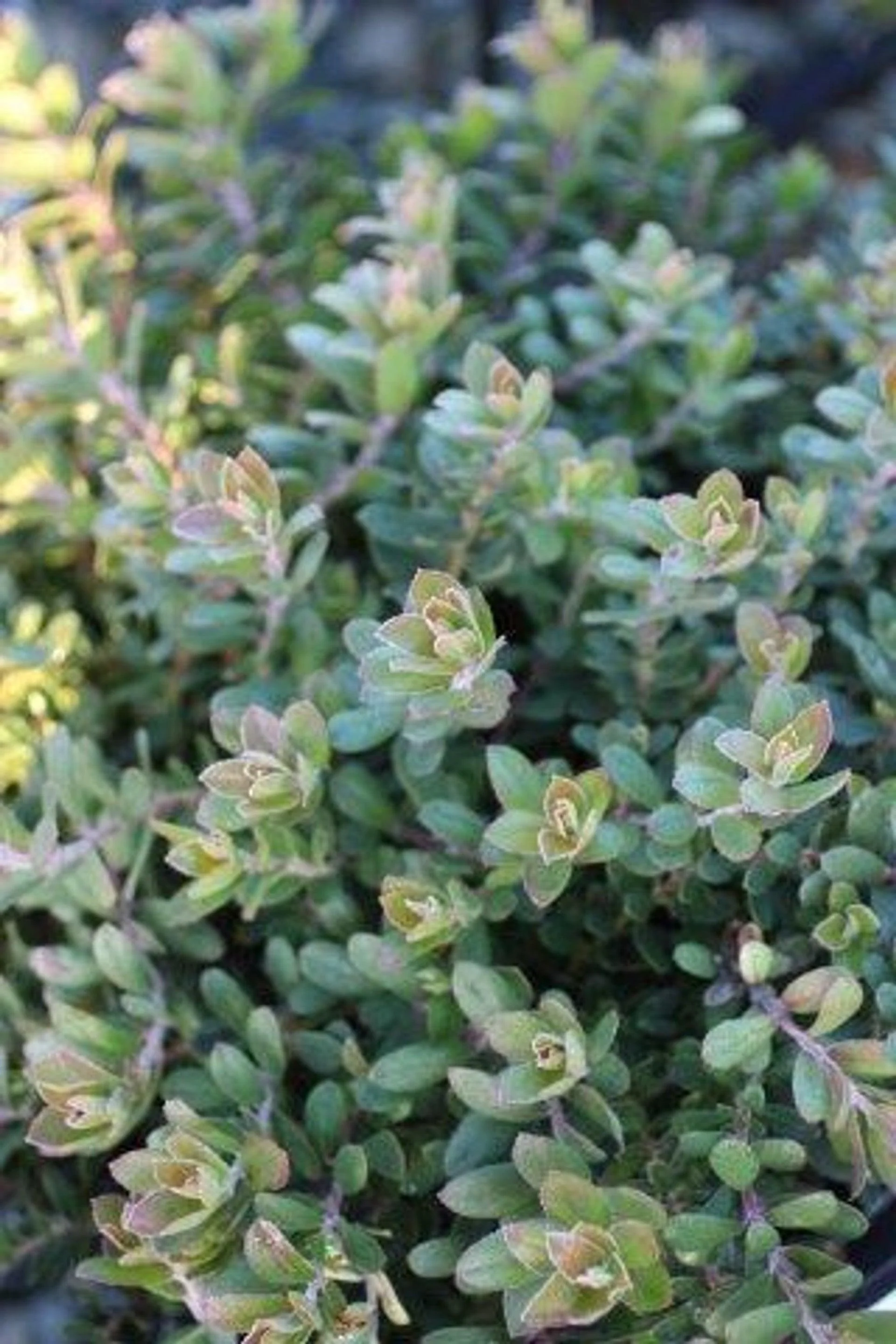
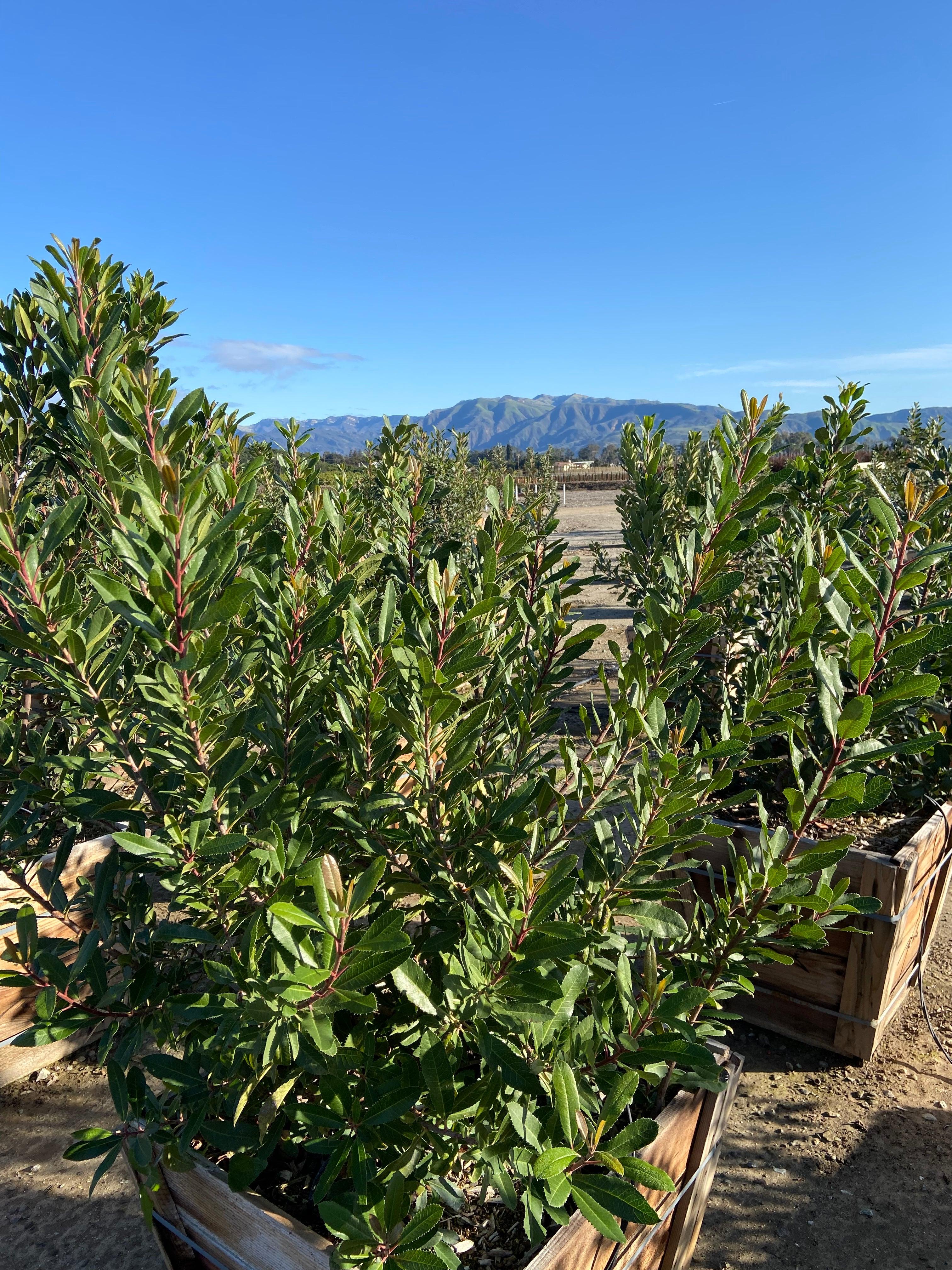
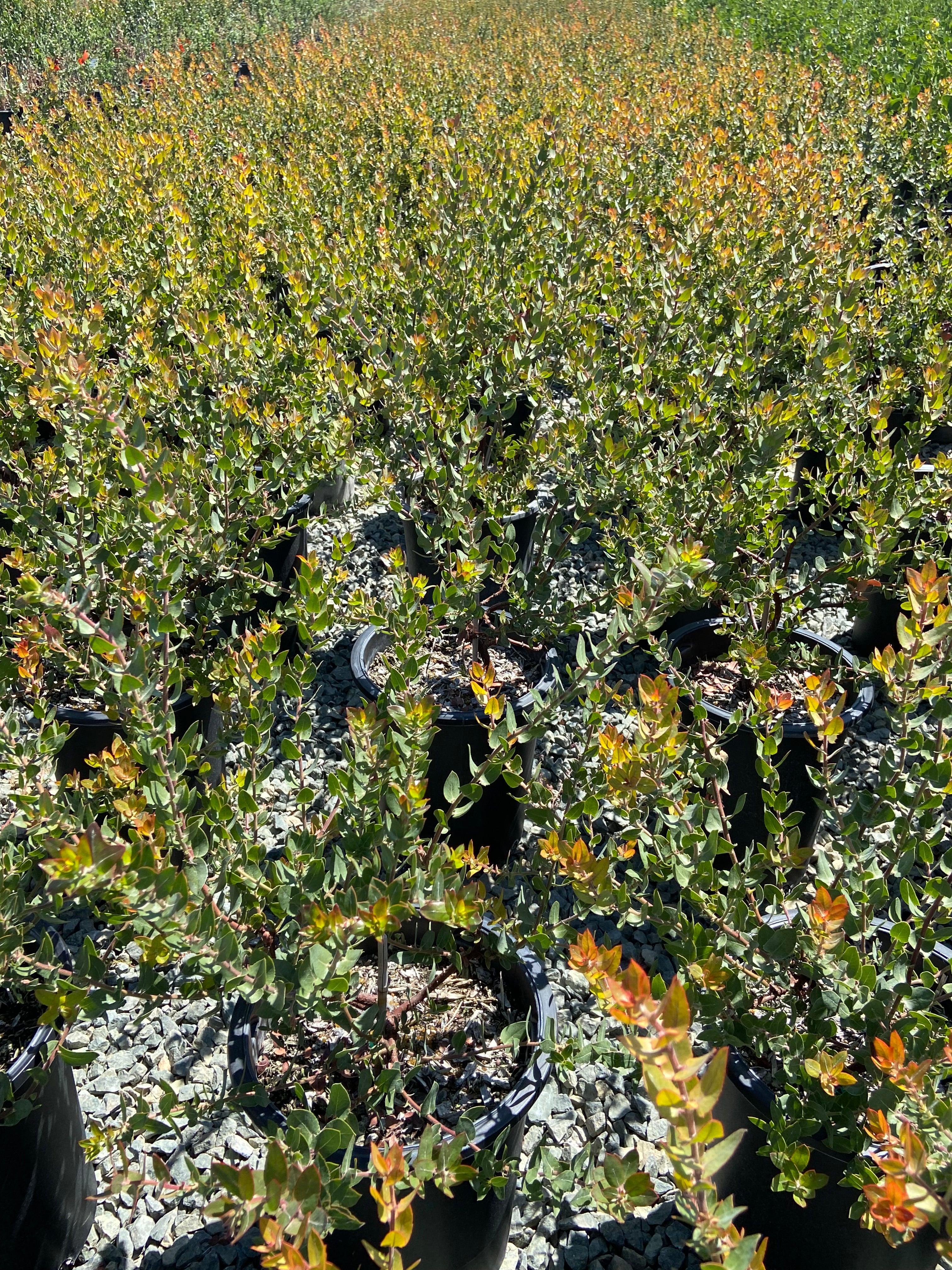
Distinctive bark and foliage – Small, glossy, dark green leaves contrast with smooth red bark for a look that non-native hedges rarely offer.
-
Native wildlife support – The Howard McMinn Manzanita features small, glossy, dark green leaves and produces fragrant white flowers in the spring, which are beneficial to local bird species, especially hummingbirds.
-
Dense enough for design flexibility – Its naturally dense shape can be used formally as a hedge or informally as a rounded native shrub.
-
Less dependent on irrigation – Compared with many traditional evergreen shrubs, mcminn manzanita uses far less water once established and is well suited to drought-conscious California gardens.
How To Grow Howard Mcminn Manzanita
-
Plant it in the right exposure and soil
Choose a site with full sun to part shade. Full sun produces the best bloom, bark color, and dense growth, while some afternoon shade can help in hotter inland California gardens. Plant in well-draining soil; clay, loam, and even serpentine soils can work if water does not sit around the roots. -
Water deeply while roots establish
During the first year, water regularly but not constantly. Deep, infrequent watering encourages the root system to move down into the soil. Avoid shallow daily irrigation and never allow standing water, especially in clay soils. -
Reduce watering and enjoy long-term structure
After the first 2 to 3 years, Howard McMinn Manzanita becomes drought tolerant and usually needs only occasional deep watering. In many gardens, once or twice a month during summer is enough. Growth can be slow in the first 1 to 2 years, but the plant fills out steadily over time and can provide decades of evergreen structure. -
Shape lightly after bloom
If you want a tighter hedge or a more sculptural specimen, shear or prune lightly after the spring bloom. Avoid heavy pruning into old wood; gentle shaping keeps the natural form intact and helps protect the bark display.
Product Details
-
Botanical name: Arctostaphylos densiflora ‘Howard McMinn’
-
Search name: arctostaphylos densiflora howard mcminn; densiflora howard mcminn
-
Common name: Howard McMinn Manzanita
-
Plant type: Woody native evergreen shrub
-
Mature size: This plant typically reaches a mature height and width of 6 to 10 feet, making it suitable for various landscaping applications.
-
USDA hardiness: USDA Zone 7 to 10
-
Sunset zones: Sunset Zones 7 to 9, 14 to 21
-
Sun exposure: Full sun to partial shade; part shade is useful in hotter interior locations
-
Soil: Tolerates clay, loam, serpentine, and lean native soils with good drainage
-
Drainage requirement: Requires good drainage and will not tolerate standing water
-
Water needs: Low once established; typically once or twice monthly in summer, depending on heat and soil
-
Flower season: Late winter through spring
-
Flowers: Dense clusters of urn-shaped white to soft pink flowers; fragrant white flowers are common in spring
-
Fruit: Small brownish-red berries that support wildlife; this is a wildlife fruit plant, not sold as an edible berry crop
-
Foliage: Small, glossy, dark green leaves
-
Wildlife value: Attracts hummingbirds, bumblebees, butterflies, and birds
-
Maintenance: Low; responds well to light shearing
-
Landscape uses: Hedge, privacy screen, slope planting, native garden, wildlife garden, specimen plant, or drought-tolerant foundation shrub; for taller evergreen screening, many California gardens pair it with a Fern Pine hedge for privacy and wind protection
Who It’s For
Ideal for:
-
California homeowners replacing thirsty shrubs with a drought-tolerant native plant
-
Gardeners who want evergreen structure, winter bark, spring flowers, and summer wildlife value
-
Property owners who need a low-maintenance hedge, privacy screen, or wide mounding shrub
-
Native plant enthusiasts looking to support hummingbirds, butterflies, bumblebees, and local bird species
-
Designers building water-wise gardens that still feel lush, shaped, and intentional
-
Homeowners with clay or serpentine soil who need a plant that tolerates challenging conditions when drainage is improved, and who may want to combine it with other California natives like Toyon for berries and habitat value
If you want a California garden that looks good across seasons without heavy irrigation, fertilizer, or constant pruning, Howard McMinn Manzanita fits the job, especially when combined with other evergreen privacy trees and shrubs from our nursery.
Frequently Asked Questions
How fast does Howard McMinn Manzanita grow?
Yardwork recommends planning for slower growth during the first 1 to 2 years while the plant establishes roots. After that, growth becomes more noticeable, and the shrub gradually develops its dense, wide form. Mature plants typically reach 6 to 10 feet tall and wide.
What soil conditions does it prefer?
Howard McMinn Manzanita prefers well-drained soil and performs well in clay, loam, serpentine, and lean native soils when drainage is good. Yardwork does not recommend planting it where irrigation collects, where soil stays soggy, or where water pools around the crown.
How much water does it need once established?
Once established, it is drought-tolerant and requires minimal watering, typically once or twice a month during summer. Yardwork recommends deep, infrequent watering rather than frequent shallow irrigation.
Can it handle clay soil conditions?
Yes. The Howard McMinn Manzanita is tolerant of serpentine or clay soils, and this cultivar can handle various soil types, including clay and loam. The key is good drainage. If your clay soil is compacted or slow to drain, Yardwork recommends planting on a mound, improving soil structure, or booking a soil consultation before planting.
When is the best time to plant?
Fall through early spring is best in most California gardens. Planting during cooler weather gives roots time to establish before summer heat and drought stress arrive.
Does it need pruning?
Only light pruning is usually needed. Howard McMinn Manzanita responds well to light shearing and can be shaped into an informal hedge or specimen plant. Yardwork recommends pruning lightly after bloom rather than cutting hard into old wood.
Are aphid galls a problem?
Plants of this variety may show galls from manzanita leaf fold aphids, which are cosmetic and do not harm the plant’s health. Yardwork generally recommends monitoring rather than treating unless another issue is present.
Ready to Create Your Dream California Garden?
Stop settling for high-water shrubs that need constant trimming, fertilizer, and irrigation. Choose Howard McMinn Manzanita for a native California evergreen shrub with smooth red bark, glossy green leaves, late winter to spring flowers, wildlife-friendly berries, and long-term drought resilience.
Yardwork can help you select the right container size, confirm sun exposure, improve drainage, and prepare your soil before planting. For challenging sites, our expert consultation and soil testing services help protect your investment and improve long-term plant success, including when you add mature trees for instant shade and privacy.
More Images
Howard McMinn Manzanita - Arctostaphylos densiflora 'Howard McMinn'
Howard McMinn Manzanita
Transform Your Garden with California’s Most Versatile Native Evergreen
Howard McMinn Manzanita gives California gardens year-round structure, winter-to-spring bloom, sculptural red bark, and drought-tolerant performance in one low-maintenance evergreen shrub. This native plant is a strong choice when you want a garden that looks established, supports wildlife, and does not depend on constant irrigation.
With dense growth, glossy green leaves, smooth mahogany-red stems, and clusters of small white flowers often touched with pink, Arctostaphylos densiflora ‘Howard McMinn’ adds immediate visual interest and becomes more character-rich over the years. Once established, it handles dry summer conditions with minimal water, making it ideal for water-wise California landscapes.
Why You’ll Love It
-
Striking winter bark – Smooth red to mahogany bark adds sculptural interest when many shrubs look flat or dormant.
-
Excellent hedge potential – Its dense, wide, mounding shape works beautifully as an informal hedge, privacy screen, backdrop plant, or specimen plant; if you need a faster-growing non-native alternative, consider an English Laurel hedge for privacy and screening.
-
Long flowering season – The plant produces dense clusters of urn-shaped white to soft pink flowers from late winter through spring, blooming later and longer than most other manzanitas.
-
Pollinator and wildlife value – Howard McMinn Manzanita attracts hummingbirds, attracts butterflies, and draws bumblebees to its flowers; small brownish-red berries provide fruit for birds and other wildlife.
-
Water-saving once established – This drought-tolerant evergreen shrub requires minimal watering after establishment, typically once or twice a month during summer.
-
Built for California conditions – The Howard McMinn Manzanita is a woody evergreen shrub that thrives in USDA Zones 7 to 10 and Sunset Zones 7 to 9, 14 to 21; for a larger small-tree option with similar bark and drought performance, explore Dr. Hurd Manzanita for California landscapes.
-
Flexible sun exposure – This plant prefers full sun to partial shade, making it versatile for various garden settings, including sites with part shade in hotter inland areas.
-
Handles tougher soils – The Howard McMinn Manzanita is tolerant of serpentine or clay soils, which makes it suitable for challenging soil conditions when good drainage is present.
-
Low-maintenance shaping – Howard McMinn Manzanita responds well to light shearing and can be shaped into an informal hedge or specimen plant.
-
Deer resistant and dependable – In many California gardens, it is deer resistant and easier to maintain than thirsty non-native shrubs.
What Makes It Different
Most landscape shrubs used for screening or foundation planting need frequent water, repeated pruning, fertilizer, or pest management to stay presentable. Howard McMinn Manzanita delivers evergreen structure, seasonal flowers, smooth red bark, and strong drought performance while staying naturally beautiful with minimal intervention.
-
More adaptable than many manzanitas – It is adaptable, forgiving, and visually striking, unlike many wild manzanita species that fail in garden settings.
-
Better suited to real garden soils – This cultivar can handle various soil types, including clay and loam, but requires good drainage and will not tolerate standing water.
-
Distinctive bark and foliage – Small, glossy, dark green leaves contrast with smooth red bark for a look that non-native hedges rarely offer.
-
Native wildlife support – The Howard McMinn Manzanita features small, glossy, dark green leaves and produces fragrant white flowers in the spring, which are beneficial to local bird species, especially hummingbirds.
-
Dense enough for design flexibility – Its naturally dense shape can be used formally as a hedge or informally as a rounded native shrub.
-
Less dependent on irrigation – Compared with many traditional evergreen shrubs, mcminn manzanita uses far less water once established and is well suited to drought-conscious California gardens.
How To Grow Howard Mcminn Manzanita
-
Plant it in the right exposure and soil
Choose a site with full sun to part shade. Full sun produces the best bloom, bark color, and dense growth, while some afternoon shade can help in hotter inland California gardens. Plant in well-draining soil; clay, loam, and even serpentine soils can work if water does not sit around the roots. -
Water deeply while roots establish
During the first year, water regularly but not constantly. Deep, infrequent watering encourages the root system to move down into the soil. Avoid shallow daily irrigation and never allow standing water, especially in clay soils. -
Reduce watering and enjoy long-term structure
After the first 2 to 3 years, Howard McMinn Manzanita becomes drought tolerant and usually needs only occasional deep watering. In many gardens, once or twice a month during summer is enough. Growth can be slow in the first 1 to 2 years, but the plant fills out steadily over time and can provide decades of evergreen structure. -
Shape lightly after bloom
If you want a tighter hedge or a more sculptural specimen, shear or prune lightly after the spring bloom. Avoid heavy pruning into old wood; gentle shaping keeps the natural form intact and helps protect the bark display.
Product Details
-
Botanical name: Arctostaphylos densiflora ‘Howard McMinn’
-
Search name: arctostaphylos densiflora howard mcminn; densiflora howard mcminn
-
Common name: Howard McMinn Manzanita
-
Plant type: Woody native evergreen shrub
-
Mature size: This plant typically reaches a mature height and width of 6 to 10 feet, making it suitable for various landscaping applications.
-
USDA hardiness: USDA Zone 7 to 10
-
Sunset zones: Sunset Zones 7 to 9, 14 to 21
-
Sun exposure: Full sun to partial shade; part shade is useful in hotter interior locations
-
Soil: Tolerates clay, loam, serpentine, and lean native soils with good drainage
-
Drainage requirement: Requires good drainage and will not tolerate standing water
-
Water needs: Low once established; typically once or twice monthly in summer, depending on heat and soil
-
Flower season: Late winter through spring
-
Flowers: Dense clusters of urn-shaped white to soft pink flowers; fragrant white flowers are common in spring
-
Fruit: Small brownish-red berries that support wildlife; this is a wildlife fruit plant, not sold as an edible berry crop
-
Foliage: Small, glossy, dark green leaves
-
Wildlife value: Attracts hummingbirds, bumblebees, butterflies, and birds
-
Maintenance: Low; responds well to light shearing
-
Landscape uses: Hedge, privacy screen, slope planting, native garden, wildlife garden, specimen plant, or drought-tolerant foundation shrub; for taller evergreen screening, many California gardens pair it with a Fern Pine hedge for privacy and wind protection
Who It’s For
Ideal for:
-
California homeowners replacing thirsty shrubs with a drought-tolerant native plant
-
Gardeners who want evergreen structure, winter bark, spring flowers, and summer wildlife value
-
Property owners who need a low-maintenance hedge, privacy screen, or wide mounding shrub
-
Native plant enthusiasts looking to support hummingbirds, butterflies, bumblebees, and local bird species
-
Designers building water-wise gardens that still feel lush, shaped, and intentional
-
Homeowners with clay or serpentine soil who need a plant that tolerates challenging conditions when drainage is improved, and who may want to combine it with other California natives like Toyon for berries and habitat value
If you want a California garden that looks good across seasons without heavy irrigation, fertilizer, or constant pruning, Howard McMinn Manzanita fits the job, especially when combined with other evergreen privacy trees and shrubs from our nursery.
Frequently Asked Questions
How fast does Howard McMinn Manzanita grow?
Yardwork recommends planning for slower growth during the first 1 to 2 years while the plant establishes roots. After that, growth becomes more noticeable, and the shrub gradually develops its dense, wide form. Mature plants typically reach 6 to 10 feet tall and wide.
What soil conditions does it prefer?
Howard McMinn Manzanita prefers well-drained soil and performs well in clay, loam, serpentine, and lean native soils when drainage is good. Yardwork does not recommend planting it where irrigation collects, where soil stays soggy, or where water pools around the crown.
How much water does it need once established?
Once established, it is drought-tolerant and requires minimal watering, typically once or twice a month during summer. Yardwork recommends deep, infrequent watering rather than frequent shallow irrigation.
Can it handle clay soil conditions?
Yes. The Howard McMinn Manzanita is tolerant of serpentine or clay soils, and this cultivar can handle various soil types, including clay and loam. The key is good drainage. If your clay soil is compacted or slow to drain, Yardwork recommends planting on a mound, improving soil structure, or booking a soil consultation before planting.
When is the best time to plant?
Fall through early spring is best in most California gardens. Planting during cooler weather gives roots time to establish before summer heat and drought stress arrive.
Does it need pruning?
Only light pruning is usually needed. Howard McMinn Manzanita responds well to light shearing and can be shaped into an informal hedge or specimen plant. Yardwork recommends pruning lightly after bloom rather than cutting hard into old wood.
Are aphid galls a problem?
Plants of this variety may show galls from manzanita leaf fold aphids, which are cosmetic and do not harm the plant’s health. Yardwork generally recommends monitoring rather than treating unless another issue is present.
Ready to Create Your Dream California Garden?
Stop settling for high-water shrubs that need constant trimming, fertilizer, and irrigation. Choose Howard McMinn Manzanita for a native California evergreen shrub with smooth red bark, glossy green leaves, late winter to spring flowers, wildlife-friendly berries, and long-term drought resilience.
Yardwork can help you select the right container size, confirm sun exposure, improve drainage, and prepare your soil before planting. For challenging sites, our expert consultation and soil testing services help protect your investment and improve long-term plant success, including when you add mature trees for instant shade and privacy.
Product Information
Product Information
Shipping & Returns
Shipping & Returns
Description
Howard McMinn Manzanita
Transform Your Garden with California’s Most Versatile Native Evergreen
Howard McMinn Manzanita gives California gardens year-round structure, winter-to-spring bloom, sculptural red bark, and drought-tolerant performance in one low-maintenance evergreen shrub. This native plant is a strong choice when you want a garden that looks established, supports wildlife, and does not depend on constant irrigation.
With dense growth, glossy green leaves, smooth mahogany-red stems, and clusters of small white flowers often touched with pink, Arctostaphylos densiflora ‘Howard McMinn’ adds immediate visual interest and becomes more character-rich over the years. Once established, it handles dry summer conditions with minimal water, making it ideal for water-wise California landscapes.
Why You’ll Love It
-
Striking winter bark – Smooth red to mahogany bark adds sculptural interest when many shrubs look flat or dormant.
-
Excellent hedge potential – Its dense, wide, mounding shape works beautifully as an informal hedge, privacy screen, backdrop plant, or specimen plant; if you need a faster-growing non-native alternative, consider an English Laurel hedge for privacy and screening.
-
Long flowering season – The plant produces dense clusters of urn-shaped white to soft pink flowers from late winter through spring, blooming later and longer than most other manzanitas.
-
Pollinator and wildlife value – Howard McMinn Manzanita attracts hummingbirds, attracts butterflies, and draws bumblebees to its flowers; small brownish-red berries provide fruit for birds and other wildlife.
-
Water-saving once established – This drought-tolerant evergreen shrub requires minimal watering after establishment, typically once or twice a month during summer.
-
Built for California conditions – The Howard McMinn Manzanita is a woody evergreen shrub that thrives in USDA Zones 7 to 10 and Sunset Zones 7 to 9, 14 to 21; for a larger small-tree option with similar bark and drought performance, explore Dr. Hurd Manzanita for California landscapes.
-
Flexible sun exposure – This plant prefers full sun to partial shade, making it versatile for various garden settings, including sites with part shade in hotter inland areas.
-
Handles tougher soils – The Howard McMinn Manzanita is tolerant of serpentine or clay soils, which makes it suitable for challenging soil conditions when good drainage is present.
-
Low-maintenance shaping – Howard McMinn Manzanita responds well to light shearing and can be shaped into an informal hedge or specimen plant.
-
Deer resistant and dependable – In many California gardens, it is deer resistant and easier to maintain than thirsty non-native shrubs.
What Makes It Different
Most landscape shrubs used for screening or foundation planting need frequent water, repeated pruning, fertilizer, or pest management to stay presentable. Howard McMinn Manzanita delivers evergreen structure, seasonal flowers, smooth red bark, and strong drought performance while staying naturally beautiful with minimal intervention.
-
More adaptable than many manzanitas – It is adaptable, forgiving, and visually striking, unlike many wild manzanita species that fail in garden settings.
-
Better suited to real garden soils – This cultivar can handle various soil types, including clay and loam, but requires good drainage and will not tolerate standing water.
-
Distinctive bark and foliage – Small, glossy, dark green leaves contrast with smooth red bark for a look that non-native hedges rarely offer.
-
Native wildlife support – The Howard McMinn Manzanita features small, glossy, dark green leaves and produces fragrant white flowers in the spring, which are beneficial to local bird species, especially hummingbirds.
-
Dense enough for design flexibility – Its naturally dense shape can be used formally as a hedge or informally as a rounded native shrub.
-
Less dependent on irrigation – Compared with many traditional evergreen shrubs, mcminn manzanita uses far less water once established and is well suited to drought-conscious California gardens.
How To Grow Howard Mcminn Manzanita
-
Plant it in the right exposure and soil
Choose a site with full sun to part shade. Full sun produces the best bloom, bark color, and dense growth, while some afternoon shade can help in hotter inland California gardens. Plant in well-draining soil; clay, loam, and even serpentine soils can work if water does not sit around the roots. -
Water deeply while roots establish
During the first year, water regularly but not constantly. Deep, infrequent watering encourages the root system to move down into the soil. Avoid shallow daily irrigation and never allow standing water, especially in clay soils. -
Reduce watering and enjoy long-term structure
After the first 2 to 3 years, Howard McMinn Manzanita becomes drought tolerant and usually needs only occasional deep watering. In many gardens, once or twice a month during summer is enough. Growth can be slow in the first 1 to 2 years, but the plant fills out steadily over time and can provide decades of evergreen structure. -
Shape lightly after bloom
If you want a tighter hedge or a more sculptural specimen, shear or prune lightly after the spring bloom. Avoid heavy pruning into old wood; gentle shaping keeps the natural form intact and helps protect the bark display.
Product Details
-
Botanical name: Arctostaphylos densiflora ‘Howard McMinn’
-
Search name: arctostaphylos densiflora howard mcminn; densiflora howard mcminn
-
Common name: Howard McMinn Manzanita
-
Plant type: Woody native evergreen shrub
-
Mature size: This plant typically reaches a mature height and width of 6 to 10 feet, making it suitable for various landscaping applications.
-
USDA hardiness: USDA Zone 7 to 10
-
Sunset zones: Sunset Zones 7 to 9, 14 to 21
-
Sun exposure: Full sun to partial shade; part shade is useful in hotter interior locations
-
Soil: Tolerates clay, loam, serpentine, and lean native soils with good drainage
-
Drainage requirement: Requires good drainage and will not tolerate standing water
-
Water needs: Low once established; typically once or twice monthly in summer, depending on heat and soil
-
Flower season: Late winter through spring
-
Flowers: Dense clusters of urn-shaped white to soft pink flowers; fragrant white flowers are common in spring
-
Fruit: Small brownish-red berries that support wildlife; this is a wildlife fruit plant, not sold as an edible berry crop
-
Foliage: Small, glossy, dark green leaves
-
Wildlife value: Attracts hummingbirds, bumblebees, butterflies, and birds
-
Maintenance: Low; responds well to light shearing
-
Landscape uses: Hedge, privacy screen, slope planting, native garden, wildlife garden, specimen plant, or drought-tolerant foundation shrub; for taller evergreen screening, many California gardens pair it with a Fern Pine hedge for privacy and wind protection
Who It’s For
Ideal for:
-
California homeowners replacing thirsty shrubs with a drought-tolerant native plant
-
Gardeners who want evergreen structure, winter bark, spring flowers, and summer wildlife value
-
Property owners who need a low-maintenance hedge, privacy screen, or wide mounding shrub
-
Native plant enthusiasts looking to support hummingbirds, butterflies, bumblebees, and local bird species
-
Designers building water-wise gardens that still feel lush, shaped, and intentional
-
Homeowners with clay or serpentine soil who need a plant that tolerates challenging conditions when drainage is improved, and who may want to combine it with other California natives like Toyon for berries and habitat value
If you want a California garden that looks good across seasons without heavy irrigation, fertilizer, or constant pruning, Howard McMinn Manzanita fits the job, especially when combined with other evergreen privacy trees and shrubs from our nursery.
Frequently Asked Questions
How fast does Howard McMinn Manzanita grow?
Yardwork recommends planning for slower growth during the first 1 to 2 years while the plant establishes roots. After that, growth becomes more noticeable, and the shrub gradually develops its dense, wide form. Mature plants typically reach 6 to 10 feet tall and wide.
What soil conditions does it prefer?
Howard McMinn Manzanita prefers well-drained soil and performs well in clay, loam, serpentine, and lean native soils when drainage is good. Yardwork does not recommend planting it where irrigation collects, where soil stays soggy, or where water pools around the crown.
How much water does it need once established?
Once established, it is drought-tolerant and requires minimal watering, typically once or twice a month during summer. Yardwork recommends deep, infrequent watering rather than frequent shallow irrigation.
Can it handle clay soil conditions?
Yes. The Howard McMinn Manzanita is tolerant of serpentine or clay soils, and this cultivar can handle various soil types, including clay and loam. The key is good drainage. If your clay soil is compacted or slow to drain, Yardwork recommends planting on a mound, improving soil structure, or booking a soil consultation before planting.
When is the best time to plant?
Fall through early spring is best in most California gardens. Planting during cooler weather gives roots time to establish before summer heat and drought stress arrive.
Does it need pruning?
Only light pruning is usually needed. Howard McMinn Manzanita responds well to light shearing and can be shaped into an informal hedge or specimen plant. Yardwork recommends pruning lightly after bloom rather than cutting hard into old wood.
Are aphid galls a problem?
Plants of this variety may show galls from manzanita leaf fold aphids, which are cosmetic and do not harm the plant’s health. Yardwork generally recommends monitoring rather than treating unless another issue is present.
Ready to Create Your Dream California Garden?
Stop settling for high-water shrubs that need constant trimming, fertilizer, and irrigation. Choose Howard McMinn Manzanita for a native California evergreen shrub with smooth red bark, glossy green leaves, late winter to spring flowers, wildlife-friendly berries, and long-term drought resilience.
Yardwork can help you select the right container size, confirm sun exposure, improve drainage, and prepare your soil before planting. For challenging sites, our expert consultation and soil testing services help protect your investment and improve long-term plant success, including when you add mature trees for instant shade and privacy.