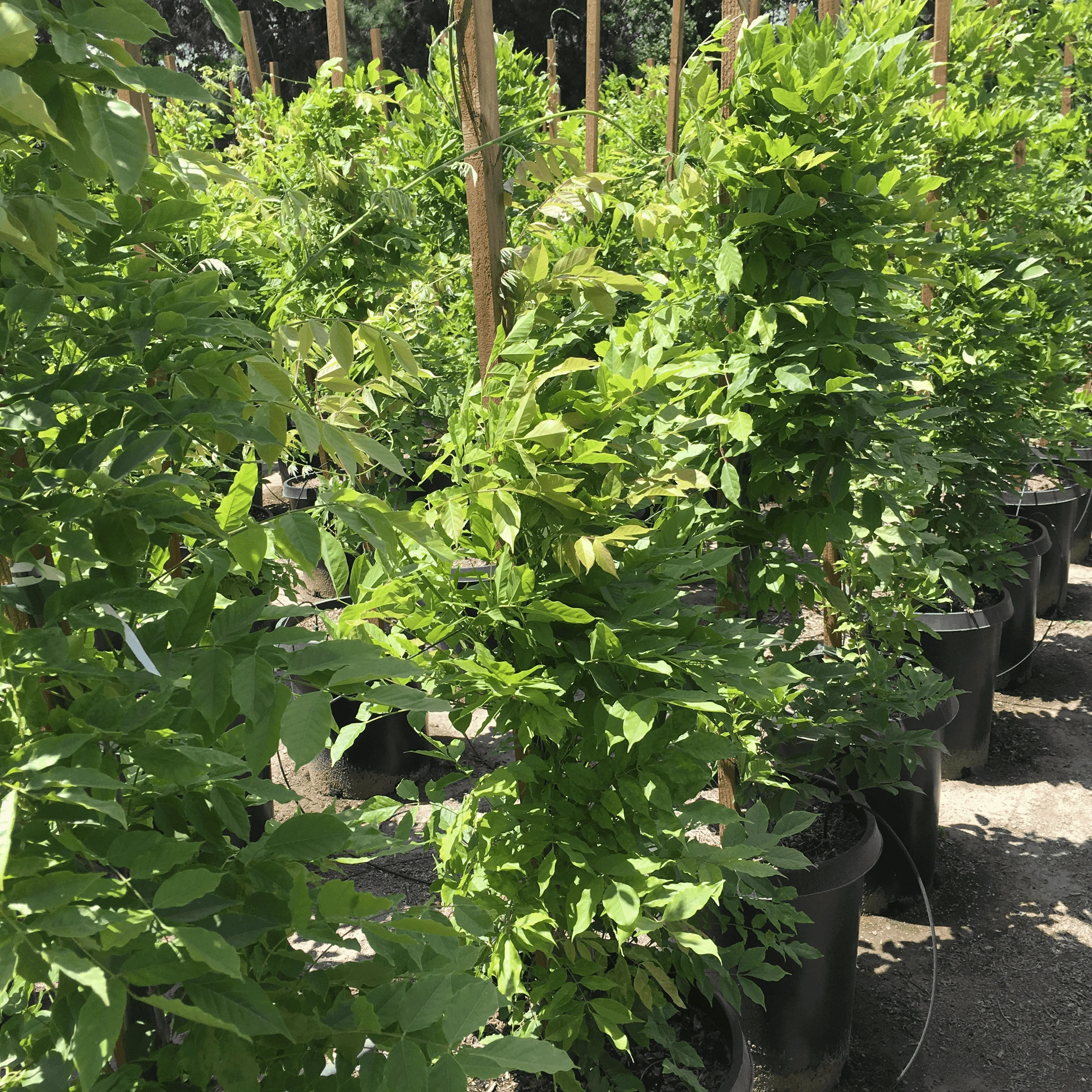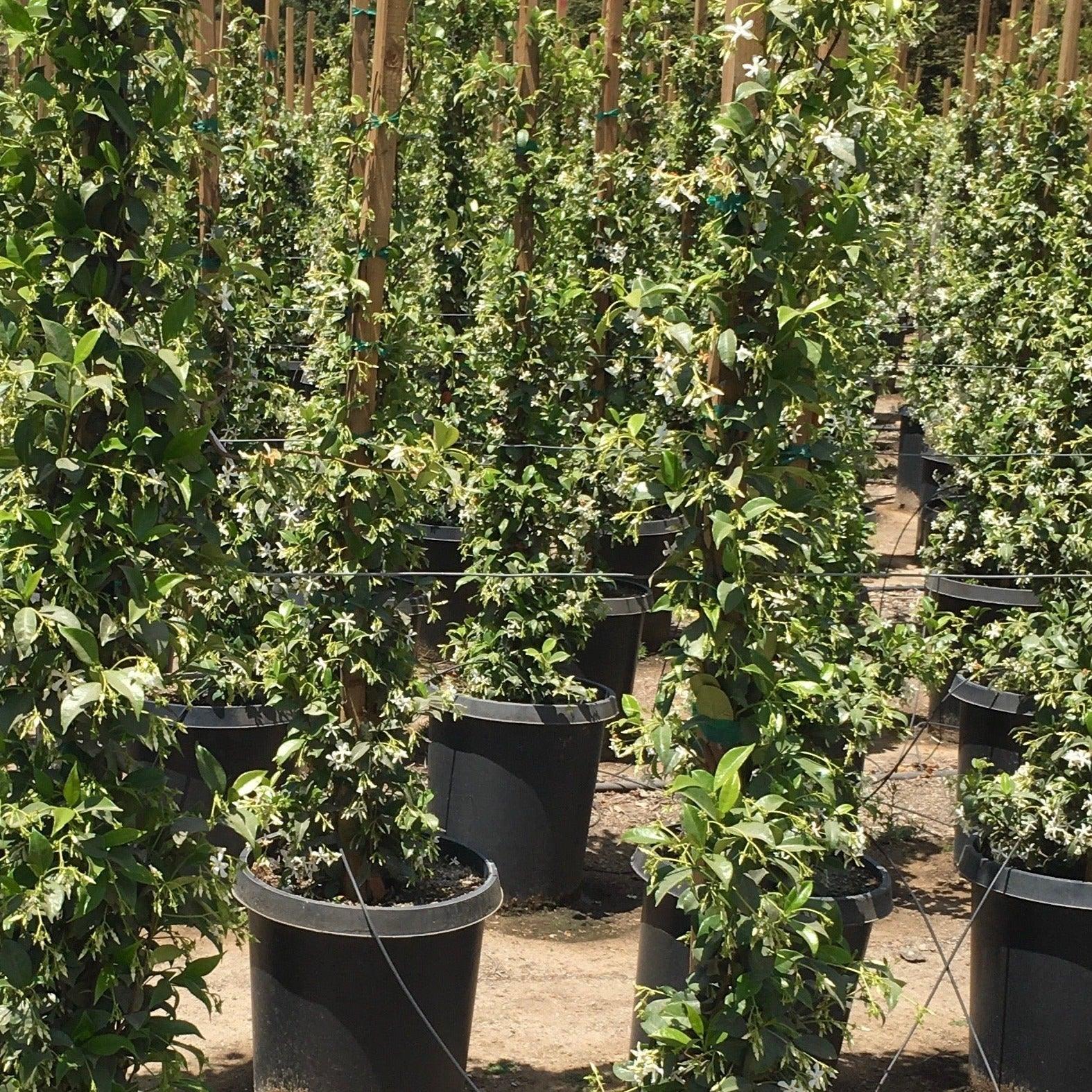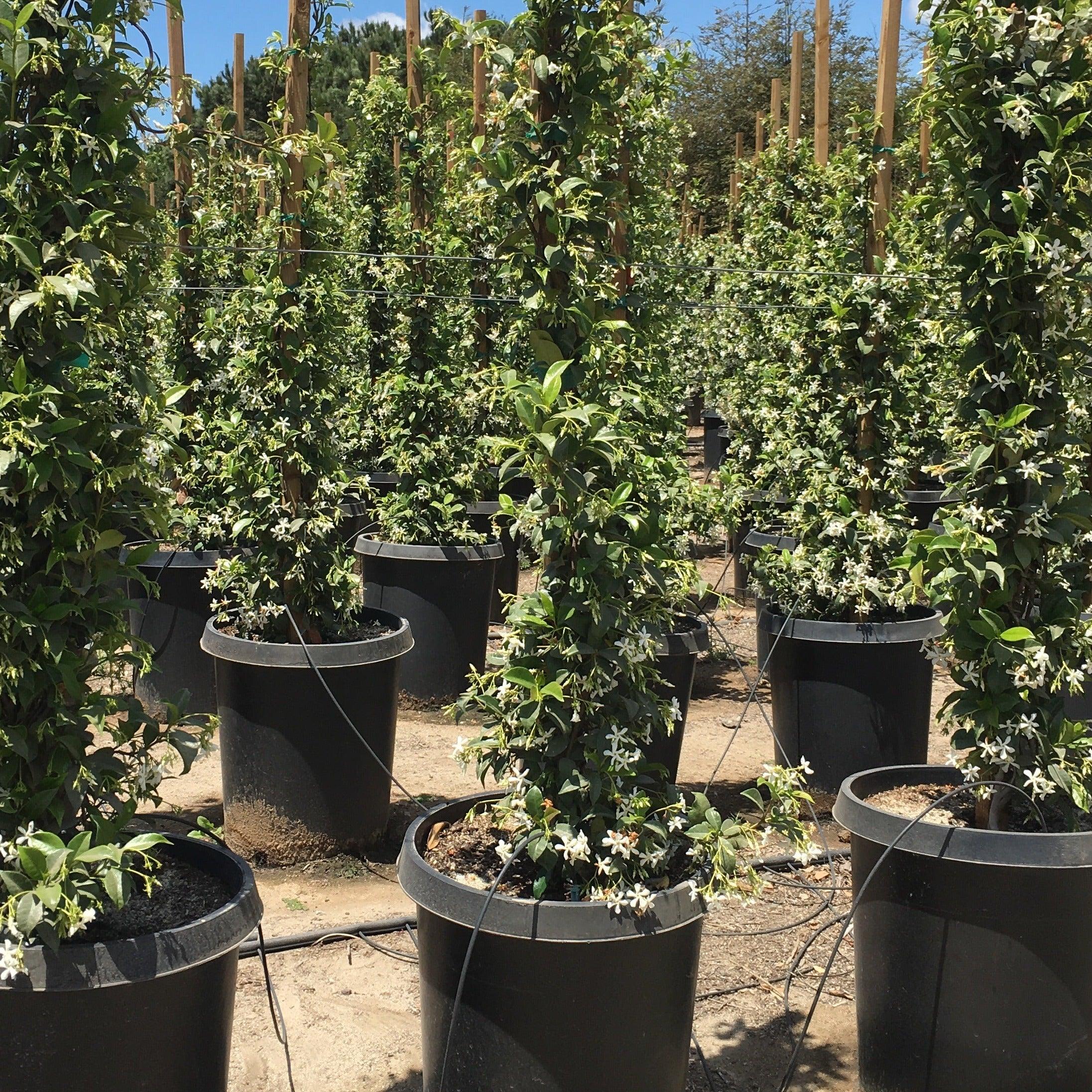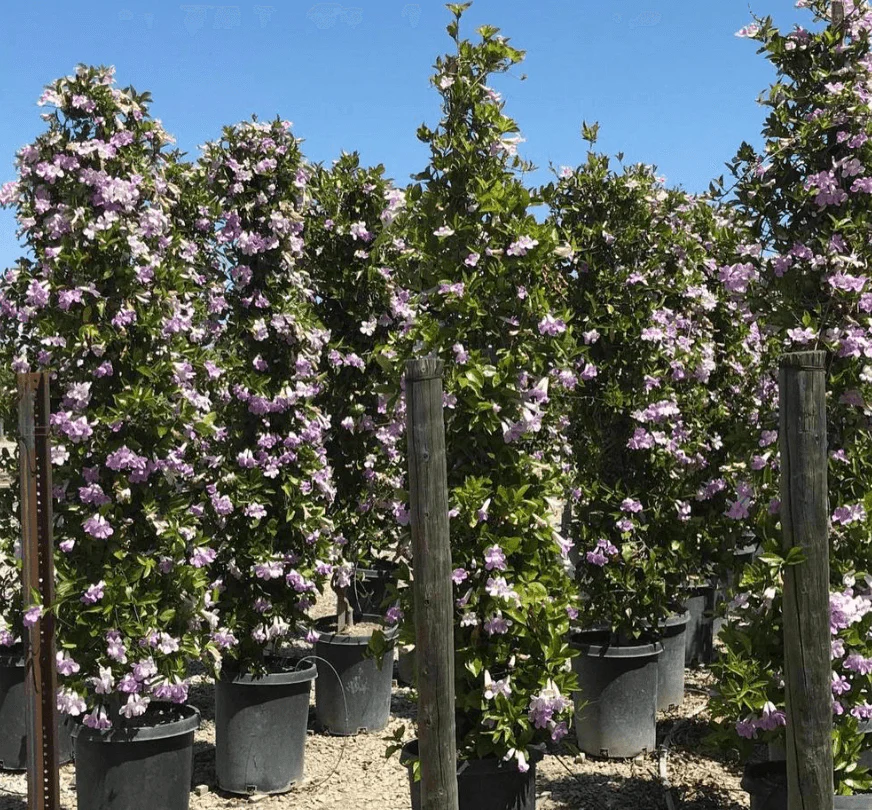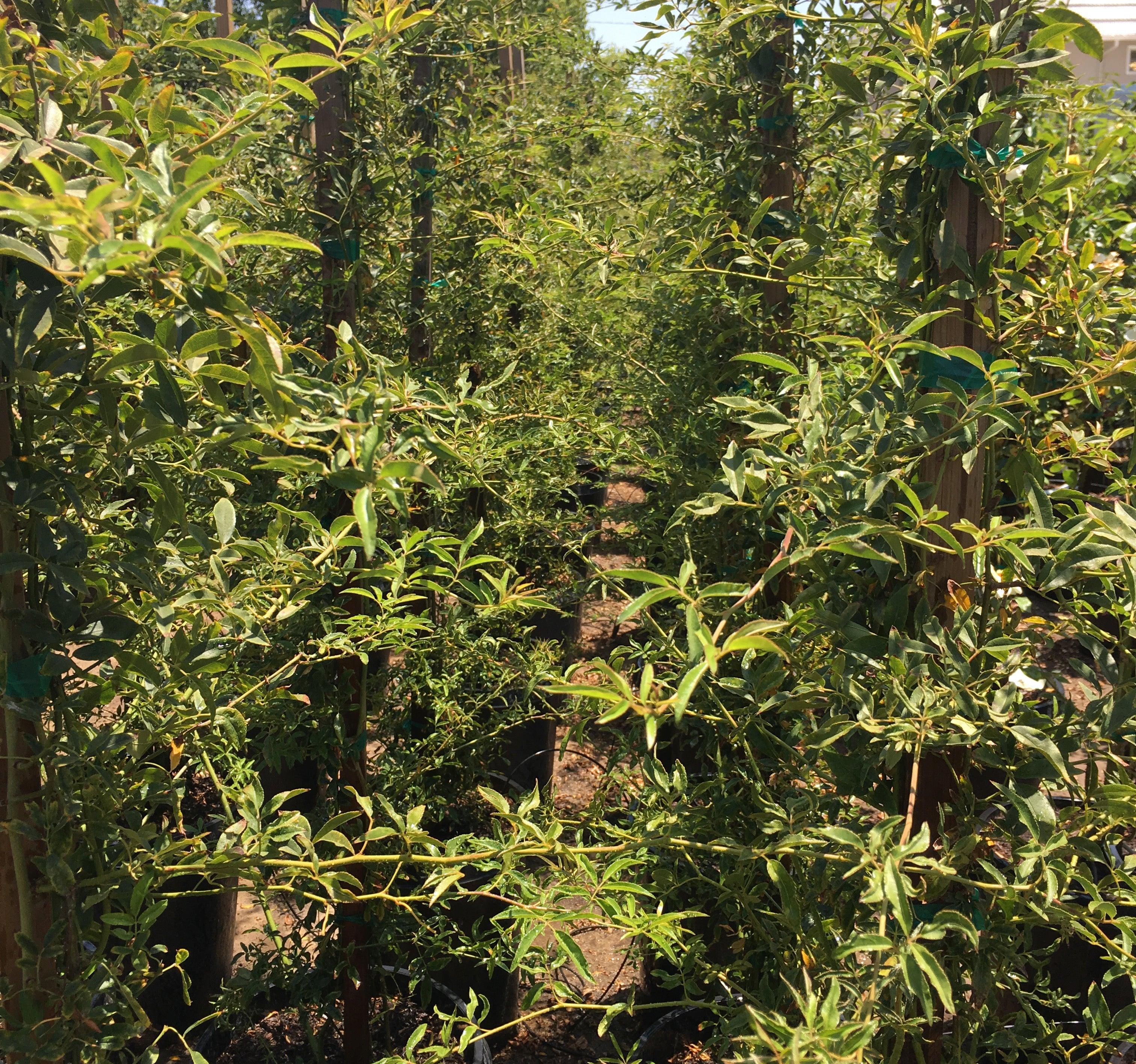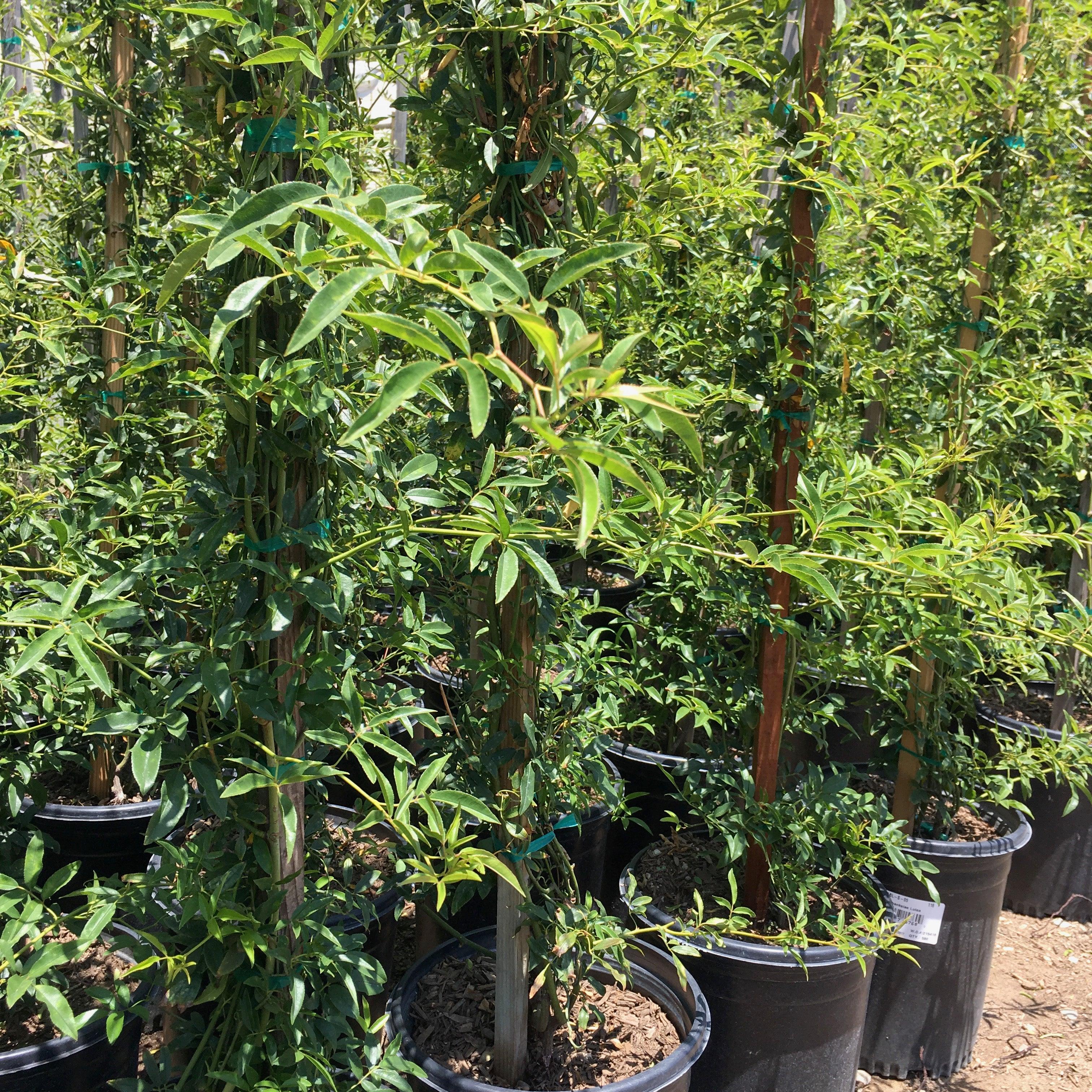
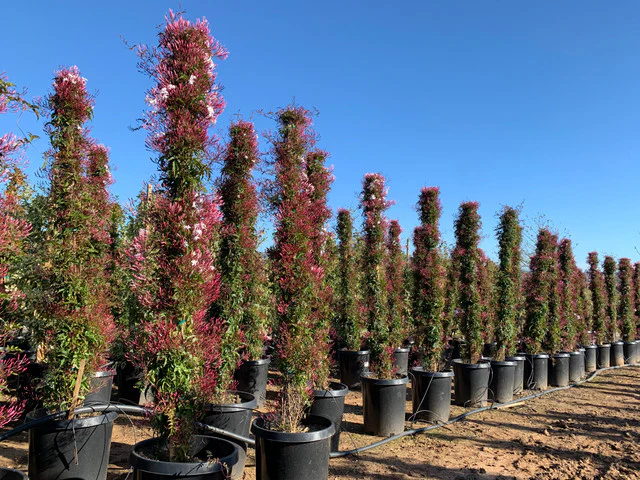
Pink Jasmine (Jasmine Polyanthum)
Fragrant Winter Blooms When Your Garden Needs Them Most
Pink Jasmine gives your garden abundant fragrant flowers in late winter and early spring, bringing star-shaped white blooms and sweet perfume into the season when most outdoor plants are still quiet.
Why You’ll Love Pink Jasmine
-
Intensely fragrant white flowers – Deep pink buds open into white flowers with a rich, sweet scent often compared to jasmine perfume or french perfume.
-
Fast coverage for outdoor spaces – This fast growing vine quickly softens old fences, a chain link fence, a grid trellis, arbors, and garden walls.
-
Winter-to-spring color – The pink jasmine bloom typically arrives from late winter through spring, often lasting 2+ months when few other flowers are open.
-
A reliable California performer – Pink Jasmine (Jasminum polyanthum) thrives in full sun to partial shade, with bright light promoting stronger growth and better flowering.
-
Easy to enjoy once established – It is largely unbothered by severe outdoor pests or diseases and exhibits strong deer resistance.
Pink jasmine plants also support a more active garden. A single vine can attract birds, bees, butterflies, and hummingbirds, promoting local wildlife biodiversity. Pink jasmine is non-toxic to cats and dogs, making it a safe choice for pet owners.
What Makes Pink Jasmine Different
Most jasmine varieties are known for warm-season flowers. Pink Jasmine is different because it delivers its strongest jasmine bloom in winter and early spring, when fragrance is most noticeable and most appreciated.
Pink Jasmine (Jasminum polyanthum) has:
-
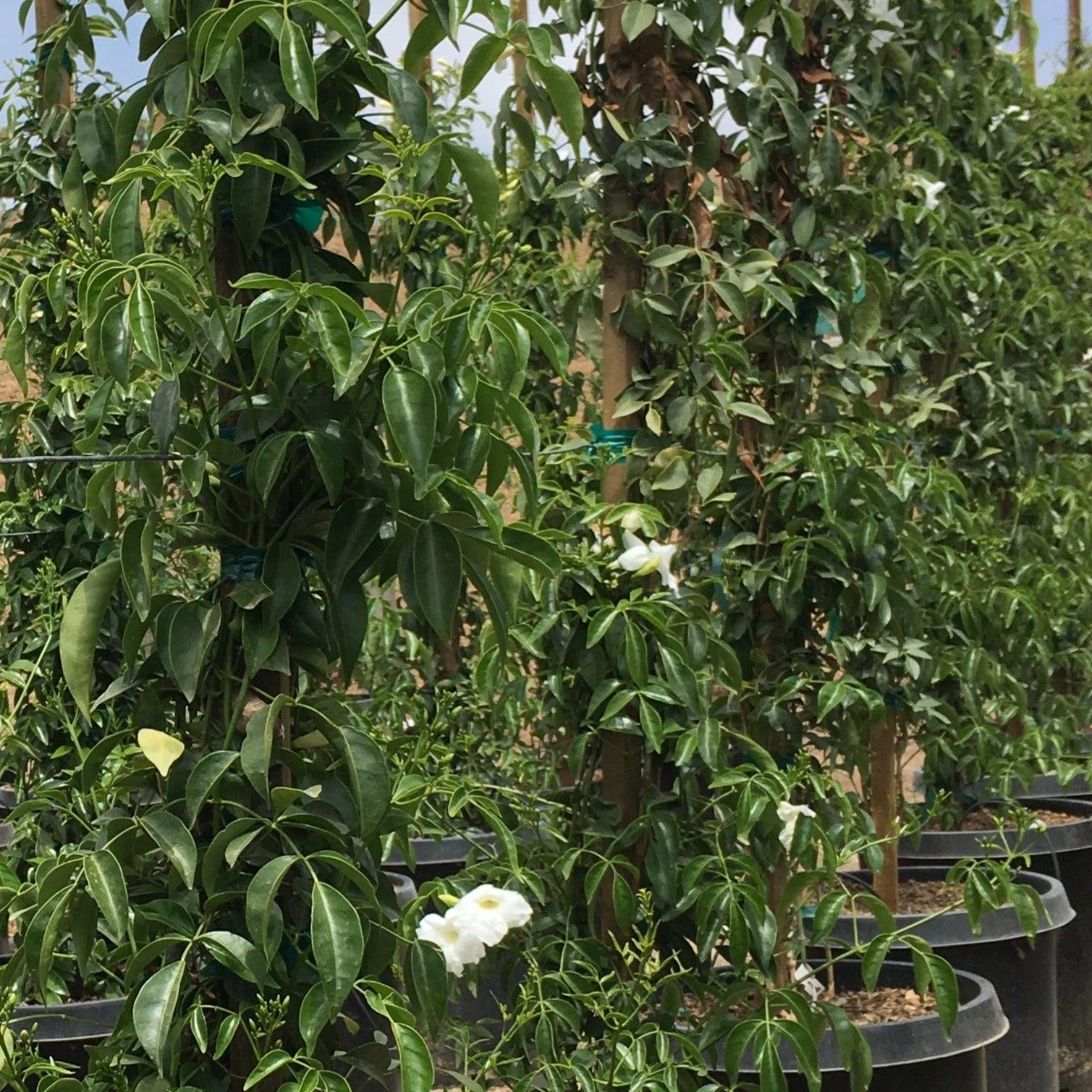
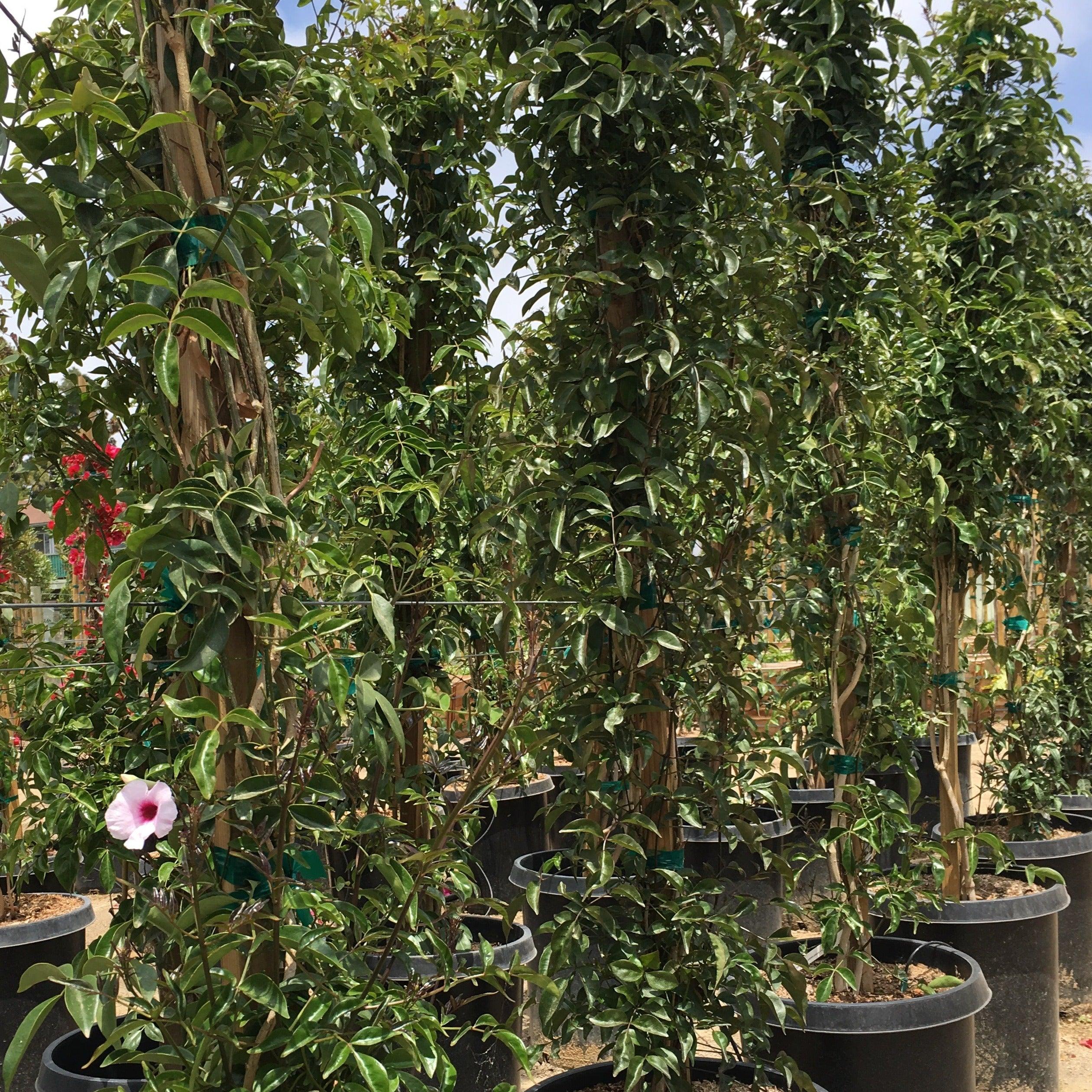
Pink buds that open to white flowers – The plant produces large clusters of deep pink buds that open into starry white flowers, filling the air with a rich, sweet perfume, making it one of the most fragrant flowering vines.
-
More cold hardy than tropical jasmine – Pink Jasmine (Jasminum polyanthum) thrives best in USDA Zones 8-10, where it can be grown outdoors year-round in mild climates, but in colder regions, it is recommended to grow it in pots and move it indoors before frost.
-
Strong growth without losing garden usefulness – Pink Jasmine (Jasminum polyanthum) is a vigorous evergreen vine that can grow 15 to 20 feet tall and 6 to 10 feet wide, depending on support and pruning.
Pink jasmine belongs in landscapes where scent matters as much as coverage. It is an evergreen vine in mild climates, though older plants may become semi deciduous after colder nights or mild frosts. Compared with a tropical jasmine, this popular jasmine is more adaptable for Southern California, coastal gardens, and protected inland patios.
How Pink Jasmine Transforms Your Space
-
Plant near patios, doorways, or walkways
Pink Jasmine is best suited for planting near patios, doorways, or seating areas where its fragrance can be appreciated up close. When you plant pink jasmine near a window or outdoor room, the fragrance wafts inside during the flowering season. -
Train the twining vine onto support
As the climbing vine establishes, guide new growth onto a trellis, arbor, fence, wall, or pergola. Pink Jasmine can be effectively used on trellises, arbors, and fences, providing a fragrant and visually appealing vertical element in landscape design. -
Enjoy months of fragrant blooms
Pink Jasmine typically blooms from late winter to spring, often producing a heavy flush of flowers when few other plants are in bloom, enhancing its appeal in gardens.
For best results, grow pink jasmine in full sun to part shade. Bright light promotes stronger growth and better flowering, while too much shade can lead to leggy growth and reduced flowering. Water regularly while the plant establishes, then water deeply when the soil begins to dry.
Plant Specifications
-
Mature Size: 15-20 feet tall, 6-10 feet wide
-
USDA Hardiness Zones: 8-11; best performance is often in USDA Zone 8-10 mild climates
-
Sun Requirements: Full sun to partial shade; bright light supports stronger blooms
-
Soil Needs: Well drained soil with excellent drainage and regular moisture
-
Growth Rate: Fast-growing, up to 6 inches per day in favorable growing season conditions
-
Bloom Time: Late winter through spring, often beginning in late January or February
-
Flower Color: Pink flower buds opening to fragrant white flowers
-
Foliage: The leaves of Pink Jasmine are composed of 5-7 leaflets that range from bright green to deeper green, providing a lush backdrop for its flowers.
-
Watering: Pink Jasmine requires regular watering, especially while establishing, and prefers well-drained soil; it can tolerate brief dry periods once established but thrives with consistent moisture for the best growth and flowering.
-
Pruning: Prune Pink Jasmine immediately after flowering to control growth and encourage a dense, flower-filled framework; this timing is crucial as the plant blooms on growth that developed earlier.
-
Landscape Uses: Pink jasmine can be utilized as a privacy screen, ground cover, container plant, or for decorative vertical accents such as over arbors and trellises.
-
Companion Plants: Companion plants for Pink Jasmine include camellias, hellebores, lavender, climbing roses, and salvia, which can enhance the overall design and extend the flowering season.
This many flowered jasmine is a strong grower, so give it a structure early. Without support, stems can roam unsupported and behave more like a loose ground cover. With a trellis or fence, pink jasmine grow habits become easier to guide, shape, and prune.
Who It’s Perfect For
Ideal for:
-
California homeowners wanting flowers, foliage, and fragrance through winter
-
Gardeners looking for fragrant plants near patios, doors, decks, and seating areas
-
Landscape designers creating romantic garden rooms with dense clusters of blooms
-
Anyone needing fast-growing screening for privacy, coverage, or vertical accents
-
Plant lovers in colder regions who want container-friendly indoor plants during frost season
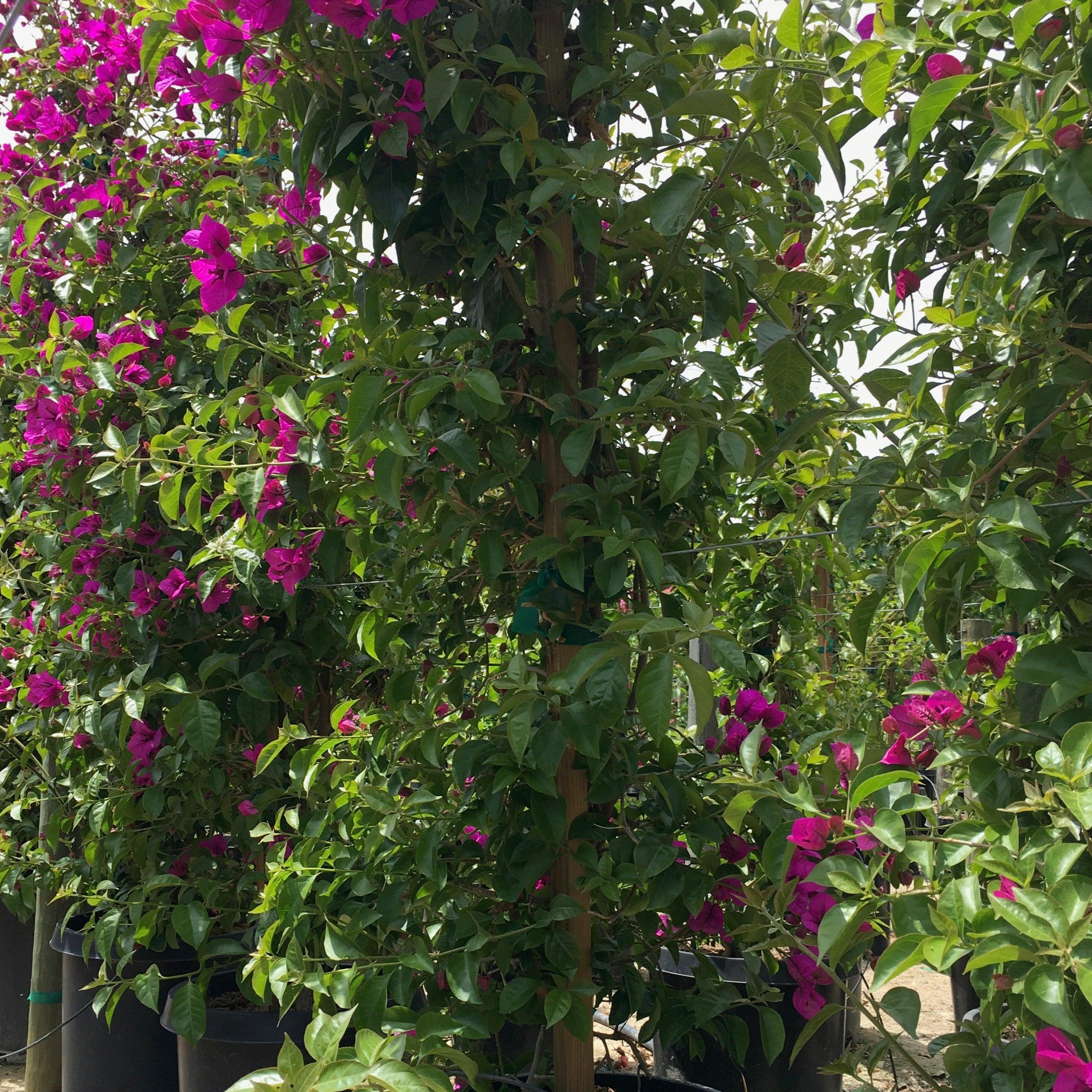
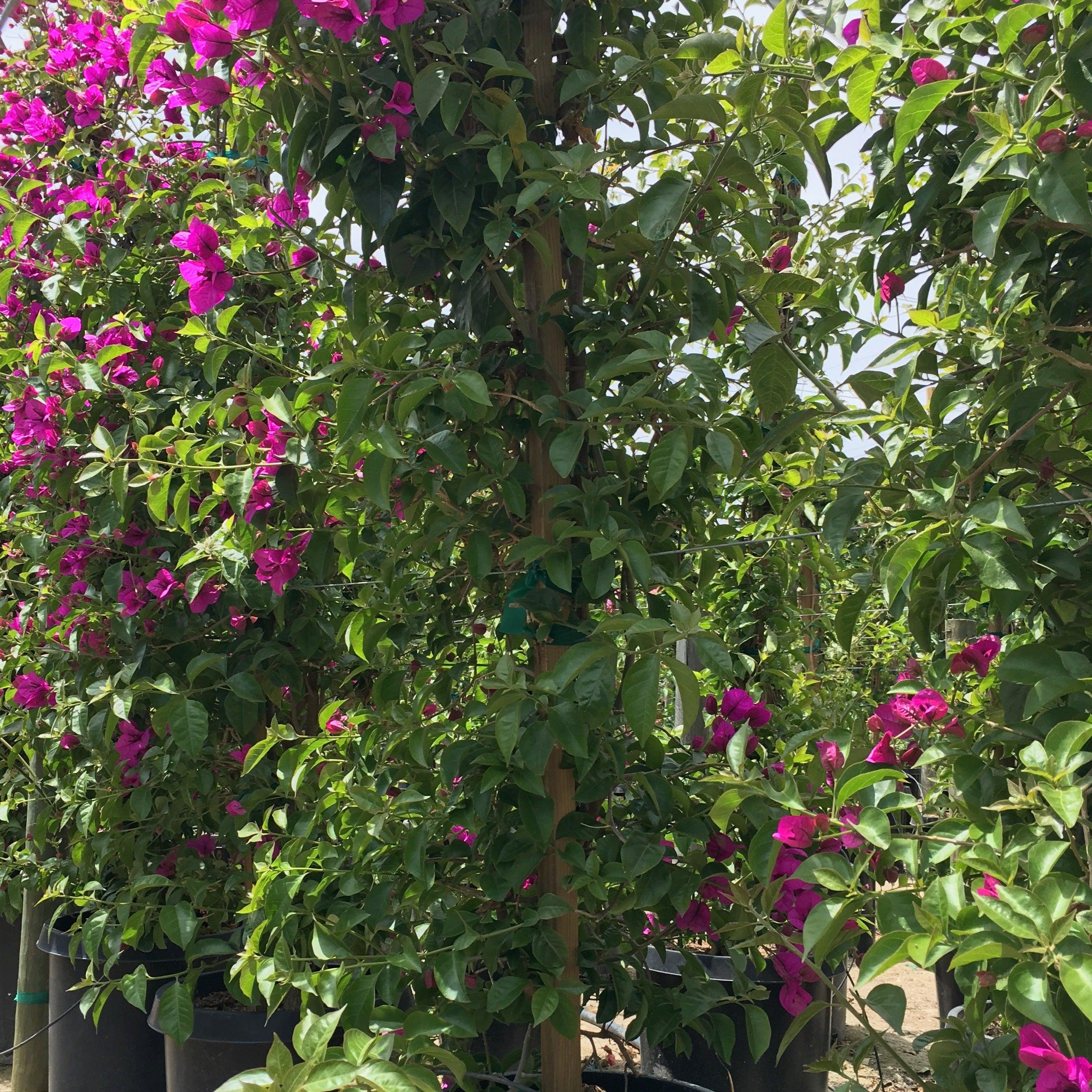
If you want a cold hardy, fast growing vine with abundant fragrant flowers, Pink Jasmine fits beautifully into both outdoor plants collections and patio container designs. For even more warm-climate color, Jamaica White Bougainvillea offers a similarly vigorous vine with white-to-blush bracts. In Southern California, it can thrive outdoors with regular watering, sun exposure, and well drained soil. In colder regions, keep pink jasmine plants in pots and move them indoors before frost.
Frequently Asked Questions
Does it need support to climb?
Yes. Pink Jasmine is a twining vine, not a self-clinging vine, so it needs a trellis, arbor, fence, or similar structure. It is excellent for a grid trellis, old fences, pergolas, and privacy screens, and pairs well with Star Jasmine (Trachelospermum jasminoides) in layered fragrant plantings.
When should I prune pink jasmine?
Prune immediately after flowering ends, usually in late spring. This helps control size, encourages healthy plants, and protects the next round of flower buds because pink jasmine blooms on growth that developed earlier.
Can I grow it in containers?
Yes. Pink Jasmine performs well in containers with excellent drainage. Container growing is especially useful in colder regions where nighttime temperatures may drop below safe levels and the plant needs to move indoors before frost, and you can complement container vines with flowering trees suited to California gardens for multilevel seasonal color.
Will it survive California’s dry summers?
Yes, with care. Water Pink Jasmine regularly while establishing, then deeply when the soil begins to dry; it can tolerate brief dry periods once established but prefers consistent moisture for optimal growth and flowering.
Is it safe around pets?
Yes. Pink jasmine is non-toxic to cats and dogs, making it a safe choice for pet owners. It is also commonly considered safe around horses.
Ready to Add Winter Fragrance?
Choose Pink Jasmine (Jasminum polyanthum) for pink buds, star shaped white flowers, and months of sweet winter-to-spring scent, then layer in evergreen privacy trees and fast-growing screens or structure plants like California Pepper Tree, Glossy Privet, Cheesewood (Pittosporum), and additional Star Jasmine selections to complete a full, fragrant landscape design.
Yardwork makes it easier to select the right plant, place it well, and keep it thriving. We offer expert plant selection, delivery, and care guidance for California landscapes, including support for choosing the right trellis, planter, or companion planting design.
Original: $75.00
-65%$75.00
$26.25Pink Jasmine (Jasmine Polyanthum)
Fragrant Winter Blooms When Your Garden Needs Them Most
Pink Jasmine gives your garden abundant fragrant flowers in late winter and early spring, bringing star-shaped white blooms and sweet perfume into the season when most outdoor plants are still quiet.
Why You’ll Love Pink Jasmine
-
Intensely fragrant white flowers – Deep pink buds open into white flowers with a rich, sweet scent often compared to jasmine perfume or french perfume.
-
Fast coverage for outdoor spaces – This fast growing vine quickly softens old fences, a chain link fence, a grid trellis, arbors, and garden walls.
-
Winter-to-spring color – The pink jasmine bloom typically arrives from late winter through spring, often lasting 2+ months when few other flowers are open.
-
A reliable California performer – Pink Jasmine (Jasminum polyanthum) thrives in full sun to partial shade, with bright light promoting stronger growth and better flowering.
-
Easy to enjoy once established – It is largely unbothered by severe outdoor pests or diseases and exhibits strong deer resistance.
Pink jasmine plants also support a more active garden. A single vine can attract birds, bees, butterflies, and hummingbirds, promoting local wildlife biodiversity. Pink jasmine is non-toxic to cats and dogs, making it a safe choice for pet owners.
What Makes Pink Jasmine Different
Most jasmine varieties are known for warm-season flowers. Pink Jasmine is different because it delivers its strongest jasmine bloom in winter and early spring, when fragrance is most noticeable and most appreciated.
Pink Jasmine (Jasminum polyanthum) has:
-
Pink buds that open to white flowers – The plant produces large clusters of deep pink buds that open into starry white flowers, filling the air with a rich, sweet perfume, making it one of the most fragrant flowering vines.
-
More cold hardy than tropical jasmine – Pink Jasmine (Jasminum polyanthum) thrives best in USDA Zones 8-10, where it can be grown outdoors year-round in mild climates, but in colder regions, it is recommended to grow it in pots and move it indoors before frost.
-
Strong growth without losing garden usefulness – Pink Jasmine (Jasminum polyanthum) is a vigorous evergreen vine that can grow 15 to 20 feet tall and 6 to 10 feet wide, depending on support and pruning.
Pink jasmine belongs in landscapes where scent matters as much as coverage. It is an evergreen vine in mild climates, though older plants may become semi deciduous after colder nights or mild frosts. Compared with a tropical jasmine, this popular jasmine is more adaptable for Southern California, coastal gardens, and protected inland patios.
How Pink Jasmine Transforms Your Space
-
Plant near patios, doorways, or walkways
Pink Jasmine is best suited for planting near patios, doorways, or seating areas where its fragrance can be appreciated up close. When you plant pink jasmine near a window or outdoor room, the fragrance wafts inside during the flowering season. -
Train the twining vine onto support
As the climbing vine establishes, guide new growth onto a trellis, arbor, fence, wall, or pergola. Pink Jasmine can be effectively used on trellises, arbors, and fences, providing a fragrant and visually appealing vertical element in landscape design. -
Enjoy months of fragrant blooms
Pink Jasmine typically blooms from late winter to spring, often producing a heavy flush of flowers when few other plants are in bloom, enhancing its appeal in gardens.
For best results, grow pink jasmine in full sun to part shade. Bright light promotes stronger growth and better flowering, while too much shade can lead to leggy growth and reduced flowering. Water regularly while the plant establishes, then water deeply when the soil begins to dry.
Plant Specifications
-
Mature Size: 15-20 feet tall, 6-10 feet wide
-
USDA Hardiness Zones: 8-11; best performance is often in USDA Zone 8-10 mild climates
-
Sun Requirements: Full sun to partial shade; bright light supports stronger blooms
-
Soil Needs: Well drained soil with excellent drainage and regular moisture
-
Growth Rate: Fast-growing, up to 6 inches per day in favorable growing season conditions
-
Bloom Time: Late winter through spring, often beginning in late January or February
-
Flower Color: Pink flower buds opening to fragrant white flowers
-
Foliage: The leaves of Pink Jasmine are composed of 5-7 leaflets that range from bright green to deeper green, providing a lush backdrop for its flowers.
-
Watering: Pink Jasmine requires regular watering, especially while establishing, and prefers well-drained soil; it can tolerate brief dry periods once established but thrives with consistent moisture for the best growth and flowering.
-
Pruning: Prune Pink Jasmine immediately after flowering to control growth and encourage a dense, flower-filled framework; this timing is crucial as the plant blooms on growth that developed earlier.
-
Landscape Uses: Pink jasmine can be utilized as a privacy screen, ground cover, container plant, or for decorative vertical accents such as over arbors and trellises.
-
Companion Plants: Companion plants for Pink Jasmine include camellias, hellebores, lavender, climbing roses, and salvia, which can enhance the overall design and extend the flowering season.
This many flowered jasmine is a strong grower, so give it a structure early. Without support, stems can roam unsupported and behave more like a loose ground cover. With a trellis or fence, pink jasmine grow habits become easier to guide, shape, and prune.
Who It’s Perfect For
Ideal for:
-
California homeowners wanting flowers, foliage, and fragrance through winter
-
Gardeners looking for fragrant plants near patios, doors, decks, and seating areas
-
Landscape designers creating romantic garden rooms with dense clusters of blooms
-
Anyone needing fast-growing screening for privacy, coverage, or vertical accents
-
Plant lovers in colder regions who want container-friendly indoor plants during frost season
If you want a cold hardy, fast growing vine with abundant fragrant flowers, Pink Jasmine fits beautifully into both outdoor plants collections and patio container designs. For even more warm-climate color, Jamaica White Bougainvillea offers a similarly vigorous vine with white-to-blush bracts. In Southern California, it can thrive outdoors with regular watering, sun exposure, and well drained soil. In colder regions, keep pink jasmine plants in pots and move them indoors before frost.
Frequently Asked Questions
Does it need support to climb?
Yes. Pink Jasmine is a twining vine, not a self-clinging vine, so it needs a trellis, arbor, fence, or similar structure. It is excellent for a grid trellis, old fences, pergolas, and privacy screens, and pairs well with Star Jasmine (Trachelospermum jasminoides) in layered fragrant plantings.
When should I prune pink jasmine?
Prune immediately after flowering ends, usually in late spring. This helps control size, encourages healthy plants, and protects the next round of flower buds because pink jasmine blooms on growth that developed earlier.
Can I grow it in containers?
Yes. Pink Jasmine performs well in containers with excellent drainage. Container growing is especially useful in colder regions where nighttime temperatures may drop below safe levels and the plant needs to move indoors before frost, and you can complement container vines with flowering trees suited to California gardens for multilevel seasonal color.
Will it survive California’s dry summers?
Yes, with care. Water Pink Jasmine regularly while establishing, then deeply when the soil begins to dry; it can tolerate brief dry periods once established but prefers consistent moisture for optimal growth and flowering.
Is it safe around pets?
Yes. Pink jasmine is non-toxic to cats and dogs, making it a safe choice for pet owners. It is also commonly considered safe around horses.
Ready to Add Winter Fragrance?
Choose Pink Jasmine (Jasminum polyanthum) for pink buds, star shaped white flowers, and months of sweet winter-to-spring scent, then layer in evergreen privacy trees and fast-growing screens or structure plants like California Pepper Tree, Glossy Privet, Cheesewood (Pittosporum), and additional Star Jasmine selections to complete a full, fragrant landscape design.
Yardwork makes it easier to select the right plant, place it well, and keep it thriving. We offer expert plant selection, delivery, and care guidance for California landscapes, including support for choosing the right trellis, planter, or companion planting design.
Product Information
Product Information
Shipping & Returns
Shipping & Returns
Description
Fragrant Winter Blooms When Your Garden Needs Them Most
Pink Jasmine gives your garden abundant fragrant flowers in late winter and early spring, bringing star-shaped white blooms and sweet perfume into the season when most outdoor plants are still quiet.
Why You’ll Love Pink Jasmine
-
Intensely fragrant white flowers – Deep pink buds open into white flowers with a rich, sweet scent often compared to jasmine perfume or french perfume.
-
Fast coverage for outdoor spaces – This fast growing vine quickly softens old fences, a chain link fence, a grid trellis, arbors, and garden walls.
-
Winter-to-spring color – The pink jasmine bloom typically arrives from late winter through spring, often lasting 2+ months when few other flowers are open.
-
A reliable California performer – Pink Jasmine (Jasminum polyanthum) thrives in full sun to partial shade, with bright light promoting stronger growth and better flowering.
-
Easy to enjoy once established – It is largely unbothered by severe outdoor pests or diseases and exhibits strong deer resistance.
Pink jasmine plants also support a more active garden. A single vine can attract birds, bees, butterflies, and hummingbirds, promoting local wildlife biodiversity. Pink jasmine is non-toxic to cats and dogs, making it a safe choice for pet owners.
What Makes Pink Jasmine Different
Most jasmine varieties are known for warm-season flowers. Pink Jasmine is different because it delivers its strongest jasmine bloom in winter and early spring, when fragrance is most noticeable and most appreciated.
Pink Jasmine (Jasminum polyanthum) has:
-
Pink buds that open to white flowers – The plant produces large clusters of deep pink buds that open into starry white flowers, filling the air with a rich, sweet perfume, making it one of the most fragrant flowering vines.
-
More cold hardy than tropical jasmine – Pink Jasmine (Jasminum polyanthum) thrives best in USDA Zones 8-10, where it can be grown outdoors year-round in mild climates, but in colder regions, it is recommended to grow it in pots and move it indoors before frost.
-
Strong growth without losing garden usefulness – Pink Jasmine (Jasminum polyanthum) is a vigorous evergreen vine that can grow 15 to 20 feet tall and 6 to 10 feet wide, depending on support and pruning.
Pink jasmine belongs in landscapes where scent matters as much as coverage. It is an evergreen vine in mild climates, though older plants may become semi deciduous after colder nights or mild frosts. Compared with a tropical jasmine, this popular jasmine is more adaptable for Southern California, coastal gardens, and protected inland patios.
How Pink Jasmine Transforms Your Space
-
Plant near patios, doorways, or walkways
Pink Jasmine is best suited for planting near patios, doorways, or seating areas where its fragrance can be appreciated up close. When you plant pink jasmine near a window or outdoor room, the fragrance wafts inside during the flowering season. -
Train the twining vine onto support
As the climbing vine establishes, guide new growth onto a trellis, arbor, fence, wall, or pergola. Pink Jasmine can be effectively used on trellises, arbors, and fences, providing a fragrant and visually appealing vertical element in landscape design. -
Enjoy months of fragrant blooms
Pink Jasmine typically blooms from late winter to spring, often producing a heavy flush of flowers when few other plants are in bloom, enhancing its appeal in gardens.
For best results, grow pink jasmine in full sun to part shade. Bright light promotes stronger growth and better flowering, while too much shade can lead to leggy growth and reduced flowering. Water regularly while the plant establishes, then water deeply when the soil begins to dry.
Plant Specifications
-
Mature Size: 15-20 feet tall, 6-10 feet wide
-
USDA Hardiness Zones: 8-11; best performance is often in USDA Zone 8-10 mild climates
-
Sun Requirements: Full sun to partial shade; bright light supports stronger blooms
-
Soil Needs: Well drained soil with excellent drainage and regular moisture
-
Growth Rate: Fast-growing, up to 6 inches per day in favorable growing season conditions
-
Bloom Time: Late winter through spring, often beginning in late January or February
-
Flower Color: Pink flower buds opening to fragrant white flowers
-
Foliage: The leaves of Pink Jasmine are composed of 5-7 leaflets that range from bright green to deeper green, providing a lush backdrop for its flowers.
-
Watering: Pink Jasmine requires regular watering, especially while establishing, and prefers well-drained soil; it can tolerate brief dry periods once established but thrives with consistent moisture for the best growth and flowering.
-
Pruning: Prune Pink Jasmine immediately after flowering to control growth and encourage a dense, flower-filled framework; this timing is crucial as the plant blooms on growth that developed earlier.
-
Landscape Uses: Pink jasmine can be utilized as a privacy screen, ground cover, container plant, or for decorative vertical accents such as over arbors and trellises.
-
Companion Plants: Companion plants for Pink Jasmine include camellias, hellebores, lavender, climbing roses, and salvia, which can enhance the overall design and extend the flowering season.
This many flowered jasmine is a strong grower, so give it a structure early. Without support, stems can roam unsupported and behave more like a loose ground cover. With a trellis or fence, pink jasmine grow habits become easier to guide, shape, and prune.
Who It’s Perfect For
Ideal for:
-
California homeowners wanting flowers, foliage, and fragrance through winter
-
Gardeners looking for fragrant plants near patios, doors, decks, and seating areas
-
Landscape designers creating romantic garden rooms with dense clusters of blooms
-
Anyone needing fast-growing screening for privacy, coverage, or vertical accents
-
Plant lovers in colder regions who want container-friendly indoor plants during frost season
If you want a cold hardy, fast growing vine with abundant fragrant flowers, Pink Jasmine fits beautifully into both outdoor plants collections and patio container designs. For even more warm-climate color, Jamaica White Bougainvillea offers a similarly vigorous vine with white-to-blush bracts. In Southern California, it can thrive outdoors with regular watering, sun exposure, and well drained soil. In colder regions, keep pink jasmine plants in pots and move them indoors before frost.
Frequently Asked Questions
Does it need support to climb?
Yes. Pink Jasmine is a twining vine, not a self-clinging vine, so it needs a trellis, arbor, fence, or similar structure. It is excellent for a grid trellis, old fences, pergolas, and privacy screens, and pairs well with Star Jasmine (Trachelospermum jasminoides) in layered fragrant plantings.
When should I prune pink jasmine?
Prune immediately after flowering ends, usually in late spring. This helps control size, encourages healthy plants, and protects the next round of flower buds because pink jasmine blooms on growth that developed earlier.
Can I grow it in containers?
Yes. Pink Jasmine performs well in containers with excellent drainage. Container growing is especially useful in colder regions where nighttime temperatures may drop below safe levels and the plant needs to move indoors before frost, and you can complement container vines with flowering trees suited to California gardens for multilevel seasonal color.
Will it survive California’s dry summers?
Yes, with care. Water Pink Jasmine regularly while establishing, then deeply when the soil begins to dry; it can tolerate brief dry periods once established but prefers consistent moisture for optimal growth and flowering.
Is it safe around pets?
Yes. Pink jasmine is non-toxic to cats and dogs, making it a safe choice for pet owners. It is also commonly considered safe around horses.
Ready to Add Winter Fragrance?
Choose Pink Jasmine (Jasminum polyanthum) for pink buds, star shaped white flowers, and months of sweet winter-to-spring scent, then layer in evergreen privacy trees and fast-growing screens or structure plants like California Pepper Tree, Glossy Privet, Cheesewood (Pittosporum), and additional Star Jasmine selections to complete a full, fragrant landscape design.
Yardwork makes it easier to select the right plant, place it well, and keep it thriving. We offer expert plant selection, delivery, and care guidance for California landscapes, including support for choosing the right trellis, planter, or companion planting design.