Salvia Caradonna (Caradonna Salvia)
Transform Your Garden with Striking Purple Spikes and Dark Stems
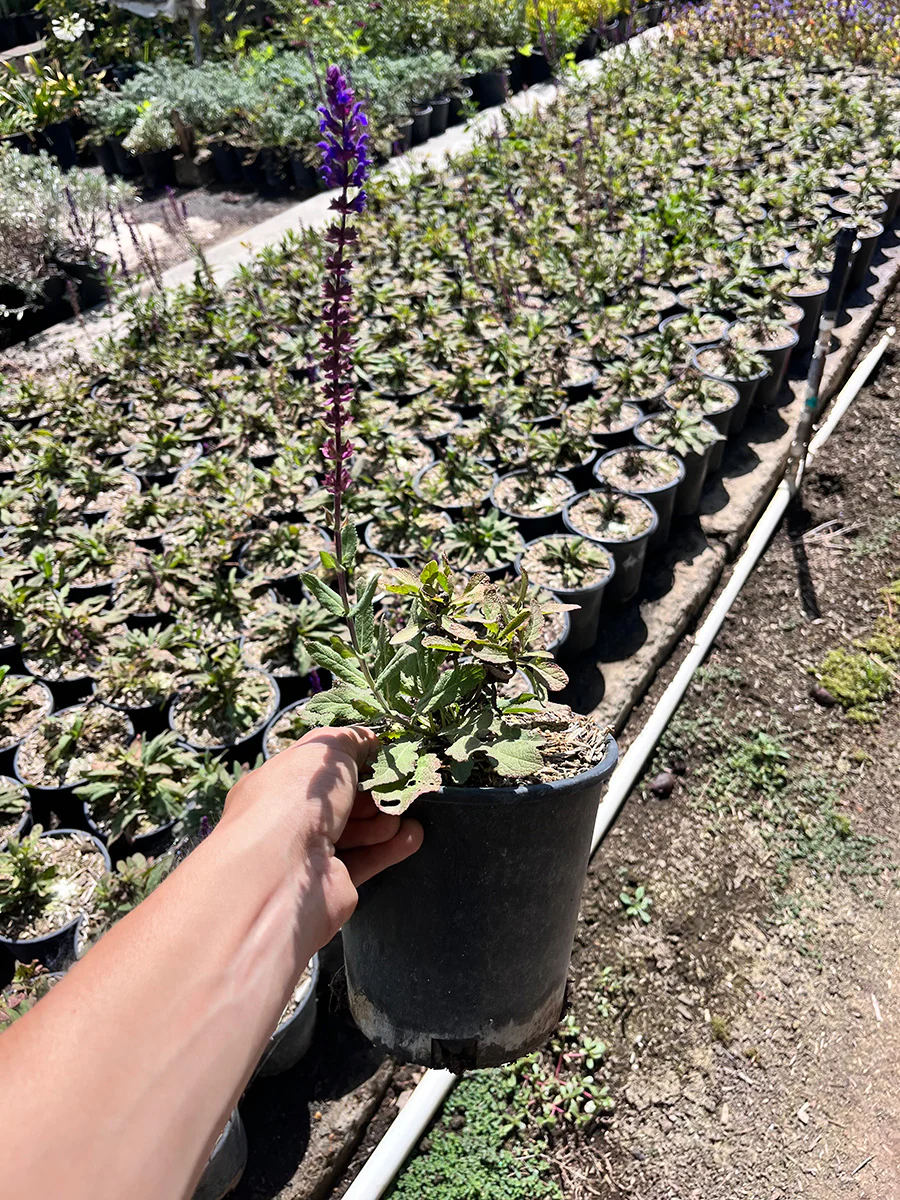
Salvia nemorosa ‘Caradonna’ gives your garden upright violet blue flowers, glowing purple stems, and dependable pollinator activity from late spring into the warm season. This perennial salvia is valued for its dramatic contrast: blue-violet flower spikes rise above dark purple, almost-black stems, adding structure and color to perennial borders, cottage gardens, butterfly gardens, wild gardens, and Mediterranean-style plantings.
Also known as caradonna meadow sage, nemorosa caradonna is a compact, aromatic, drought-tolerant salvia that attracts bees, butterflies, and hummingbirds while staying tidy in full sun and well drained soil, pairing naturally with other purple, drought-tolerant Mediterranean shrubs like bougainvillea.
Why You’ll Love It
-
Stunning Visual Drama – The almost-black stems and intense violet-blue blooms provide excellent architectural structure in mixed plantings. The striking dark purple stems and blue-violet flowers of ‘Caradonna’ provide dramatic visual interest in garden designs, making it a head-turner in any landscape.
-
Pollinator Magnet – The flowers of Salvia nemorosa ‘Caradonna’ are blue to violet and are known to attract pollinators such as bees, butterflies, and hummingbirds. The nectar-dense, tubular flowers are officially recognized by the Royal Horticultural Society (RHS) as excellent for wildlife, making caradonna salvia a strong choice for biodiversity-focused garden spaces.
-
Extended Bloom Period – Salvia nemorosa ‘Caradonna’ typically blooms from late spring to early summer, with the potential for sporadic reblooming throughout the summer and into early fall. The blooming period of Salvia nemorosa ‘Caradonna’ can be extended with regular deadheading, allowing for continued flowering through summer and into fall.
-
Heat and Drought Tolerant – Salvia nemorosa ‘Caradonna’ thrives in average, dry to medium, well-drained soil and prefers full sun exposure. Water thoroughly during its first season to establish a deep root system; once established, it is remarkably drought-tolerant and highly suited for water-conscious xeriscaping or Mediterranean-style gardens.
-
Low Maintenance – The aromatic oils in its leaves make it highly deer and rabbit resistant, and deadheading spent flowers is recommended to promote continuous blooming and maintain the plant’s appearance during the growing season. It returns as a reliable perennial where the hardiness zone is appropriate, needing only basic pruning, regular moisture for repeat bloom, and good drainage in winter.
What Makes It Different
Most salvia cultivars offer blue or purple flowers, but many lack the deep stem color that makes this plant so distinctive. Salvia nemorosa ‘Caradonna’ is for gardeners who want contrast, upright form, and long-season interest.
-
Unique Dark Purple Stems – The plant features dark purple stems and blue-violet flowers that bloom in dense, terminal spikes, attracting pollinators like bees and butterflies. In bright light, the stems can read as nearly jet black, giving the flower spikes a sharper, more architectural point than ordinary perennial salvia.
-
Compact Upright Habit – Salvia nemorosa ‘Caradonna’ typically grows to a height of 1.5 to 3 feet and can spread up to 2 feet wide, forming a clump of foliage. In typical garden use, it often maintains a tidy 18-24 inch presence, with basal foliage and gray green leaves supporting tall spikes that resist flopping when grown in full sun without excess fertilizer.
-
German Heritage – Caradonna meadow sage is a proven German cultivar associated with the East Friesland salvia tradition and recognized for strong garden performance. It is also connected with RHS recognition, including garden merit value and wildlife benefit, giving gardeners confidence in its long-tested performance.
-
Year-Round Structure – Even when the main bloom has passed, the dark stems, aromatic foliage, and basal foliage keep the plant attractive as summer progresses. In mild climates it may remain semi-evergreen, while in colder winter areas it can die back and return from the crown in spring.
This is not a filler perennial. It is a design plant for gardeners who want purple and blue contrast, pollinators, and upright structure without high water demands.
How to Plant and Grow Salvia Caradonna
-
Choose Your Spot
Plant Salvia nemorosa ‘Caradonna’ in full sun with at least 6 hours of direct sunlight daily for the most vigorous growth and heaviest blooming. Salvia nemorosa ‘Caradonna’ prefers full sun and well-drained soil, thriving in average to dry conditions, and is tolerant of drought once established. It can handle sandy soils, average garden soil, and lean conditions, but it will not tolerate sitting in wet, heavy clay during the winter. -
Plant at Right Time
In California, plant in spring or fall depending on your microclimate. Spring planting helps plants establish before summer bloom, while fall planting allows roots to settle before the next hot season. Set each pot at the same depth it grew in the nursery container, keeping the crown level with the soil surface rather than buried. -
Space for Airflow
Spacing plants 16-18 inches apart ensures proper air circulation and prevents disease. This is especially important in humid climates, crowded perennial borders, or areas where nearby shrubs, bulbs, annuals, vines, or taller perennials may block sun and airflow. -
Maintain for Success
Water thoroughly during its first season to establish a deep root system; once established, it is remarkably drought-tolerant. This plant tolerates drought conditions but requires regular moisture to encourage blooming throughout the summer and into fall. Deadheading spent flowers is recommended to promote continuous blooming and maintain the plant’s appearance during the growing season. -
Cut Back for Repeat Bloom
After the first major flush in early summer, cut plants back by removing spent flower spikes. This encourages repeat bloom and helps prevent the plant from looking tired as summer progresses. If plants flop, the most common causes are too much shade, rich feeding, poor airflow, or soil that holds too much moisture.
Plant Details
-
Mature Size: 18-24 inches tall and wide in many garden settings; Salvia nemorosa ‘Caradonna’ typically grows to a height of 1.5 to 3 feet and can spread up to 2 feet wide, forming a clump of foliage.
-
Hardiness Zones: Salvia nemorosa ‘Caradonna’ thrives across USDA Hardiness Zones 3 to 8; for California gardeners, this makes it especially useful across many Zone 5-8 mountain and inland areas where drainage is good.
-
Bloom Time: Salvia nemorosa ‘Caradonna’ typically blooms from late spring to early summer, with the potential for sporadic reblooming throughout the summer and into early fall.
-
Sun Requirements: Full sun; it requires full sun, at least 6 hours of direct sunlight daily, for the most vigorous growth and heaviest blooming.
-
Soil Needs: Average, dry to medium, well-drained soil; tolerates sandy soils and lean conditions, but avoid wet, heavy clay in winter.
-
Container Size: Available in 1-gallon pots, suitable for garden planting or a larger decorative pot with excellent drainage.
-
Water Needs: Moderate during establishment; drought tolerant once established, with regular moisture preferred when you want stronger summer and fall bloom.
-
Wildlife Value: The blue to violet flowers attract pollinators such as bees, butterflies, and hummingbirds, and the nectar-dense tubular flowers are officially recognized by the Royal Horticultural Society (RHS) as excellent for wildlife.
-
Deer and Rabbit Resistance: The aromatic oils in the leaves make this salvia highly deer and rabbit resistant.
-
Cut Flower Use: The sturdy, upright spikes make excellent, long-lasting additions to floral arrangements.
Salvia nemorosa caradonna common name searches often include “caradonna meadow sage” or “caradonna common name,” and both refer to this standout perennial salvia.
Who It’s For
Ideal for:
-
California homeowners wanting dramatic perennial color with violet blue flowers and dark purple stems
-
Gardeners seeking pollinator-friendly plants for butterflies, bees, and hummingbirds
-
Landscape designers creating cottage gardens, butterfly gardens, wild gardens, Mediterranean themes, or structured perennial borders
-
Anyone needing reliable perennials for hot, dry microclimates and water-conscious xeriscaping alongside heat- and drought-tolerant California pepper trees
-
Gardeners who want bold vertical flower spikes along paths, near seating areas, or in mixed plantings
-
People who like cutting flowers for fresh arrangements and want sturdy, long-lasting spikes
-
Container gardeners using a sunny patio pot with good drainage who may also be browsing a local online plant nursery and landscaping resource
Salvia nemorosa ‘Caradonna’ is suitable for perennial borders, cottage gardens, butterfly gardens, wild gardens, or along paths, making it versatile for various garden styles. If you want an attractive, upright, pollinator-rich plant that brings purple and blue contrast without demanding constant care, caradonna salvia fits the plan.
Frequently Asked Questions
When should I plant Caradonna Salvia in California?
Plant in spring or fall. Spring planting gives the plant time to root before summer heat, while fall planting works well in many California climate zones because cooler weather supports root establishment before the next growing season.
How often should I water it?
Water thoroughly during its first season to establish a deep root system. Once established, Salvia nemorosa ‘Caradonna’ is remarkably drought-tolerant, but it still prefers moist enough conditions and regular moisture when you want continued blooming through summer and into fall. Let the soil dry between deep waterings, and avoid constant wetness.
Will it come back every year?
Yes. Salvia nemorosa ‘Caradonna’ is a perennial and thrives across USDA Hardiness Zones 3 to 8. In colder winter areas, the top growth may die back, but the crown can survive and send up fresh spring foliage when planted in well drained soil. It will not tolerate sitting in wet, heavy clay during the winter.
What plants pair well with it?
Caradonna meadow sage pairs beautifully with silver foliage plants, lavender, rosemary, santolina, ornamental grasses, roses, yellow yarrow, alliums, echinacea, bulbs, annuals, and low shrubs. Its dark stems and violet blue flowers also contrast well with soft pastels, gold flowers, and gray green leaves in cottage gardens and Mediterranean-style landscapes.
Do I need to cut it back?
Yes, light pruning improves performance. Deadheading spent flowers is recommended to promote continuous blooming and maintain the plant’s appearance during the growing season. After the first bloom in late spring or early summer, remove faded spikes to encourage repeat bloom; at the end of the season, cut plants back to tidy the basal foliage before winter or early spring growth.
Ready to Add Drama to Your Garden?
With glowing purple stems, blue-violet flowers, aromatic foliage, and reliable repeat bloom, Salvia nemorosa ‘Caradonna’ brings lasting impact to sunny California gardens.
Yardwork can help you choose the right placement, plan spacing, confirm sun water needs, and assess whether your soil has the good drainage this plant requires. Ask about California delivery, plant quality, expert consultation, and soil testing before shipment so your stock arrives ready for success.
Original: $35.00
-65%$35.00
$12.25Salvia Caradonna (Caradonna Salvia)
Transform Your Garden with Striking Purple Spikes and Dark Stems
Salvia nemorosa ‘Caradonna’ gives your garden upright violet blue flowers, glowing purple stems, and dependable pollinator activity from late spring into the warm season. This perennial salvia is valued for its dramatic contrast: blue-violet flower spikes rise above dark purple, almost-black stems, adding structure and color to perennial borders, cottage gardens, butterfly gardens, wild gardens, and Mediterranean-style plantings.
Also known as caradonna meadow sage, nemorosa caradonna is a compact, aromatic, drought-tolerant salvia that attracts bees, butterflies, and hummingbirds while staying tidy in full sun and well drained soil, pairing naturally with other purple, drought-tolerant Mediterranean shrubs like bougainvillea.
Why You’ll Love It
-
Stunning Visual Drama – The almost-black stems and intense violet-blue blooms provide excellent architectural structure in mixed plantings. The striking dark purple stems and blue-violet flowers of ‘Caradonna’ provide dramatic visual interest in garden designs, making it a head-turner in any landscape.
-
Pollinator Magnet – The flowers of Salvia nemorosa ‘Caradonna’ are blue to violet and are known to attract pollinators such as bees, butterflies, and hummingbirds. The nectar-dense, tubular flowers are officially recognized by the Royal Horticultural Society (RHS) as excellent for wildlife, making caradonna salvia a strong choice for biodiversity-focused garden spaces.
-
Extended Bloom Period – Salvia nemorosa ‘Caradonna’ typically blooms from late spring to early summer, with the potential for sporadic reblooming throughout the summer and into early fall. The blooming period of Salvia nemorosa ‘Caradonna’ can be extended with regular deadheading, allowing for continued flowering through summer and into fall.
-
Heat and Drought Tolerant – Salvia nemorosa ‘Caradonna’ thrives in average, dry to medium, well-drained soil and prefers full sun exposure. Water thoroughly during its first season to establish a deep root system; once established, it is remarkably drought-tolerant and highly suited for water-conscious xeriscaping or Mediterranean-style gardens.
-
Low Maintenance – The aromatic oils in its leaves make it highly deer and rabbit resistant, and deadheading spent flowers is recommended to promote continuous blooming and maintain the plant’s appearance during the growing season. It returns as a reliable perennial where the hardiness zone is appropriate, needing only basic pruning, regular moisture for repeat bloom, and good drainage in winter.
What Makes It Different
Most salvia cultivars offer blue or purple flowers, but many lack the deep stem color that makes this plant so distinctive. Salvia nemorosa ‘Caradonna’ is for gardeners who want contrast, upright form, and long-season interest.
-
Unique Dark Purple Stems – The plant features dark purple stems and blue-violet flowers that bloom in dense, terminal spikes, attracting pollinators like bees and butterflies. In bright light, the stems can read as nearly jet black, giving the flower spikes a sharper, more architectural point than ordinary perennial salvia.
-
Compact Upright Habit – Salvia nemorosa ‘Caradonna’ typically grows to a height of 1.5 to 3 feet and can spread up to 2 feet wide, forming a clump of foliage. In typical garden use, it often maintains a tidy 18-24 inch presence, with basal foliage and gray green leaves supporting tall spikes that resist flopping when grown in full sun without excess fertilizer.
-
German Heritage – Caradonna meadow sage is a proven German cultivar associated with the East Friesland salvia tradition and recognized for strong garden performance. It is also connected with RHS recognition, including garden merit value and wildlife benefit, giving gardeners confidence in its long-tested performance.
-
Year-Round Structure – Even when the main bloom has passed, the dark stems, aromatic foliage, and basal foliage keep the plant attractive as summer progresses. In mild climates it may remain semi-evergreen, while in colder winter areas it can die back and return from the crown in spring.
This is not a filler perennial. It is a design plant for gardeners who want purple and blue contrast, pollinators, and upright structure without high water demands.
How to Plant and Grow Salvia Caradonna
-
Choose Your Spot
Plant Salvia nemorosa ‘Caradonna’ in full sun with at least 6 hours of direct sunlight daily for the most vigorous growth and heaviest blooming. Salvia nemorosa ‘Caradonna’ prefers full sun and well-drained soil, thriving in average to dry conditions, and is tolerant of drought once established. It can handle sandy soils, average garden soil, and lean conditions, but it will not tolerate sitting in wet, heavy clay during the winter. -
Plant at Right Time
In California, plant in spring or fall depending on your microclimate. Spring planting helps plants establish before summer bloom, while fall planting allows roots to settle before the next hot season. Set each pot at the same depth it grew in the nursery container, keeping the crown level with the soil surface rather than buried. -
Space for Airflow
Spacing plants 16-18 inches apart ensures proper air circulation and prevents disease. This is especially important in humid climates, crowded perennial borders, or areas where nearby shrubs, bulbs, annuals, vines, or taller perennials may block sun and airflow. -
Maintain for Success
Water thoroughly during its first season to establish a deep root system; once established, it is remarkably drought-tolerant. This plant tolerates drought conditions but requires regular moisture to encourage blooming throughout the summer and into fall. Deadheading spent flowers is recommended to promote continuous blooming and maintain the plant’s appearance during the growing season. -
Cut Back for Repeat Bloom
After the first major flush in early summer, cut plants back by removing spent flower spikes. This encourages repeat bloom and helps prevent the plant from looking tired as summer progresses. If plants flop, the most common causes are too much shade, rich feeding, poor airflow, or soil that holds too much moisture.
Plant Details
-
Mature Size: 18-24 inches tall and wide in many garden settings; Salvia nemorosa ‘Caradonna’ typically grows to a height of 1.5 to 3 feet and can spread up to 2 feet wide, forming a clump of foliage.
-
Hardiness Zones: Salvia nemorosa ‘Caradonna’ thrives across USDA Hardiness Zones 3 to 8; for California gardeners, this makes it especially useful across many Zone 5-8 mountain and inland areas where drainage is good.
-
Bloom Time: Salvia nemorosa ‘Caradonna’ typically blooms from late spring to early summer, with the potential for sporadic reblooming throughout the summer and into early fall.
-
Sun Requirements: Full sun; it requires full sun, at least 6 hours of direct sunlight daily, for the most vigorous growth and heaviest blooming.
-
Soil Needs: Average, dry to medium, well-drained soil; tolerates sandy soils and lean conditions, but avoid wet, heavy clay in winter.
-
Container Size: Available in 1-gallon pots, suitable for garden planting or a larger decorative pot with excellent drainage.
-
Water Needs: Moderate during establishment; drought tolerant once established, with regular moisture preferred when you want stronger summer and fall bloom.
-
Wildlife Value: The blue to violet flowers attract pollinators such as bees, butterflies, and hummingbirds, and the nectar-dense tubular flowers are officially recognized by the Royal Horticultural Society (RHS) as excellent for wildlife.
-
Deer and Rabbit Resistance: The aromatic oils in the leaves make this salvia highly deer and rabbit resistant.
-
Cut Flower Use: The sturdy, upright spikes make excellent, long-lasting additions to floral arrangements.
Salvia nemorosa caradonna common name searches often include “caradonna meadow sage” or “caradonna common name,” and both refer to this standout perennial salvia.
Who It’s For
Ideal for:
-
California homeowners wanting dramatic perennial color with violet blue flowers and dark purple stems
-
Gardeners seeking pollinator-friendly plants for butterflies, bees, and hummingbirds
-
Landscape designers creating cottage gardens, butterfly gardens, wild gardens, Mediterranean themes, or structured perennial borders
-
Anyone needing reliable perennials for hot, dry microclimates and water-conscious xeriscaping alongside heat- and drought-tolerant California pepper trees
-
Gardeners who want bold vertical flower spikes along paths, near seating areas, or in mixed plantings
-
People who like cutting flowers for fresh arrangements and want sturdy, long-lasting spikes
-
Container gardeners using a sunny patio pot with good drainage who may also be browsing a local online plant nursery and landscaping resource
Salvia nemorosa ‘Caradonna’ is suitable for perennial borders, cottage gardens, butterfly gardens, wild gardens, or along paths, making it versatile for various garden styles. If you want an attractive, upright, pollinator-rich plant that brings purple and blue contrast without demanding constant care, caradonna salvia fits the plan.
Frequently Asked Questions
When should I plant Caradonna Salvia in California?
Plant in spring or fall. Spring planting gives the plant time to root before summer heat, while fall planting works well in many California climate zones because cooler weather supports root establishment before the next growing season.
How often should I water it?
Water thoroughly during its first season to establish a deep root system. Once established, Salvia nemorosa ‘Caradonna’ is remarkably drought-tolerant, but it still prefers moist enough conditions and regular moisture when you want continued blooming through summer and into fall. Let the soil dry between deep waterings, and avoid constant wetness.
Will it come back every year?
Yes. Salvia nemorosa ‘Caradonna’ is a perennial and thrives across USDA Hardiness Zones 3 to 8. In colder winter areas, the top growth may die back, but the crown can survive and send up fresh spring foliage when planted in well drained soil. It will not tolerate sitting in wet, heavy clay during the winter.
What plants pair well with it?
Caradonna meadow sage pairs beautifully with silver foliage plants, lavender, rosemary, santolina, ornamental grasses, roses, yellow yarrow, alliums, echinacea, bulbs, annuals, and low shrubs. Its dark stems and violet blue flowers also contrast well with soft pastels, gold flowers, and gray green leaves in cottage gardens and Mediterranean-style landscapes.
Do I need to cut it back?
Yes, light pruning improves performance. Deadheading spent flowers is recommended to promote continuous blooming and maintain the plant’s appearance during the growing season. After the first bloom in late spring or early summer, remove faded spikes to encourage repeat bloom; at the end of the season, cut plants back to tidy the basal foliage before winter or early spring growth.
Ready to Add Drama to Your Garden?
With glowing purple stems, blue-violet flowers, aromatic foliage, and reliable repeat bloom, Salvia nemorosa ‘Caradonna’ brings lasting impact to sunny California gardens.
Yardwork can help you choose the right placement, plan spacing, confirm sun water needs, and assess whether your soil has the good drainage this plant requires. Ask about California delivery, plant quality, expert consultation, and soil testing before shipment so your stock arrives ready for success.
Product Information
Product Information
Shipping & Returns
Shipping & Returns
Description
Transform Your Garden with Striking Purple Spikes and Dark Stems
Salvia nemorosa ‘Caradonna’ gives your garden upright violet blue flowers, glowing purple stems, and dependable pollinator activity from late spring into the warm season. This perennial salvia is valued for its dramatic contrast: blue-violet flower spikes rise above dark purple, almost-black stems, adding structure and color to perennial borders, cottage gardens, butterfly gardens, wild gardens, and Mediterranean-style plantings.
Also known as caradonna meadow sage, nemorosa caradonna is a compact, aromatic, drought-tolerant salvia that attracts bees, butterflies, and hummingbirds while staying tidy in full sun and well drained soil, pairing naturally with other purple, drought-tolerant Mediterranean shrubs like bougainvillea.
Why You’ll Love It
-
Stunning Visual Drama – The almost-black stems and intense violet-blue blooms provide excellent architectural structure in mixed plantings. The striking dark purple stems and blue-violet flowers of ‘Caradonna’ provide dramatic visual interest in garden designs, making it a head-turner in any landscape.
-
Pollinator Magnet – The flowers of Salvia nemorosa ‘Caradonna’ are blue to violet and are known to attract pollinators such as bees, butterflies, and hummingbirds. The nectar-dense, tubular flowers are officially recognized by the Royal Horticultural Society (RHS) as excellent for wildlife, making caradonna salvia a strong choice for biodiversity-focused garden spaces.
-
Extended Bloom Period – Salvia nemorosa ‘Caradonna’ typically blooms from late spring to early summer, with the potential for sporadic reblooming throughout the summer and into early fall. The blooming period of Salvia nemorosa ‘Caradonna’ can be extended with regular deadheading, allowing for continued flowering through summer and into fall.
-
Heat and Drought Tolerant – Salvia nemorosa ‘Caradonna’ thrives in average, dry to medium, well-drained soil and prefers full sun exposure. Water thoroughly during its first season to establish a deep root system; once established, it is remarkably drought-tolerant and highly suited for water-conscious xeriscaping or Mediterranean-style gardens.
-
Low Maintenance – The aromatic oils in its leaves make it highly deer and rabbit resistant, and deadheading spent flowers is recommended to promote continuous blooming and maintain the plant’s appearance during the growing season. It returns as a reliable perennial where the hardiness zone is appropriate, needing only basic pruning, regular moisture for repeat bloom, and good drainage in winter.
What Makes It Different
Most salvia cultivars offer blue or purple flowers, but many lack the deep stem color that makes this plant so distinctive. Salvia nemorosa ‘Caradonna’ is for gardeners who want contrast, upright form, and long-season interest.
-
Unique Dark Purple Stems – The plant features dark purple stems and blue-violet flowers that bloom in dense, terminal spikes, attracting pollinators like bees and butterflies. In bright light, the stems can read as nearly jet black, giving the flower spikes a sharper, more architectural point than ordinary perennial salvia.
-
Compact Upright Habit – Salvia nemorosa ‘Caradonna’ typically grows to a height of 1.5 to 3 feet and can spread up to 2 feet wide, forming a clump of foliage. In typical garden use, it often maintains a tidy 18-24 inch presence, with basal foliage and gray green leaves supporting tall spikes that resist flopping when grown in full sun without excess fertilizer.
-
German Heritage – Caradonna meadow sage is a proven German cultivar associated with the East Friesland salvia tradition and recognized for strong garden performance. It is also connected with RHS recognition, including garden merit value and wildlife benefit, giving gardeners confidence in its long-tested performance.
-
Year-Round Structure – Even when the main bloom has passed, the dark stems, aromatic foliage, and basal foliage keep the plant attractive as summer progresses. In mild climates it may remain semi-evergreen, while in colder winter areas it can die back and return from the crown in spring.
This is not a filler perennial. It is a design plant for gardeners who want purple and blue contrast, pollinators, and upright structure without high water demands.
How to Plant and Grow Salvia Caradonna
-
Choose Your Spot
Plant Salvia nemorosa ‘Caradonna’ in full sun with at least 6 hours of direct sunlight daily for the most vigorous growth and heaviest blooming. Salvia nemorosa ‘Caradonna’ prefers full sun and well-drained soil, thriving in average to dry conditions, and is tolerant of drought once established. It can handle sandy soils, average garden soil, and lean conditions, but it will not tolerate sitting in wet, heavy clay during the winter. -
Plant at Right Time
In California, plant in spring or fall depending on your microclimate. Spring planting helps plants establish before summer bloom, while fall planting allows roots to settle before the next hot season. Set each pot at the same depth it grew in the nursery container, keeping the crown level with the soil surface rather than buried. -
Space for Airflow
Spacing plants 16-18 inches apart ensures proper air circulation and prevents disease. This is especially important in humid climates, crowded perennial borders, or areas where nearby shrubs, bulbs, annuals, vines, or taller perennials may block sun and airflow. -
Maintain for Success
Water thoroughly during its first season to establish a deep root system; once established, it is remarkably drought-tolerant. This plant tolerates drought conditions but requires regular moisture to encourage blooming throughout the summer and into fall. Deadheading spent flowers is recommended to promote continuous blooming and maintain the plant’s appearance during the growing season. -
Cut Back for Repeat Bloom
After the first major flush in early summer, cut plants back by removing spent flower spikes. This encourages repeat bloom and helps prevent the plant from looking tired as summer progresses. If plants flop, the most common causes are too much shade, rich feeding, poor airflow, or soil that holds too much moisture.
Plant Details
-
Mature Size: 18-24 inches tall and wide in many garden settings; Salvia nemorosa ‘Caradonna’ typically grows to a height of 1.5 to 3 feet and can spread up to 2 feet wide, forming a clump of foliage.
-
Hardiness Zones: Salvia nemorosa ‘Caradonna’ thrives across USDA Hardiness Zones 3 to 8; for California gardeners, this makes it especially useful across many Zone 5-8 mountain and inland areas where drainage is good.
-
Bloom Time: Salvia nemorosa ‘Caradonna’ typically blooms from late spring to early summer, with the potential for sporadic reblooming throughout the summer and into early fall.
-
Sun Requirements: Full sun; it requires full sun, at least 6 hours of direct sunlight daily, for the most vigorous growth and heaviest blooming.
-
Soil Needs: Average, dry to medium, well-drained soil; tolerates sandy soils and lean conditions, but avoid wet, heavy clay in winter.
-
Container Size: Available in 1-gallon pots, suitable for garden planting or a larger decorative pot with excellent drainage.
-
Water Needs: Moderate during establishment; drought tolerant once established, with regular moisture preferred when you want stronger summer and fall bloom.
-
Wildlife Value: The blue to violet flowers attract pollinators such as bees, butterflies, and hummingbirds, and the nectar-dense tubular flowers are officially recognized by the Royal Horticultural Society (RHS) as excellent for wildlife.
-
Deer and Rabbit Resistance: The aromatic oils in the leaves make this salvia highly deer and rabbit resistant.
-
Cut Flower Use: The sturdy, upright spikes make excellent, long-lasting additions to floral arrangements.
Salvia nemorosa caradonna common name searches often include “caradonna meadow sage” or “caradonna common name,” and both refer to this standout perennial salvia.
Who It’s For
Ideal for:
-
California homeowners wanting dramatic perennial color with violet blue flowers and dark purple stems
-
Gardeners seeking pollinator-friendly plants for butterflies, bees, and hummingbirds
-
Landscape designers creating cottage gardens, butterfly gardens, wild gardens, Mediterranean themes, or structured perennial borders
-
Anyone needing reliable perennials for hot, dry microclimates and water-conscious xeriscaping alongside heat- and drought-tolerant California pepper trees
-
Gardeners who want bold vertical flower spikes along paths, near seating areas, or in mixed plantings
-
People who like cutting flowers for fresh arrangements and want sturdy, long-lasting spikes
-
Container gardeners using a sunny patio pot with good drainage who may also be browsing a local online plant nursery and landscaping resource
Salvia nemorosa ‘Caradonna’ is suitable for perennial borders, cottage gardens, butterfly gardens, wild gardens, or along paths, making it versatile for various garden styles. If you want an attractive, upright, pollinator-rich plant that brings purple and blue contrast without demanding constant care, caradonna salvia fits the plan.
Frequently Asked Questions
When should I plant Caradonna Salvia in California?
Plant in spring or fall. Spring planting gives the plant time to root before summer heat, while fall planting works well in many California climate zones because cooler weather supports root establishment before the next growing season.
How often should I water it?
Water thoroughly during its first season to establish a deep root system. Once established, Salvia nemorosa ‘Caradonna’ is remarkably drought-tolerant, but it still prefers moist enough conditions and regular moisture when you want continued blooming through summer and into fall. Let the soil dry between deep waterings, and avoid constant wetness.
Will it come back every year?
Yes. Salvia nemorosa ‘Caradonna’ is a perennial and thrives across USDA Hardiness Zones 3 to 8. In colder winter areas, the top growth may die back, but the crown can survive and send up fresh spring foliage when planted in well drained soil. It will not tolerate sitting in wet, heavy clay during the winter.
What plants pair well with it?
Caradonna meadow sage pairs beautifully with silver foliage plants, lavender, rosemary, santolina, ornamental grasses, roses, yellow yarrow, alliums, echinacea, bulbs, annuals, and low shrubs. Its dark stems and violet blue flowers also contrast well with soft pastels, gold flowers, and gray green leaves in cottage gardens and Mediterranean-style landscapes.
Do I need to cut it back?
Yes, light pruning improves performance. Deadheading spent flowers is recommended to promote continuous blooming and maintain the plant’s appearance during the growing season. After the first bloom in late spring or early summer, remove faded spikes to encourage repeat bloom; at the end of the season, cut plants back to tidy the basal foliage before winter or early spring growth.
Ready to Add Drama to Your Garden?
With glowing purple stems, blue-violet flowers, aromatic foliage, and reliable repeat bloom, Salvia nemorosa ‘Caradonna’ brings lasting impact to sunny California gardens.
Yardwork can help you choose the right placement, plan spacing, confirm sun water needs, and assess whether your soil has the good drainage this plant requires. Ask about California delivery, plant quality, expert consultation, and soil testing before shipment so your stock arrives ready for success.