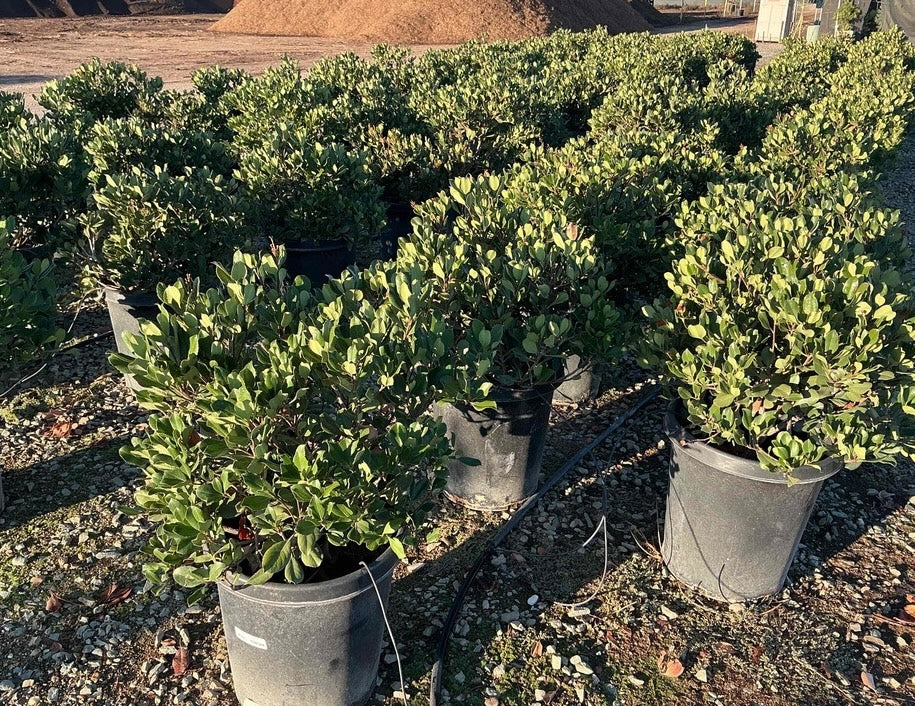
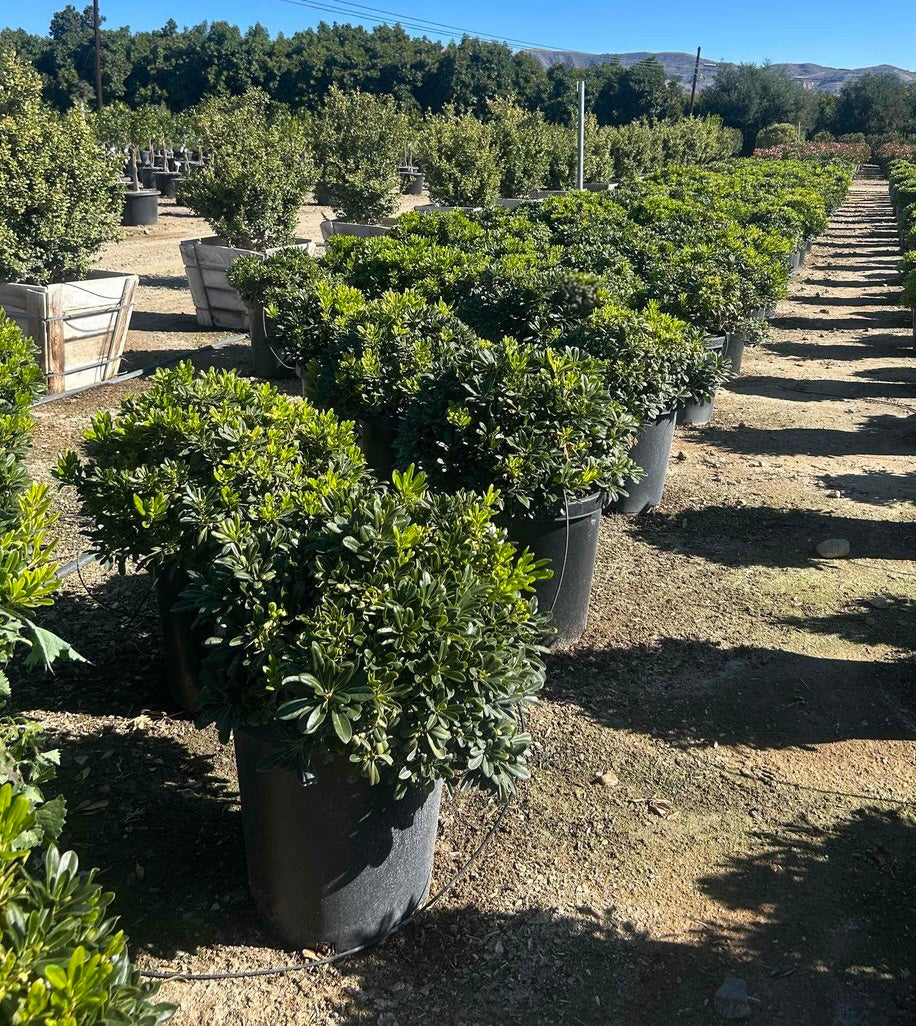
Dwarf Pittosporum (Pittosporum Tobira Wheeler's Dwarf)
Your Go-To Solution for Compact, Year-Round Greenery
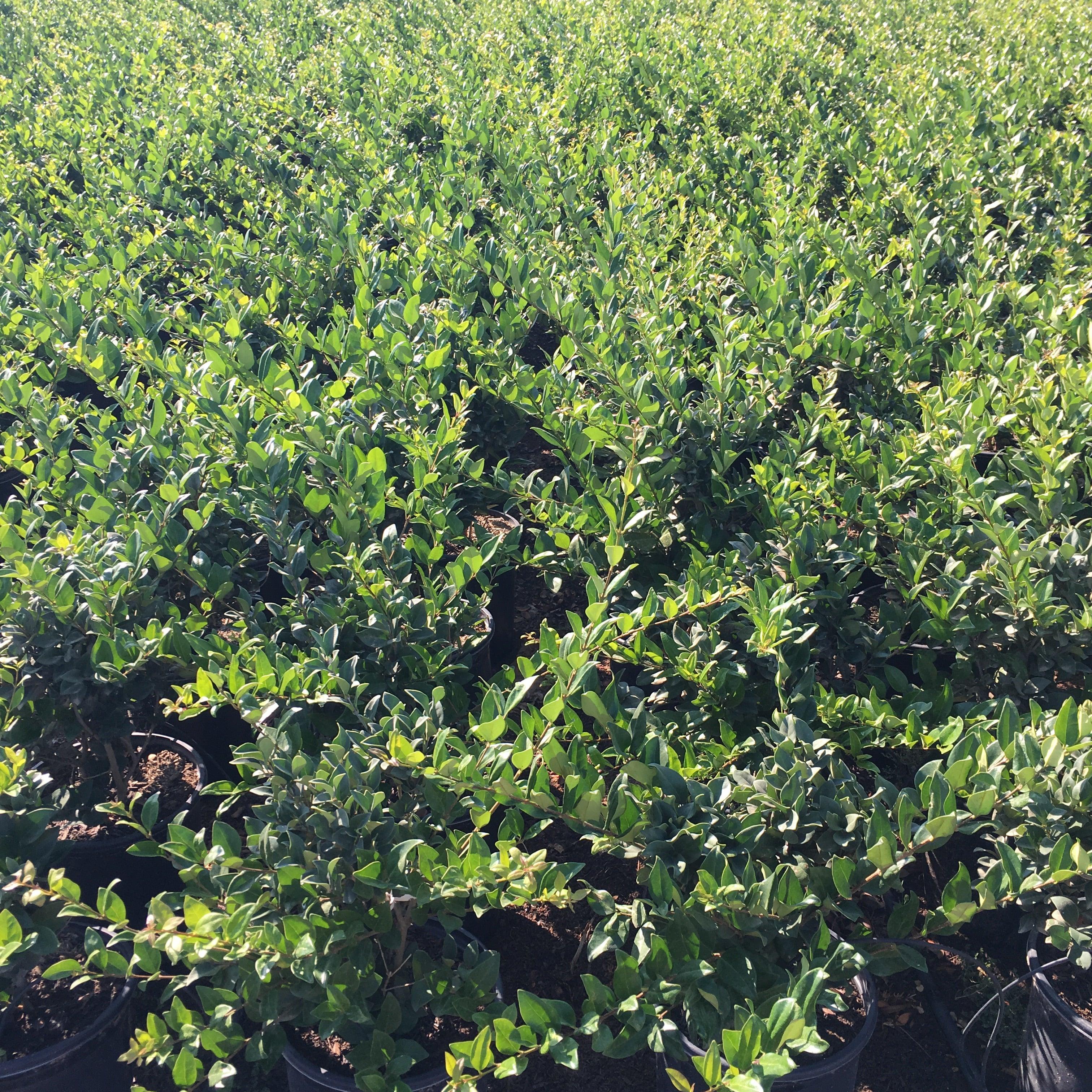
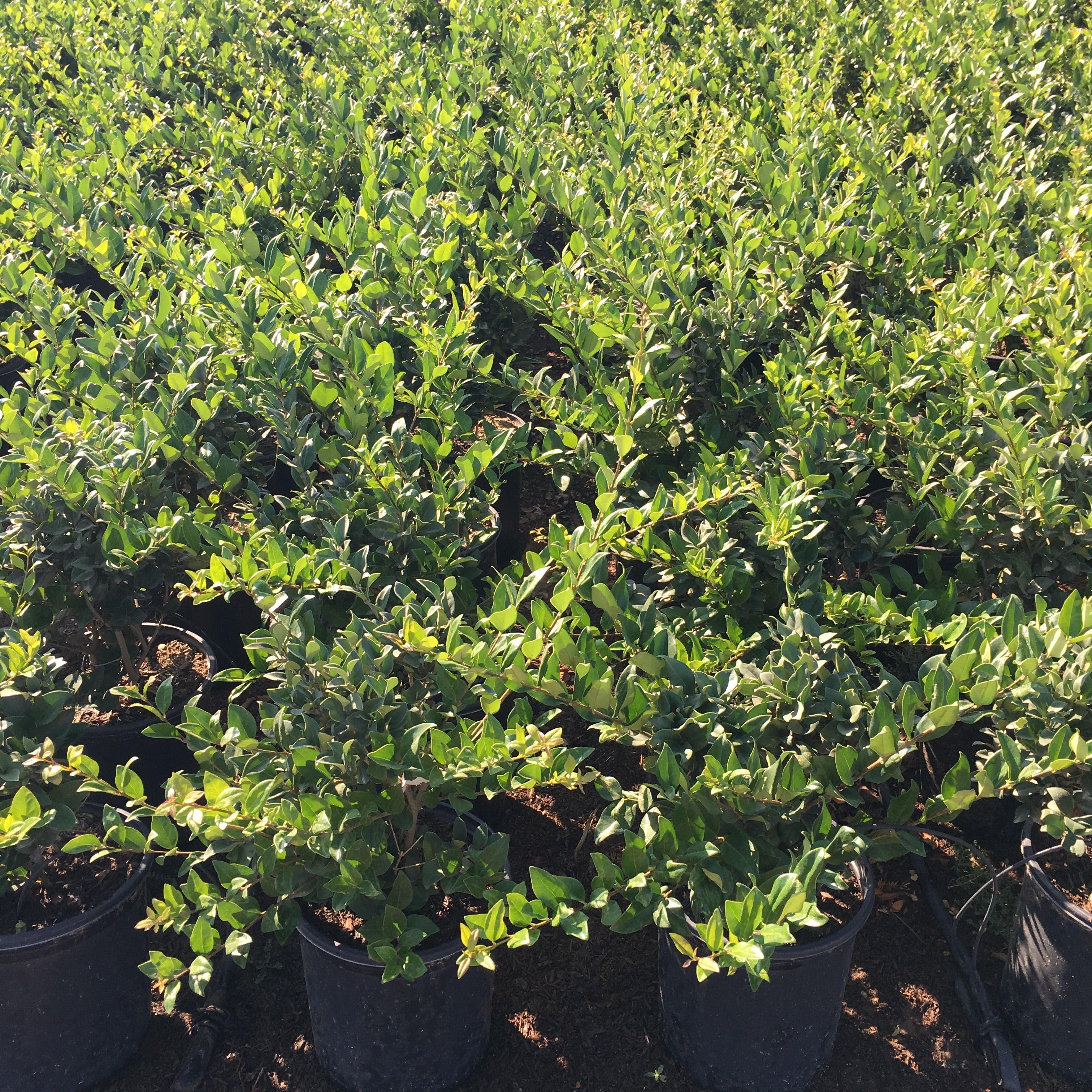
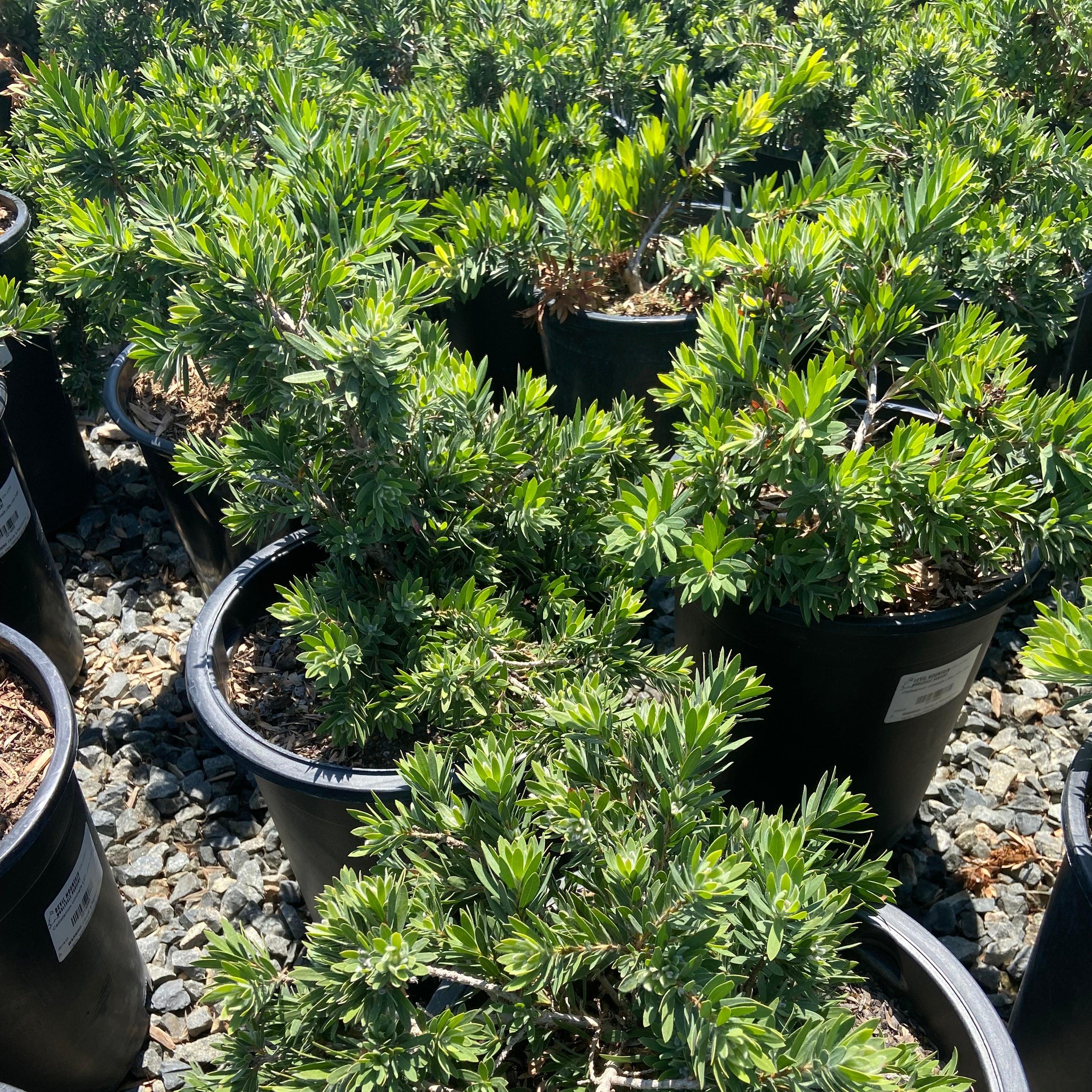
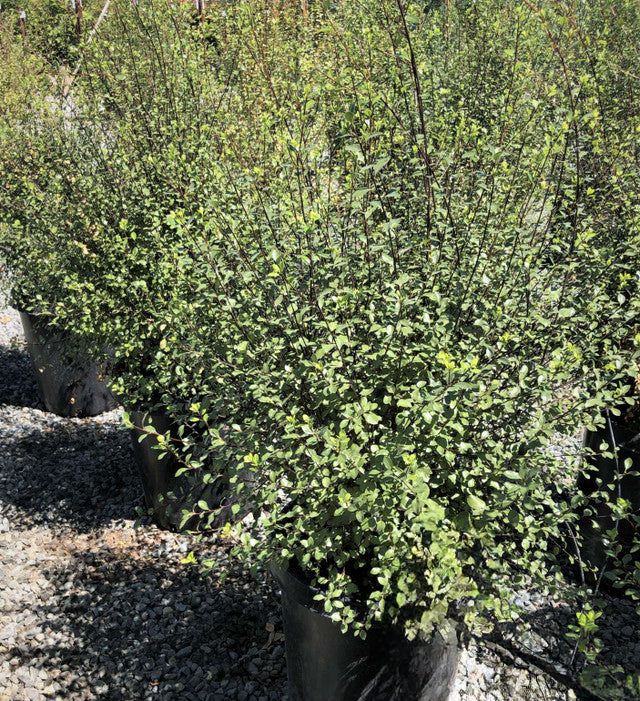
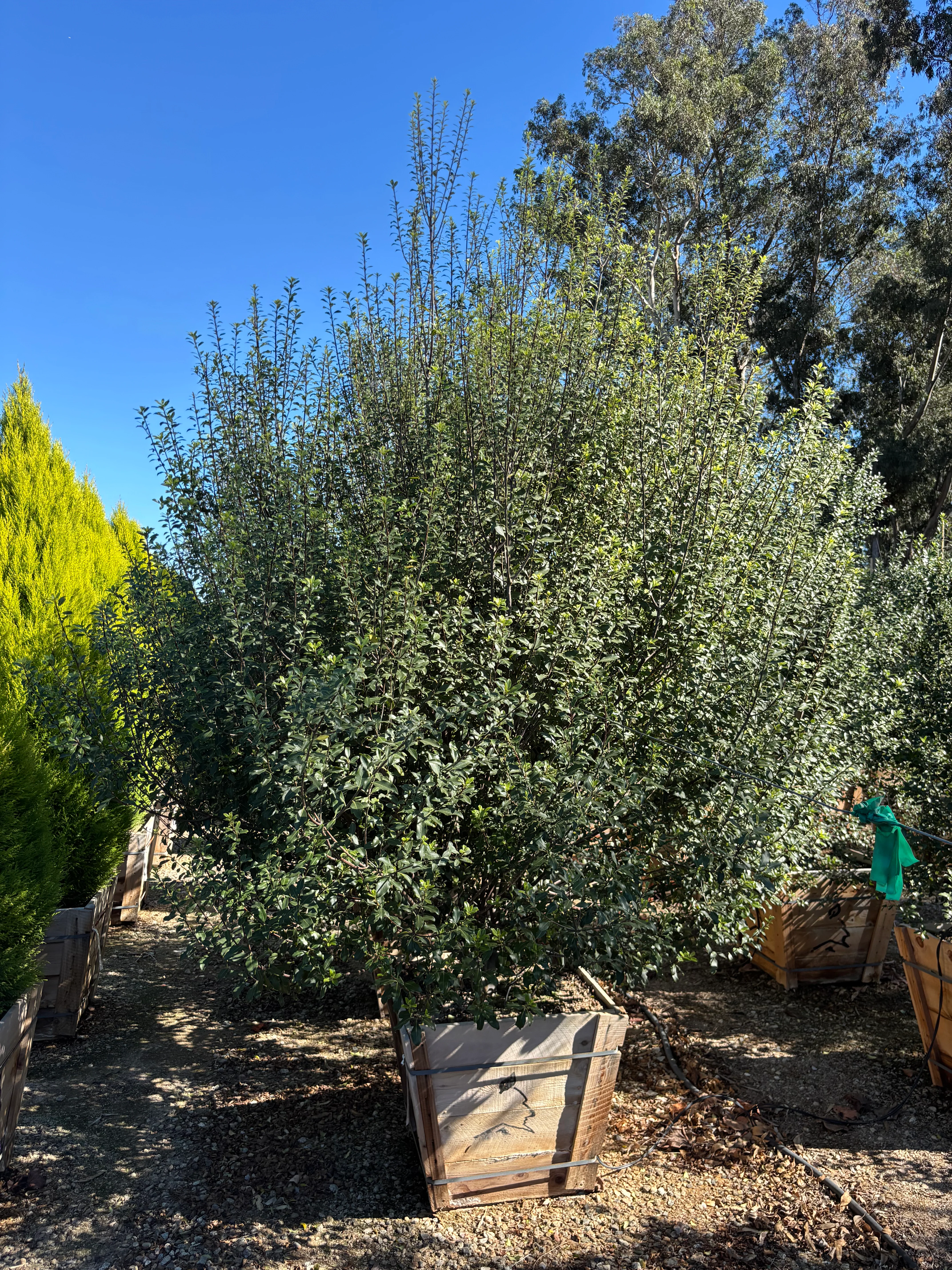
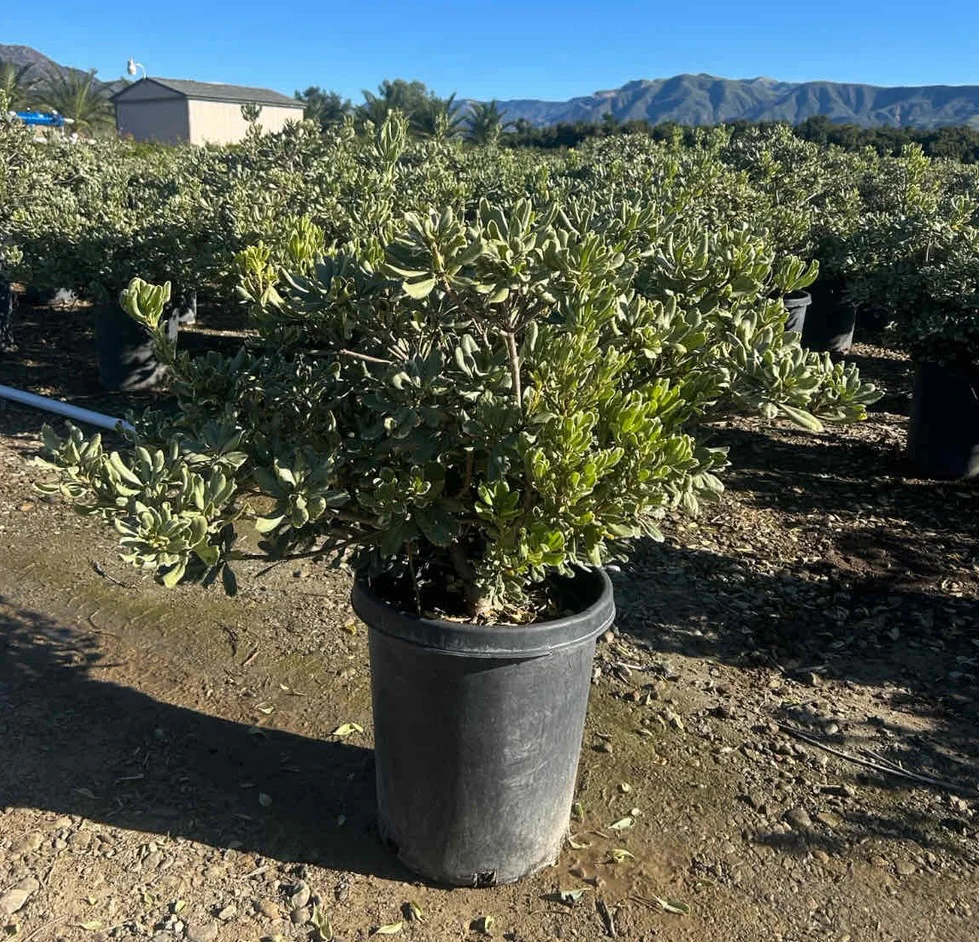
Dwarf pittosporum gives California gardens a dense, glossy, year-round green structure without the size problems of larger shrubs. This compact evergreen shrub typically stays around 2 to 3 feet tall, making it ideal for a low growing hedge, tidy shrub borders, foundation plantings, patios, containers, and small spaces where a full-size mock orange would overwhelm the design.
Why You’ll Love Dwarf Pittosporum
-
Stays Compact – This slow growing dwarf variety naturally keeps a neat appearance at about 2 to 3 feet tall, so pruning is rarely necessary for dwarf pittosporum due to its natural compact form.
-
Thrives in California Climate – Dwarf pittosporum thrives best in USDA Plant Hardiness Zones 8 through 11 and becomes drought tolerant once established, making it a strong fit for water-wise gardens.
-
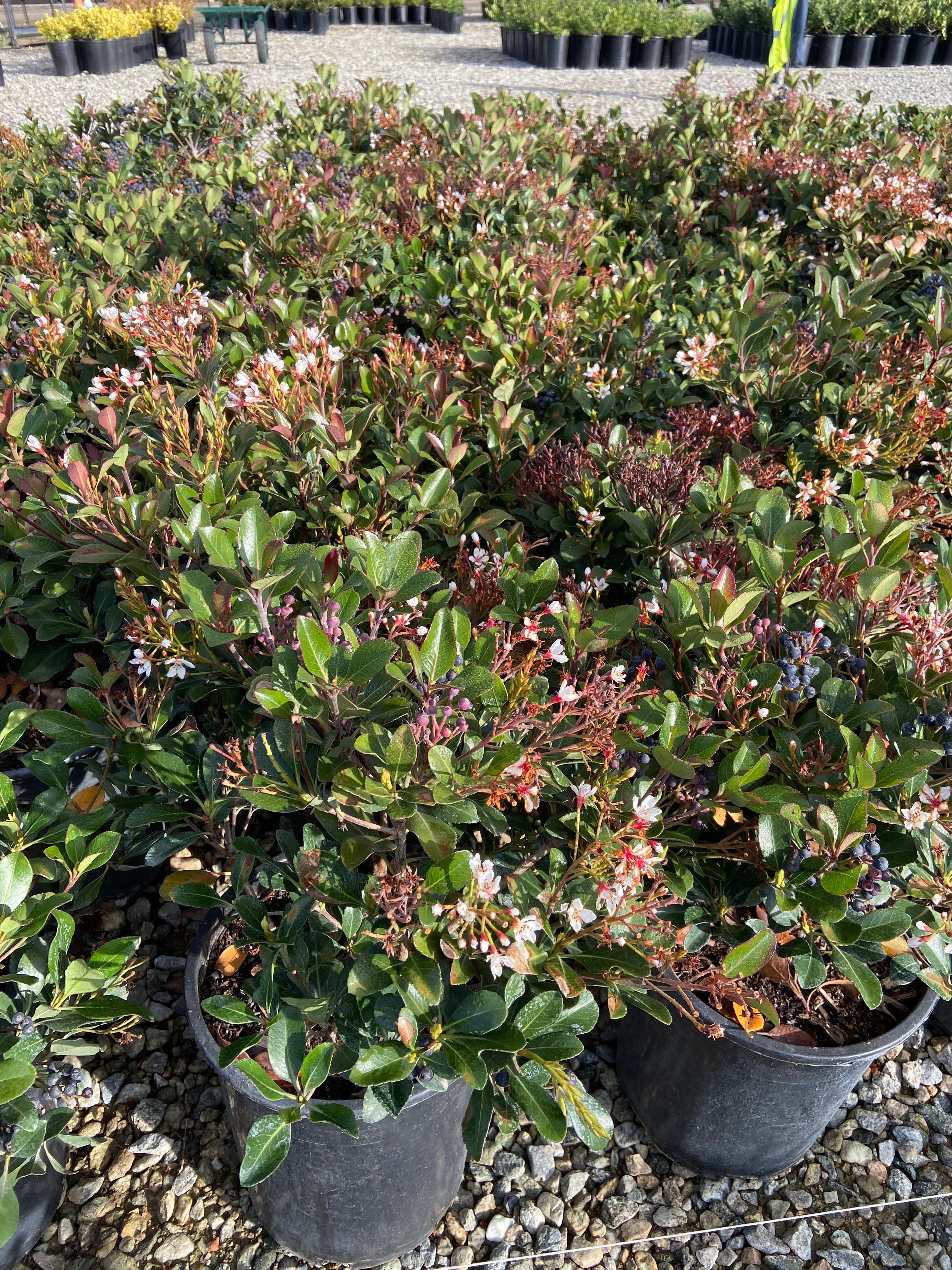
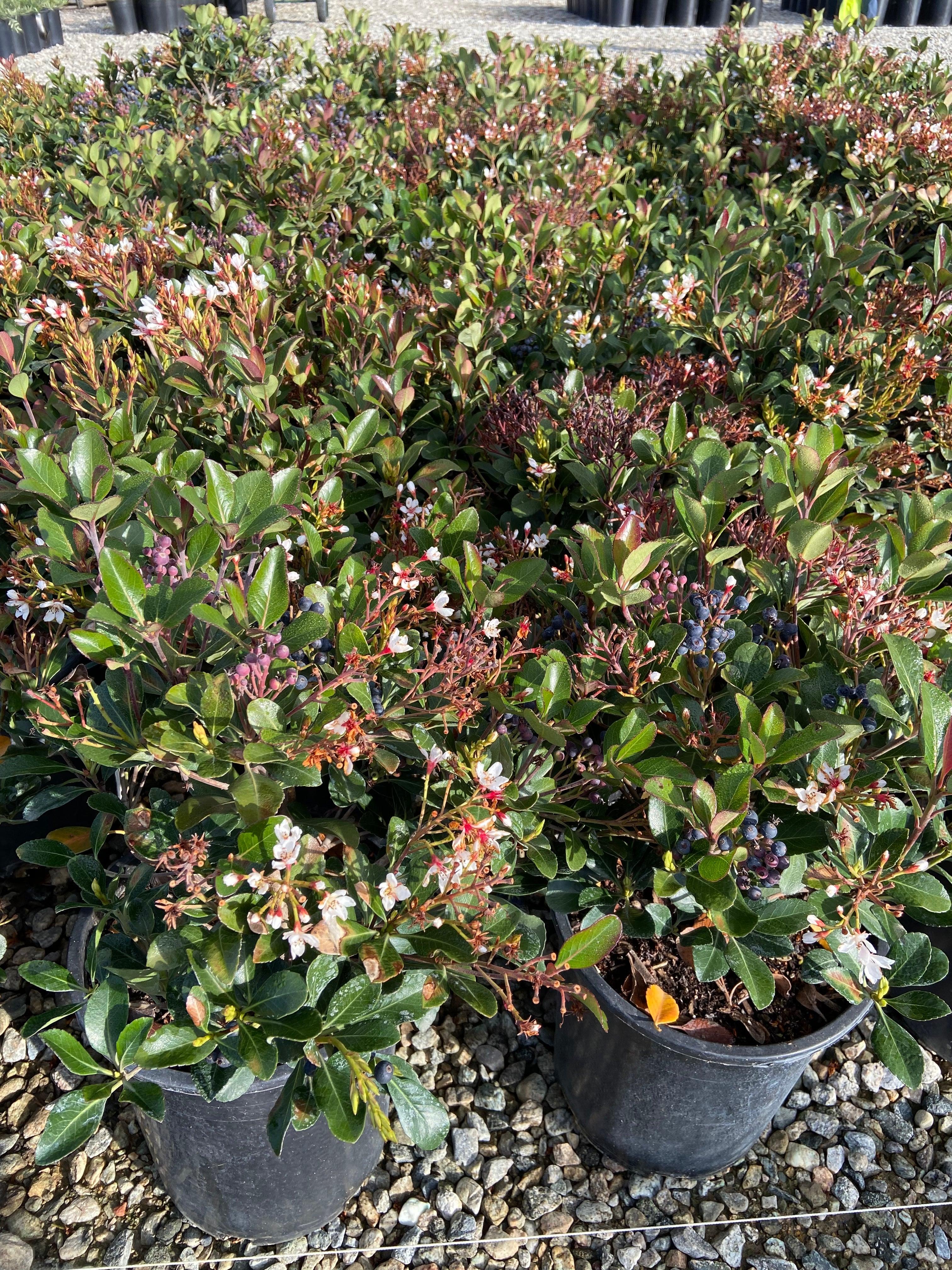
Fragrant Spring Blooms – It produces small, creamy-white clusters of flowers in spring that mature to yellow and emit a fragrance resembling orange blossoms.
-
Evergreen Beauty – Glossy dark green foliage or variegated green foliage stays dense through winter, giving the garden consistent shape and color.
-
Versatile Placement – Plant dwarf pittosporum in full sun, partial sun, part sun, or partial shade, depending on your location, heat exposure, and cultivar.
Dwarf pittosporum is also highly salt-tolerant and resilient against ocean winds and salt spray in coastal zones, making it especially useful near the coast where many ornamental shrubs struggle.
What Makes It Different
Most small shrubs either grow too large, need constant shaping, or lose visual interest outside the main growing season. Dwarf pittosporum is different because it combines compact growth, evergreen foliage, fragrant bloom, and reliable structure in one easy to grow shrub.
Dwarf pittosporum provides:
-
True Dwarf Genetics – Wheeler’s dwarf pittosporum is a cultivar that typically grows to a mature height of about 30 inches and is suitable for full sun to partial shade conditions.
-
Superior Drought Tolerance – Once established, dwarf pittosporum plants can tolerate mild drought conditions and should have their watering frequency reduced accordingly.
-
Multi-Season Interest – Cream De Mint™ dwarf pittosporum is another popular variety, known for its compact growth and fragrant white flowers that bloom in spring.
For classic dark green foliage, Wheeler’s Dwarf Japanese Pittosporum, also known as Pittosporum tobira Wheeler’s Dwarf, delivers a formal, tidy mound. For variegated foliage, Cream De Mint adds fine cream-and-green contrast. Pittosporum tenuifolium 'Silver Sheen' is another variety that features attractive foliage and is often used in landscaping for its aesthetic appeal.
How to Successfully Grow Dwarf Pittosporum
-
Plant in Well-Draining Soil
Choose a location with excellent drainage. Dwarf pittosporum requires excellent soil drainage and cannot tolerate standing water or soggy roots, which lead to root rot. It performs well in average well drained soils, including many California soil types, as long as water does not sit around the roots. -
Water Deeply But Infrequently
Dwarf pittosporum plants thrive in average, well-drained soils and require regular deep watering during their first growing season to establish a strong root system. Water deeply while the plant is young, then reduce frequency as the extensive root system develops and the soil begins to dry slightly between waterings. -
Enjoy Low-Maintenance Growth
Once established, dwarf pittosporum tolerates mild drought and maintains a naturally neat shape with minimal pruning. If needed, prune annually with light trimming after bloom to refine the hedge, remove damaged new growth, or maintain a formal outline.
For best growth, apply fertilizer during the active growing season. Dwarf pittosporum should be fertilized 2 to 3 times a year, particularly before new growth begins in spring, to promote healthy growth.
Plant Specifications
-
Mature Size: 2-3 feet tall, 3-4 feet wide
-
USDA Hardiness Zones: 8-11, perfect for most of California
-
Light Requirements: Full sun to partial shade; partial sun or part sun is helpful in hotter inland gardens
-
Soil Needs: Average well drained soil; avoid soggy roots and standing water
-
Water Requirements: Low to moderate once established; water regularly during the first growing season
-
Bloom Time: Spring, with fragrant white flowers that mature to yellow
-
Foliage: Dense, glossy green foliage or variegated foliage depending on variety
-
Growth Rate: Slow growing to average, with a naturally tidy dwarf habit
-
Common Uses: Low growing hedge, mass planting, shrub borders, foundation plantings, patios, containers, and small spaces
-
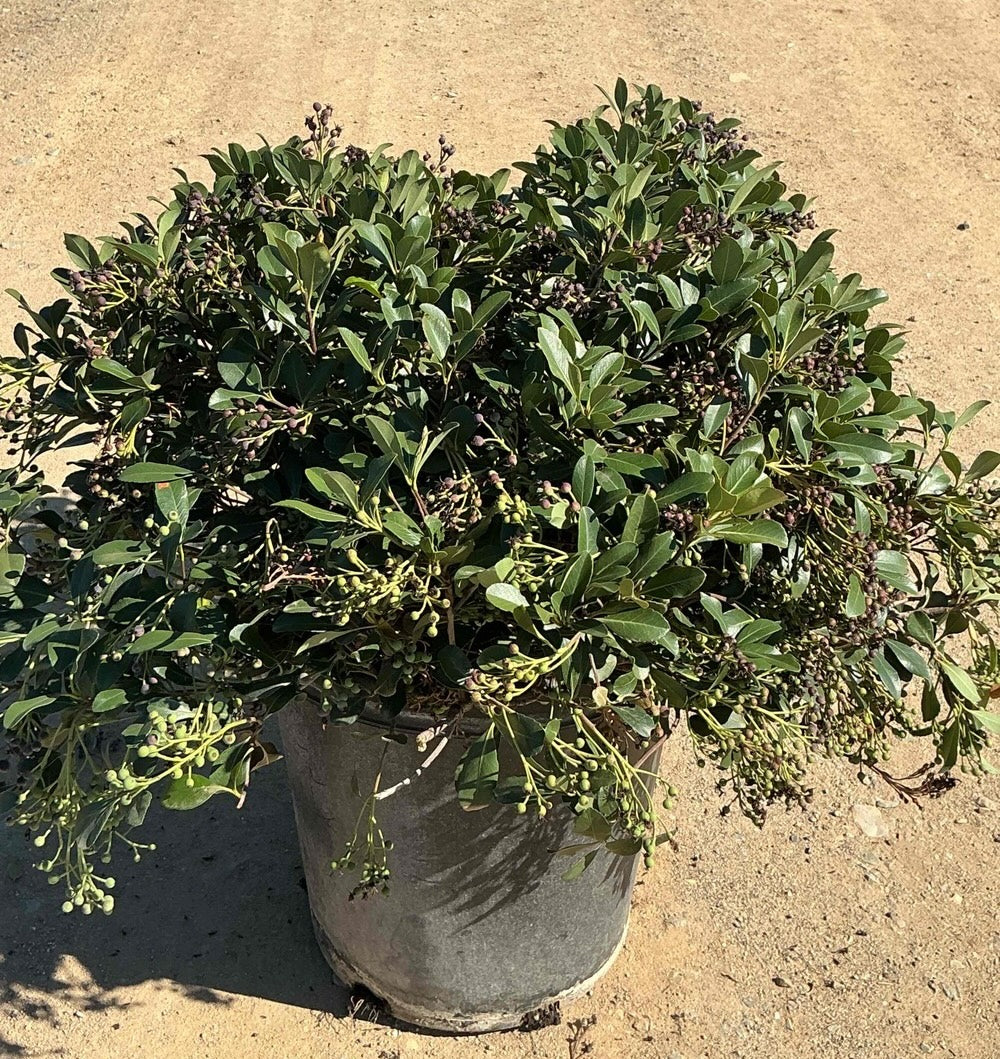
Fruit: Small fruit may follow flowers, though this evergreen shrub is primarily valued for foliage, shape, and fragrance
Perfect For These California Gardeners
Ideal for:
-
Homeowners who want low-maintenance foundation plantings around patios, walkways, and entryways
-
Water-conscious gardeners building drought tolerant landscapes with healthy plants, often pairing dwarf pittosporum with California lilac (Ceanothus) and other natives
-
Coastal gardeners who need a shrub that can handle ocean winds, salt spray, and mild drought, or who want to combine it with a Brush Cherry (Eugenia) hedge for added privacy
-
Anyone who wants a compact evergreen shrub for a hedge, container, mass planting, or small garden bed, but doesn’t have room for a taller Carolina Cherry Laurel privacy screen
If you want a tidy, evergreen shrub that stays compact, grows well in well drained soils, and brings fragrant spring flowers without constant pruning, dwarf pittosporum fits your garden, and you can complement it with flowering trees that boost curb appeal.
Frequently Asked Questions
How often does dwarf pittosporum need pruning?
Minimal pruning is required. Pruning is rarely necessary for dwarf pittosporum due to its natural compact form, though you can prune annually after spring flowers to maintain shape or a more formal hedge.
Will it survive California’s hot summers?
Yes. Dwarf pittosporum has excellent heat tolerance once established and performs well in USDA zones 8-11. In hotter inland areas, partial shade or afternoon protection can help keep foliage glossy and reduce stress.
What varieties does Yardwork recommend?
Yardwork recommends Wheeler’s Dwarf, Mojo, Cream De Mint, and select compact Pittosporum tobira varieties. Wheeler’s dwarf pittosporum offers dark green foliage and a mature height of about 30 inches, while Cream De Mint™ dwarf pittosporum is known for compact growth and fragrant white flowers that bloom in spring.
Can I grow it in containers?
Absolutely. Dwarf pittosporum is well suited to a large container on patios and decks. Use a pot with drainage holes, plant in well drained soils, water deeply during establishment, and reduce frequency once the plant is established.
Ready to Add Year-Round Structure to Your Garden?
Stop struggling with oversized shrubs, bare foundation beds, or hedges that demand constant maintenance. Choose dwarf pittosporum from Yardwork and enjoy compact, evergreen beauty that thrives in California conditions.
Browse available dwarf pittosporum varieties, request expert plant selection guidance from our California plant nursery and landscaping team, or explore other evergreen privacy trees and fast-growing screens to add healthy plants to your cart today.
Expert guidance available to help you choose the right plant for your garden, soil, sun exposure, and design goals, whether you’re shopping Autumn Sage and other companion plants or exploring additional Pittosporum and Cheesewood varieties.
Original: $55.00
-65%$55.00
$19.25More Images
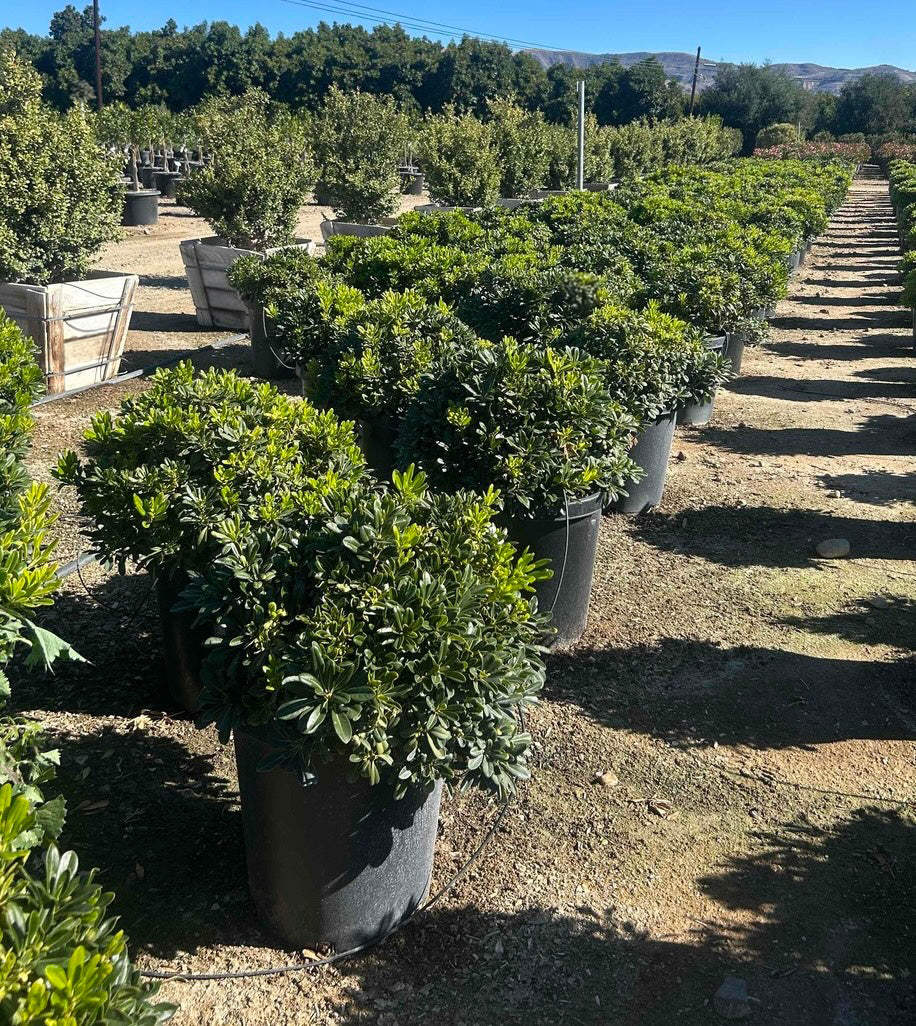
Dwarf Pittosporum (Pittosporum Tobira Wheeler's Dwarf)
Your Go-To Solution for Compact, Year-Round Greenery
Dwarf pittosporum gives California gardens a dense, glossy, year-round green structure without the size problems of larger shrubs. This compact evergreen shrub typically stays around 2 to 3 feet tall, making it ideal for a low growing hedge, tidy shrub borders, foundation plantings, patios, containers, and small spaces where a full-size mock orange would overwhelm the design.
Why You’ll Love Dwarf Pittosporum
-
Stays Compact – This slow growing dwarf variety naturally keeps a neat appearance at about 2 to 3 feet tall, so pruning is rarely necessary for dwarf pittosporum due to its natural compact form.
-
Thrives in California Climate – Dwarf pittosporum thrives best in USDA Plant Hardiness Zones 8 through 11 and becomes drought tolerant once established, making it a strong fit for water-wise gardens.
-
Fragrant Spring Blooms – It produces small, creamy-white clusters of flowers in spring that mature to yellow and emit a fragrance resembling orange blossoms.
-
Evergreen Beauty – Glossy dark green foliage or variegated green foliage stays dense through winter, giving the garden consistent shape and color.
-
Versatile Placement – Plant dwarf pittosporum in full sun, partial sun, part sun, or partial shade, depending on your location, heat exposure, and cultivar.
Dwarf pittosporum is also highly salt-tolerant and resilient against ocean winds and salt spray in coastal zones, making it especially useful near the coast where many ornamental shrubs struggle.
What Makes It Different
Most small shrubs either grow too large, need constant shaping, or lose visual interest outside the main growing season. Dwarf pittosporum is different because it combines compact growth, evergreen foliage, fragrant bloom, and reliable structure in one easy to grow shrub.
Dwarf pittosporum provides:
-
True Dwarf Genetics – Wheeler’s dwarf pittosporum is a cultivar that typically grows to a mature height of about 30 inches and is suitable for full sun to partial shade conditions.
-
Superior Drought Tolerance – Once established, dwarf pittosporum plants can tolerate mild drought conditions and should have their watering frequency reduced accordingly.
-
Multi-Season Interest – Cream De Mint™ dwarf pittosporum is another popular variety, known for its compact growth and fragrant white flowers that bloom in spring.
For classic dark green foliage, Wheeler’s Dwarf Japanese Pittosporum, also known as Pittosporum tobira Wheeler’s Dwarf, delivers a formal, tidy mound. For variegated foliage, Cream De Mint adds fine cream-and-green contrast. Pittosporum tenuifolium 'Silver Sheen' is another variety that features attractive foliage and is often used in landscaping for its aesthetic appeal.
How to Successfully Grow Dwarf Pittosporum
-
Plant in Well-Draining Soil
Choose a location with excellent drainage. Dwarf pittosporum requires excellent soil drainage and cannot tolerate standing water or soggy roots, which lead to root rot. It performs well in average well drained soils, including many California soil types, as long as water does not sit around the roots. -
Water Deeply But Infrequently
Dwarf pittosporum plants thrive in average, well-drained soils and require regular deep watering during their first growing season to establish a strong root system. Water deeply while the plant is young, then reduce frequency as the extensive root system develops and the soil begins to dry slightly between waterings. -
Enjoy Low-Maintenance Growth
Once established, dwarf pittosporum tolerates mild drought and maintains a naturally neat shape with minimal pruning. If needed, prune annually with light trimming after bloom to refine the hedge, remove damaged new growth, or maintain a formal outline.
For best growth, apply fertilizer during the active growing season. Dwarf pittosporum should be fertilized 2 to 3 times a year, particularly before new growth begins in spring, to promote healthy growth.
Plant Specifications
-
Mature Size: 2-3 feet tall, 3-4 feet wide
-
USDA Hardiness Zones: 8-11, perfect for most of California
-
Light Requirements: Full sun to partial shade; partial sun or part sun is helpful in hotter inland gardens
-
Soil Needs: Average well drained soil; avoid soggy roots and standing water
-
Water Requirements: Low to moderate once established; water regularly during the first growing season
-
Bloom Time: Spring, with fragrant white flowers that mature to yellow
-
Foliage: Dense, glossy green foliage or variegated foliage depending on variety
-
Growth Rate: Slow growing to average, with a naturally tidy dwarf habit
-
Common Uses: Low growing hedge, mass planting, shrub borders, foundation plantings, patios, containers, and small spaces
-
Fruit: Small fruit may follow flowers, though this evergreen shrub is primarily valued for foliage, shape, and fragrance
Perfect For These California Gardeners
Ideal for:
-
Homeowners who want low-maintenance foundation plantings around patios, walkways, and entryways
-
Water-conscious gardeners building drought tolerant landscapes with healthy plants, often pairing dwarf pittosporum with California lilac (Ceanothus) and other natives
-
Coastal gardeners who need a shrub that can handle ocean winds, salt spray, and mild drought, or who want to combine it with a Brush Cherry (Eugenia) hedge for added privacy
-
Anyone who wants a compact evergreen shrub for a hedge, container, mass planting, or small garden bed, but doesn’t have room for a taller Carolina Cherry Laurel privacy screen
If you want a tidy, evergreen shrub that stays compact, grows well in well drained soils, and brings fragrant spring flowers without constant pruning, dwarf pittosporum fits your garden, and you can complement it with flowering trees that boost curb appeal.
Frequently Asked Questions
How often does dwarf pittosporum need pruning?
Minimal pruning is required. Pruning is rarely necessary for dwarf pittosporum due to its natural compact form, though you can prune annually after spring flowers to maintain shape or a more formal hedge.
Will it survive California’s hot summers?
Yes. Dwarf pittosporum has excellent heat tolerance once established and performs well in USDA zones 8-11. In hotter inland areas, partial shade or afternoon protection can help keep foliage glossy and reduce stress.
What varieties does Yardwork recommend?
Yardwork recommends Wheeler’s Dwarf, Mojo, Cream De Mint, and select compact Pittosporum tobira varieties. Wheeler’s dwarf pittosporum offers dark green foliage and a mature height of about 30 inches, while Cream De Mint™ dwarf pittosporum is known for compact growth and fragrant white flowers that bloom in spring.
Can I grow it in containers?
Absolutely. Dwarf pittosporum is well suited to a large container on patios and decks. Use a pot with drainage holes, plant in well drained soils, water deeply during establishment, and reduce frequency once the plant is established.
Ready to Add Year-Round Structure to Your Garden?
Stop struggling with oversized shrubs, bare foundation beds, or hedges that demand constant maintenance. Choose dwarf pittosporum from Yardwork and enjoy compact, evergreen beauty that thrives in California conditions.
Browse available dwarf pittosporum varieties, request expert plant selection guidance from our California plant nursery and landscaping team, or explore other evergreen privacy trees and fast-growing screens to add healthy plants to your cart today.
Expert guidance available to help you choose the right plant for your garden, soil, sun exposure, and design goals, whether you’re shopping Autumn Sage and other companion plants or exploring additional Pittosporum and Cheesewood varieties.
Product Information
Product Information
Shipping & Returns
Shipping & Returns
Description
Your Go-To Solution for Compact, Year-Round Greenery
Dwarf pittosporum gives California gardens a dense, glossy, year-round green structure without the size problems of larger shrubs. This compact evergreen shrub typically stays around 2 to 3 feet tall, making it ideal for a low growing hedge, tidy shrub borders, foundation plantings, patios, containers, and small spaces where a full-size mock orange would overwhelm the design.
Why You’ll Love Dwarf Pittosporum
-
Stays Compact – This slow growing dwarf variety naturally keeps a neat appearance at about 2 to 3 feet tall, so pruning is rarely necessary for dwarf pittosporum due to its natural compact form.
-
Thrives in California Climate – Dwarf pittosporum thrives best in USDA Plant Hardiness Zones 8 through 11 and becomes drought tolerant once established, making it a strong fit for water-wise gardens.
-
Fragrant Spring Blooms – It produces small, creamy-white clusters of flowers in spring that mature to yellow and emit a fragrance resembling orange blossoms.
-
Evergreen Beauty – Glossy dark green foliage or variegated green foliage stays dense through winter, giving the garden consistent shape and color.
-
Versatile Placement – Plant dwarf pittosporum in full sun, partial sun, part sun, or partial shade, depending on your location, heat exposure, and cultivar.
Dwarf pittosporum is also highly salt-tolerant and resilient against ocean winds and salt spray in coastal zones, making it especially useful near the coast where many ornamental shrubs struggle.
What Makes It Different
Most small shrubs either grow too large, need constant shaping, or lose visual interest outside the main growing season. Dwarf pittosporum is different because it combines compact growth, evergreen foliage, fragrant bloom, and reliable structure in one easy to grow shrub.
Dwarf pittosporum provides:
-
True Dwarf Genetics – Wheeler’s dwarf pittosporum is a cultivar that typically grows to a mature height of about 30 inches and is suitable for full sun to partial shade conditions.
-
Superior Drought Tolerance – Once established, dwarf pittosporum plants can tolerate mild drought conditions and should have their watering frequency reduced accordingly.
-
Multi-Season Interest – Cream De Mint™ dwarf pittosporum is another popular variety, known for its compact growth and fragrant white flowers that bloom in spring.
For classic dark green foliage, Wheeler’s Dwarf Japanese Pittosporum, also known as Pittosporum tobira Wheeler’s Dwarf, delivers a formal, tidy mound. For variegated foliage, Cream De Mint adds fine cream-and-green contrast. Pittosporum tenuifolium 'Silver Sheen' is another variety that features attractive foliage and is often used in landscaping for its aesthetic appeal.
How to Successfully Grow Dwarf Pittosporum
-
Plant in Well-Draining Soil
Choose a location with excellent drainage. Dwarf pittosporum requires excellent soil drainage and cannot tolerate standing water or soggy roots, which lead to root rot. It performs well in average well drained soils, including many California soil types, as long as water does not sit around the roots. -
Water Deeply But Infrequently
Dwarf pittosporum plants thrive in average, well-drained soils and require regular deep watering during their first growing season to establish a strong root system. Water deeply while the plant is young, then reduce frequency as the extensive root system develops and the soil begins to dry slightly between waterings. -
Enjoy Low-Maintenance Growth
Once established, dwarf pittosporum tolerates mild drought and maintains a naturally neat shape with minimal pruning. If needed, prune annually with light trimming after bloom to refine the hedge, remove damaged new growth, or maintain a formal outline.
For best growth, apply fertilizer during the active growing season. Dwarf pittosporum should be fertilized 2 to 3 times a year, particularly before new growth begins in spring, to promote healthy growth.
Plant Specifications
-
Mature Size: 2-3 feet tall, 3-4 feet wide
-
USDA Hardiness Zones: 8-11, perfect for most of California
-
Light Requirements: Full sun to partial shade; partial sun or part sun is helpful in hotter inland gardens
-
Soil Needs: Average well drained soil; avoid soggy roots and standing water
-
Water Requirements: Low to moderate once established; water regularly during the first growing season
-
Bloom Time: Spring, with fragrant white flowers that mature to yellow
-
Foliage: Dense, glossy green foliage or variegated foliage depending on variety
-
Growth Rate: Slow growing to average, with a naturally tidy dwarf habit
-
Common Uses: Low growing hedge, mass planting, shrub borders, foundation plantings, patios, containers, and small spaces
-
Fruit: Small fruit may follow flowers, though this evergreen shrub is primarily valued for foliage, shape, and fragrance
Perfect For These California Gardeners
Ideal for:
-
Homeowners who want low-maintenance foundation plantings around patios, walkways, and entryways
-
Water-conscious gardeners building drought tolerant landscapes with healthy plants, often pairing dwarf pittosporum with California lilac (Ceanothus) and other natives
-
Coastal gardeners who need a shrub that can handle ocean winds, salt spray, and mild drought, or who want to combine it with a Brush Cherry (Eugenia) hedge for added privacy
-
Anyone who wants a compact evergreen shrub for a hedge, container, mass planting, or small garden bed, but doesn’t have room for a taller Carolina Cherry Laurel privacy screen
If you want a tidy, evergreen shrub that stays compact, grows well in well drained soils, and brings fragrant spring flowers without constant pruning, dwarf pittosporum fits your garden, and you can complement it with flowering trees that boost curb appeal.
Frequently Asked Questions
How often does dwarf pittosporum need pruning?
Minimal pruning is required. Pruning is rarely necessary for dwarf pittosporum due to its natural compact form, though you can prune annually after spring flowers to maintain shape or a more formal hedge.
Will it survive California’s hot summers?
Yes. Dwarf pittosporum has excellent heat tolerance once established and performs well in USDA zones 8-11. In hotter inland areas, partial shade or afternoon protection can help keep foliage glossy and reduce stress.
What varieties does Yardwork recommend?
Yardwork recommends Wheeler’s Dwarf, Mojo, Cream De Mint, and select compact Pittosporum tobira varieties. Wheeler’s dwarf pittosporum offers dark green foliage and a mature height of about 30 inches, while Cream De Mint™ dwarf pittosporum is known for compact growth and fragrant white flowers that bloom in spring.
Can I grow it in containers?
Absolutely. Dwarf pittosporum is well suited to a large container on patios and decks. Use a pot with drainage holes, plant in well drained soils, water deeply during establishment, and reduce frequency once the plant is established.
Ready to Add Year-Round Structure to Your Garden?
Stop struggling with oversized shrubs, bare foundation beds, or hedges that demand constant maintenance. Choose dwarf pittosporum from Yardwork and enjoy compact, evergreen beauty that thrives in California conditions.
Browse available dwarf pittosporum varieties, request expert plant selection guidance from our California plant nursery and landscaping team, or explore other evergreen privacy trees and fast-growing screens to add healthy plants to your cart today.
Expert guidance available to help you choose the right plant for your garden, soil, sun exposure, and design goals, whether you’re shopping Autumn Sage and other companion plants or exploring additional Pittosporum and Cheesewood varieties.