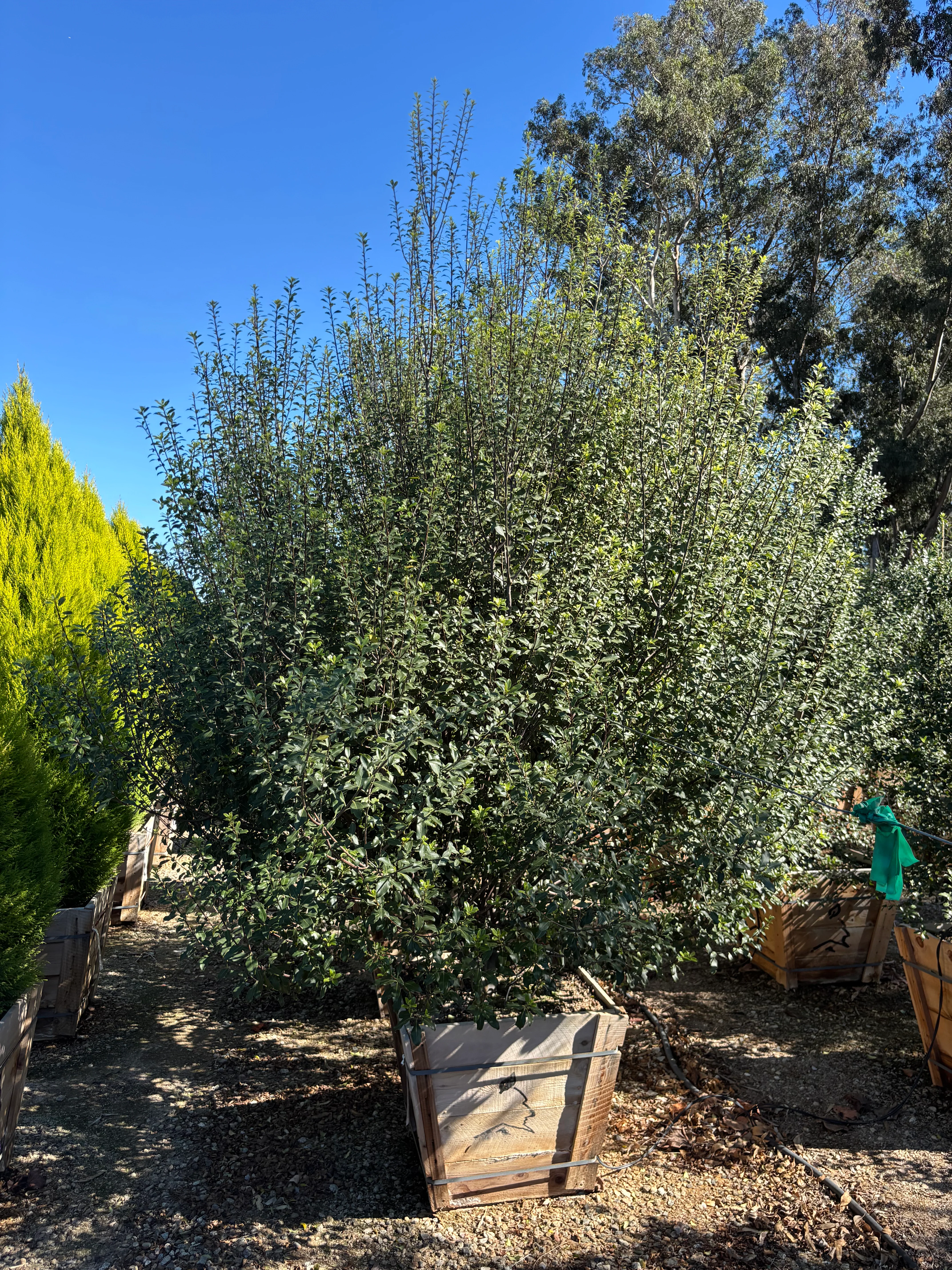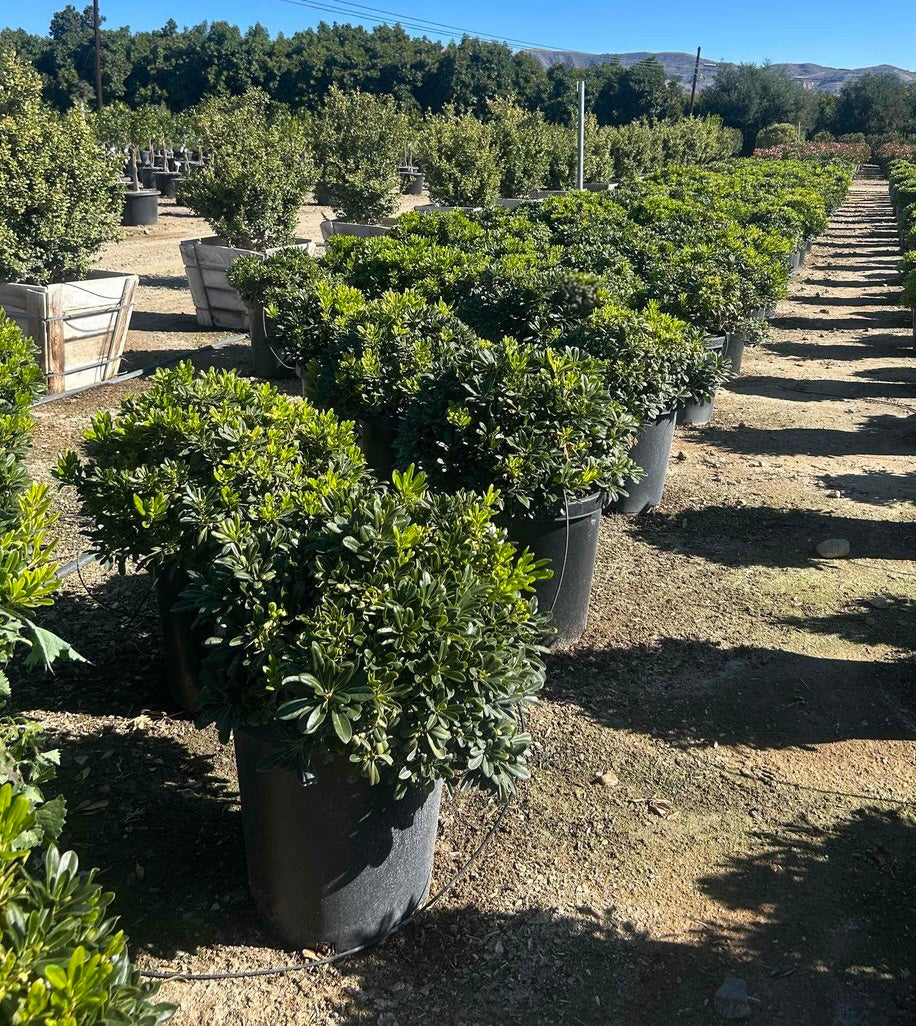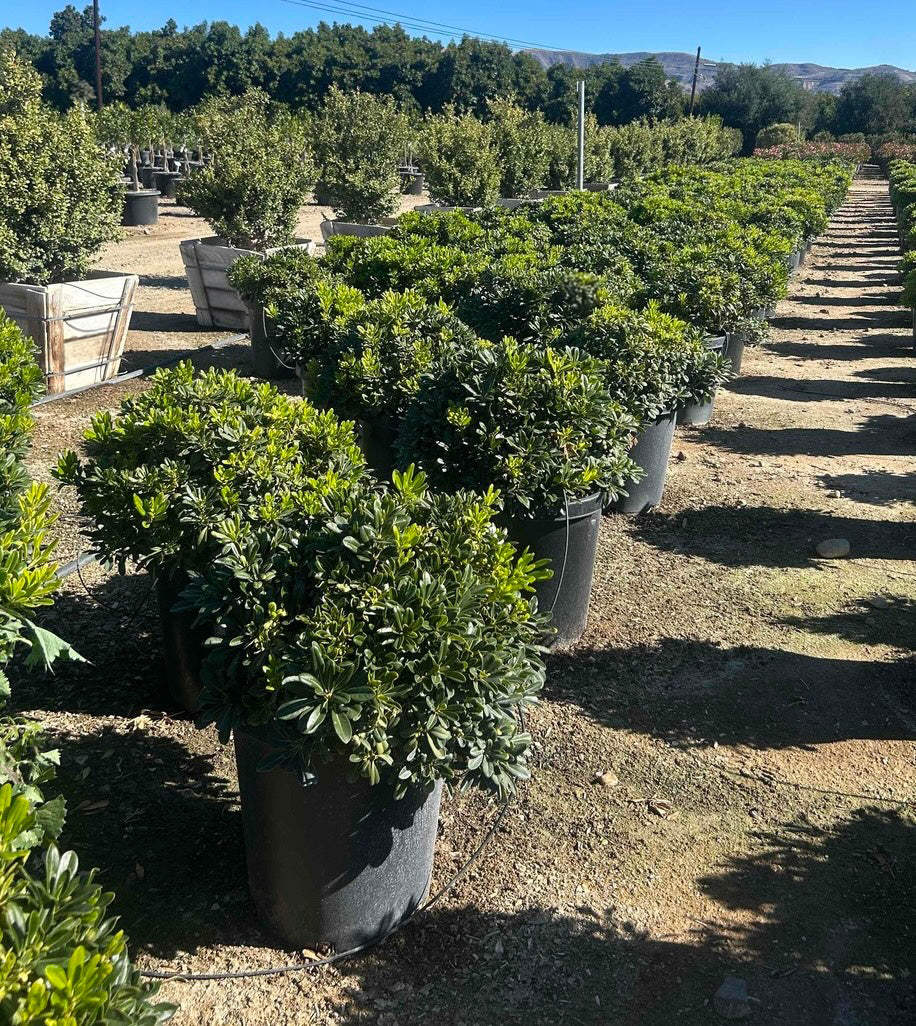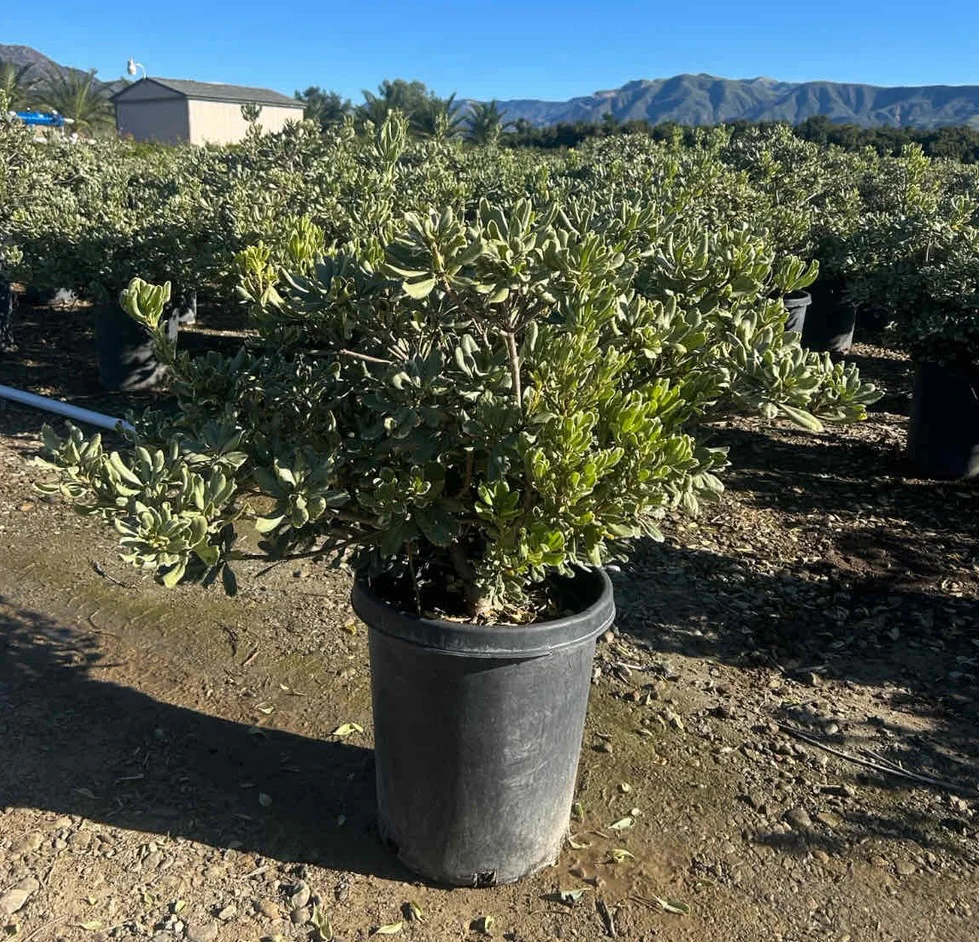

Rhaphiolepis Umbellata (Japanese Hawthorn)
Create Year-Round Beauty with Fragrant Blooms and Evergreen Elegance
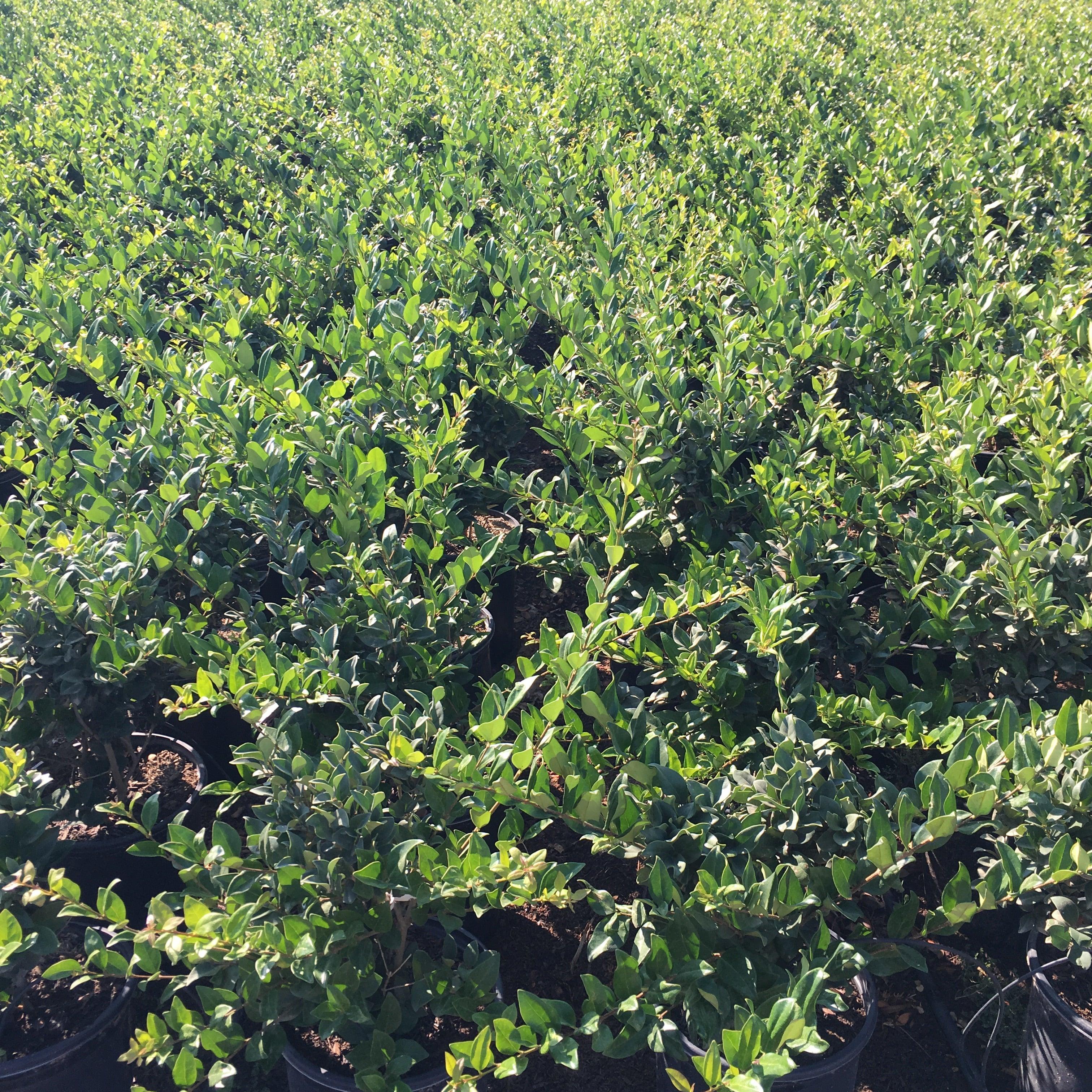
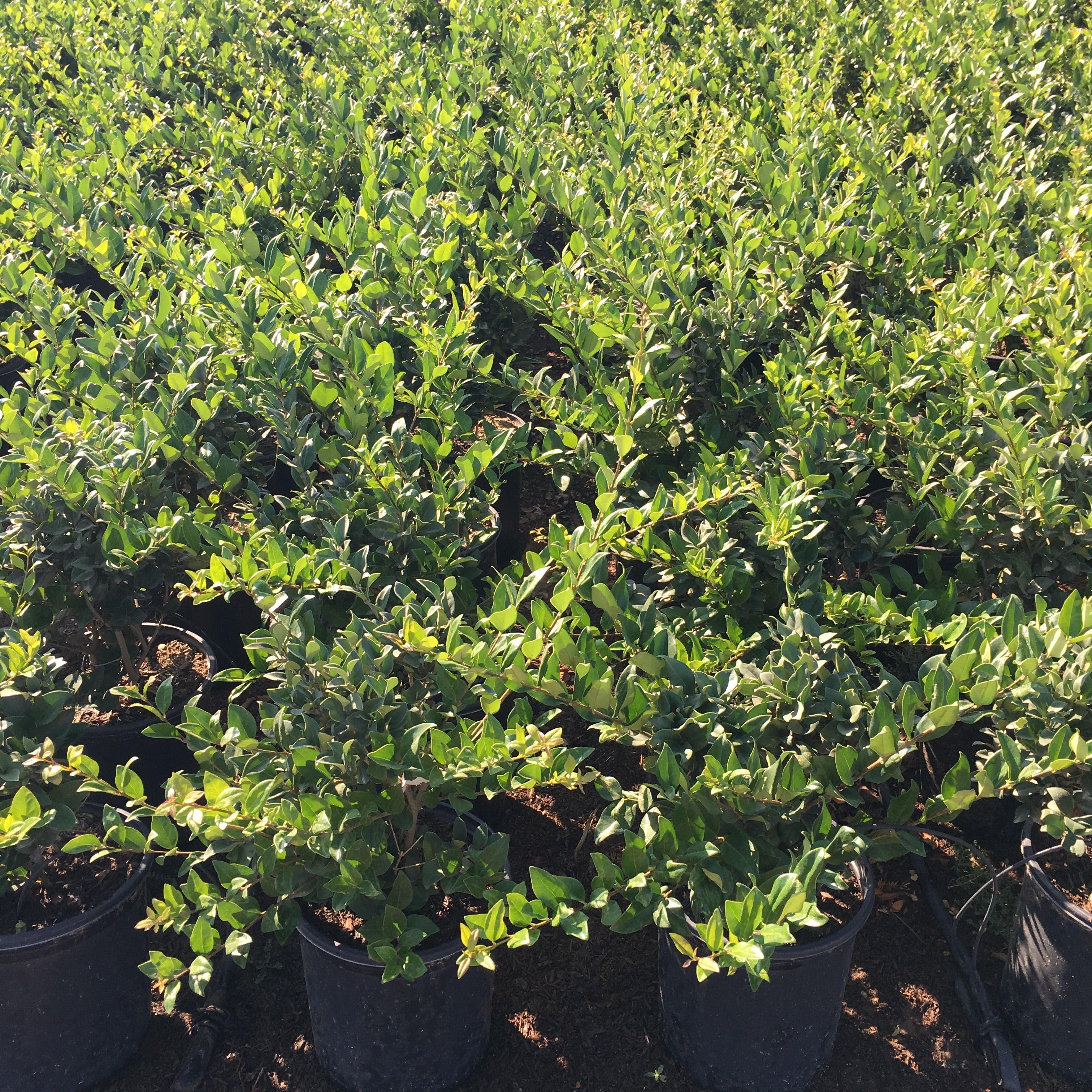
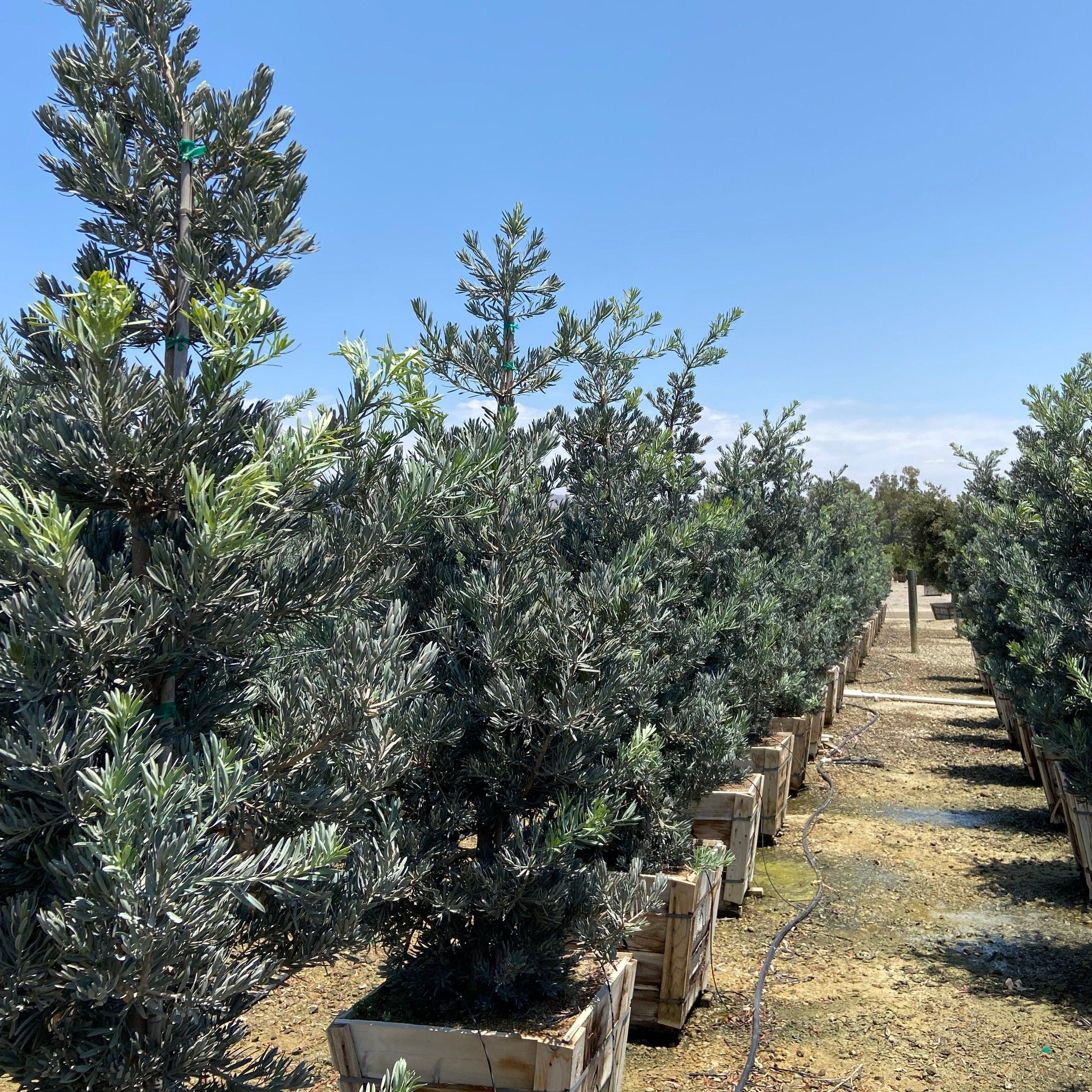
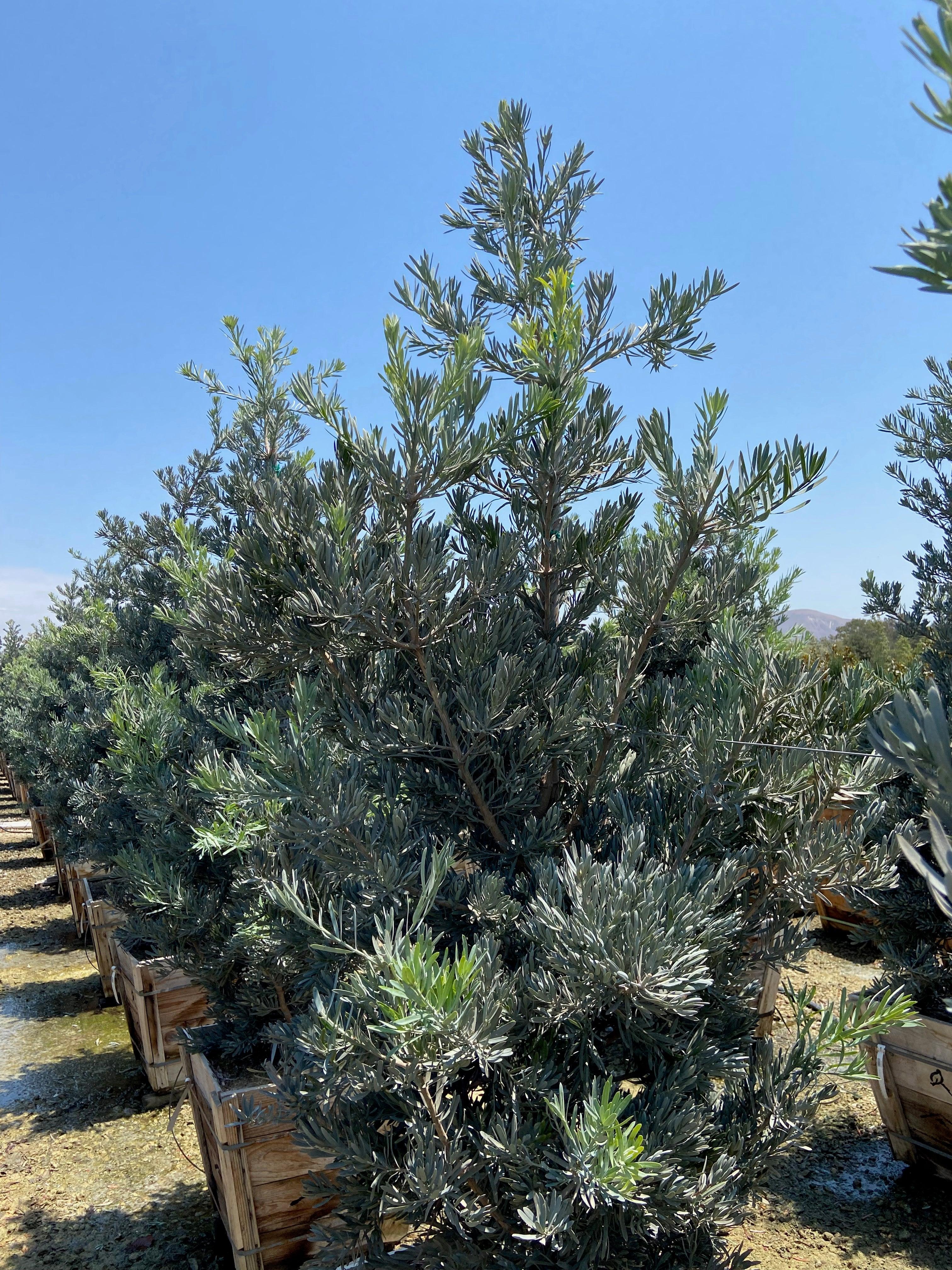
Rhaphiolepis umbellata gives California landscapes a compact evergreen shrub with glossy dark green foliage, fragrant white to light pink flowers in spring, and dependable structure through winter.
Also known by the common name Japanese Hawthorn or Yeddo Hawthorn, this broadleaf evergreen shrub is ideal when you want a polished, low-maintenance plant for foundations, borders, coastal gardens, and small privacy screens without constant pruning or heavy water use once established.
Why You’ll Love It
-
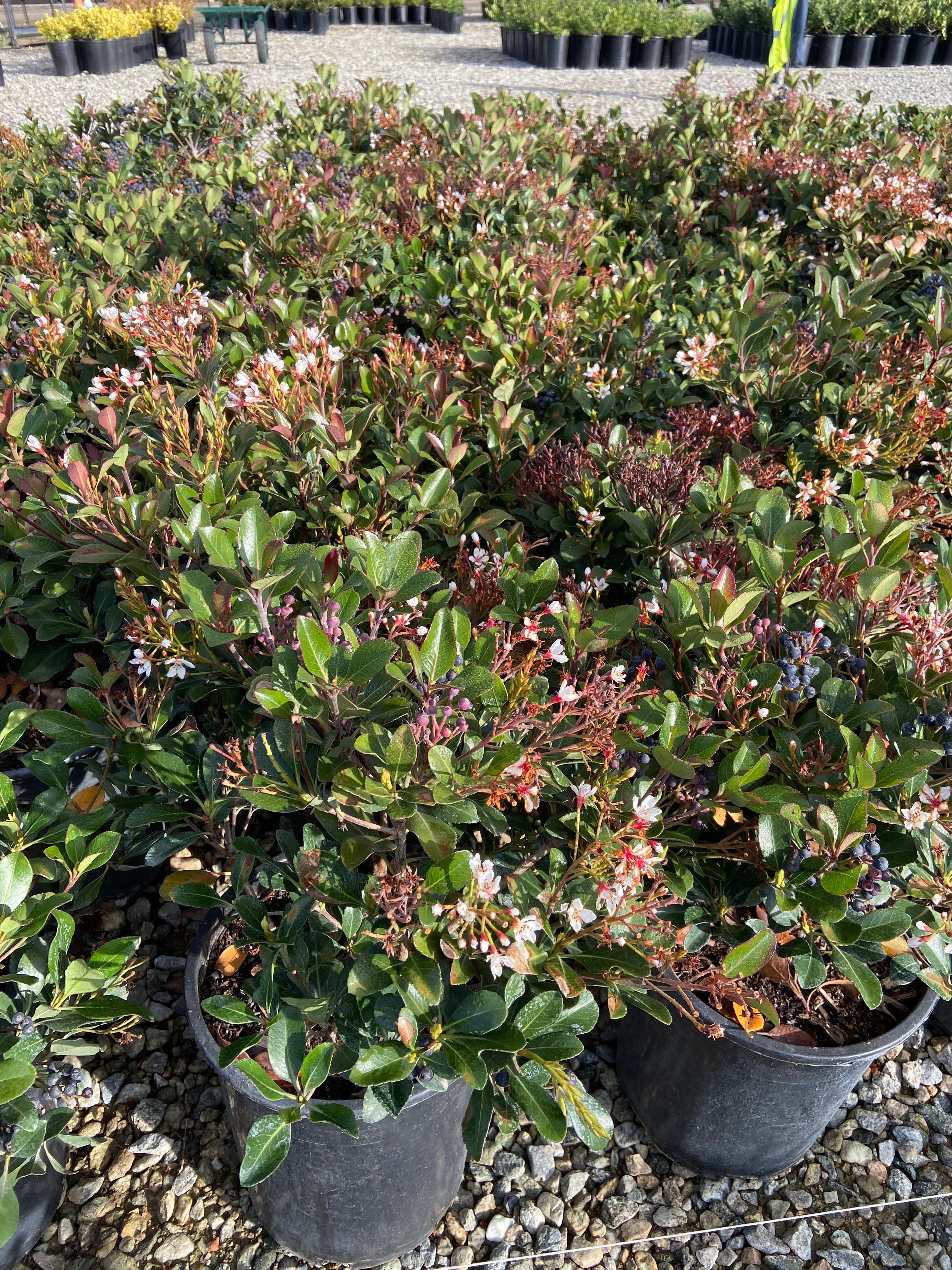
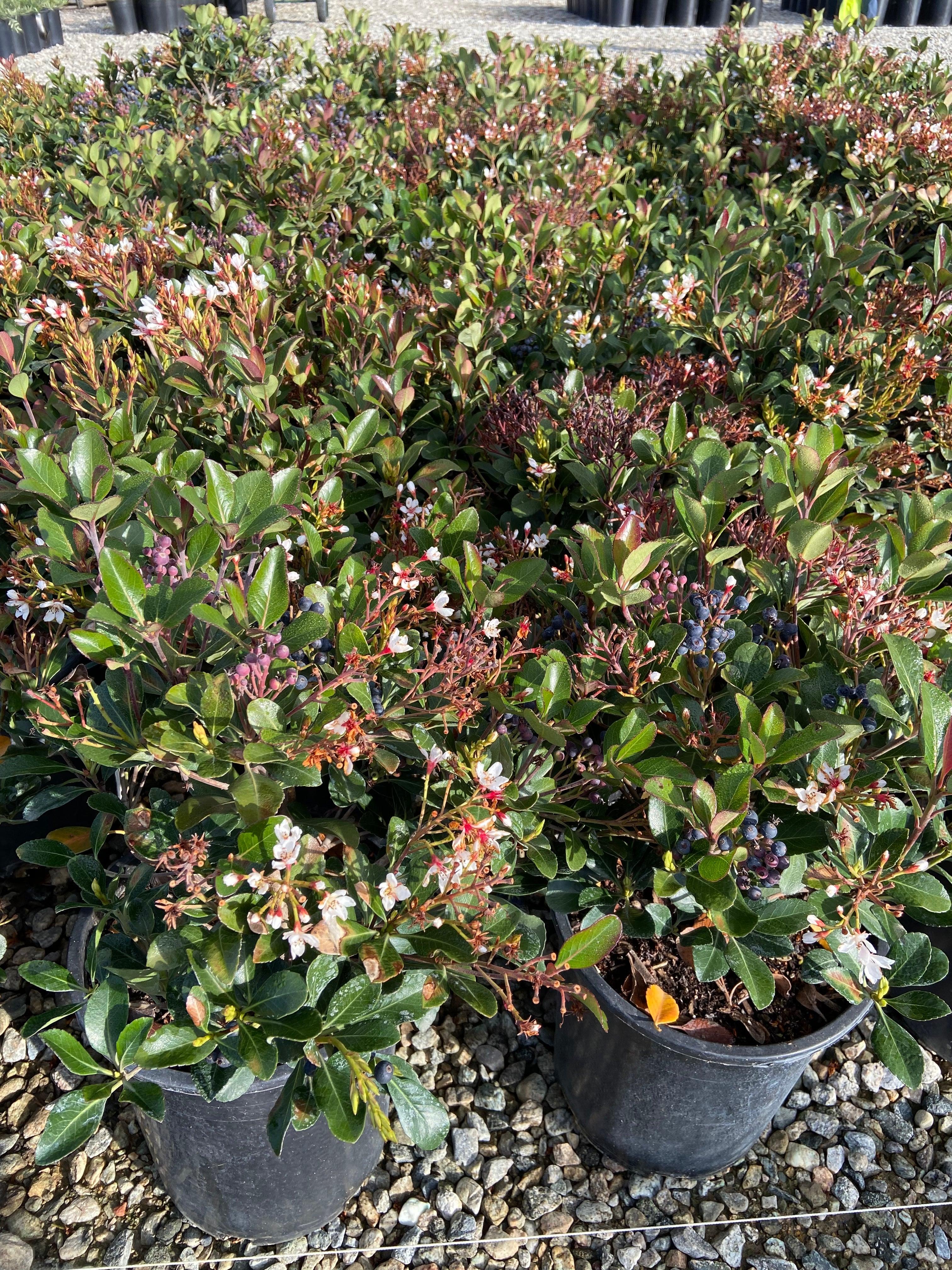
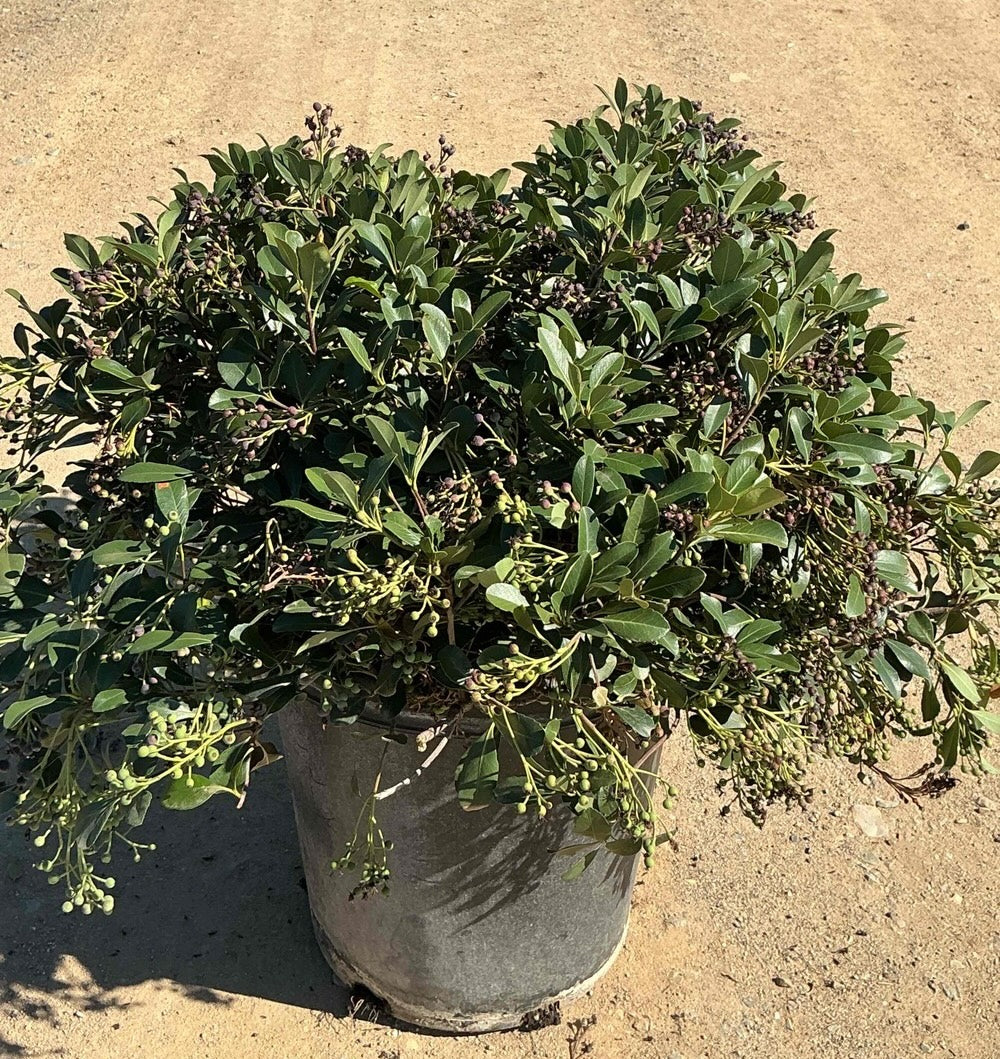
Fragrant Spring Blooms – Clusters of fragrant white flowers to soft pink flowers cover the shrub in spring to early summer, then transition into blue-black fruits in autumn.
-
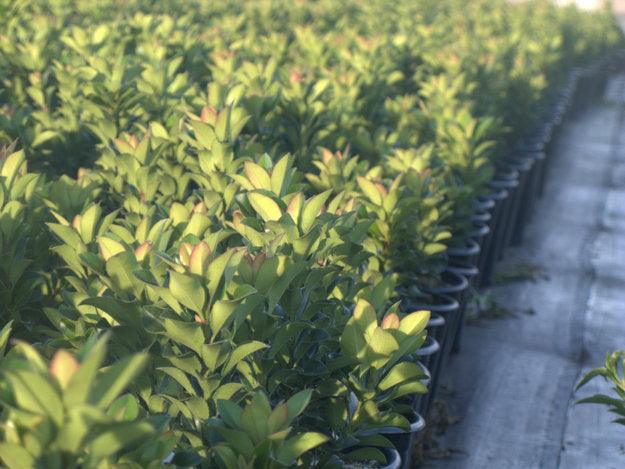
Evergreen Foliage – Dense, leathery, glossy dark green leaves create year-round structure; new growth often emerges bronze or reddish before maturing deep green, and winter foliage may take on a purplish or burgundy cast.
-
Drought Tolerance – Once established, Rhaphiolepis umbellata is drought tolerant and can handle some drought conditions, though it still prefers regular moisture and careful watering that avoids wetting the leaves.
-
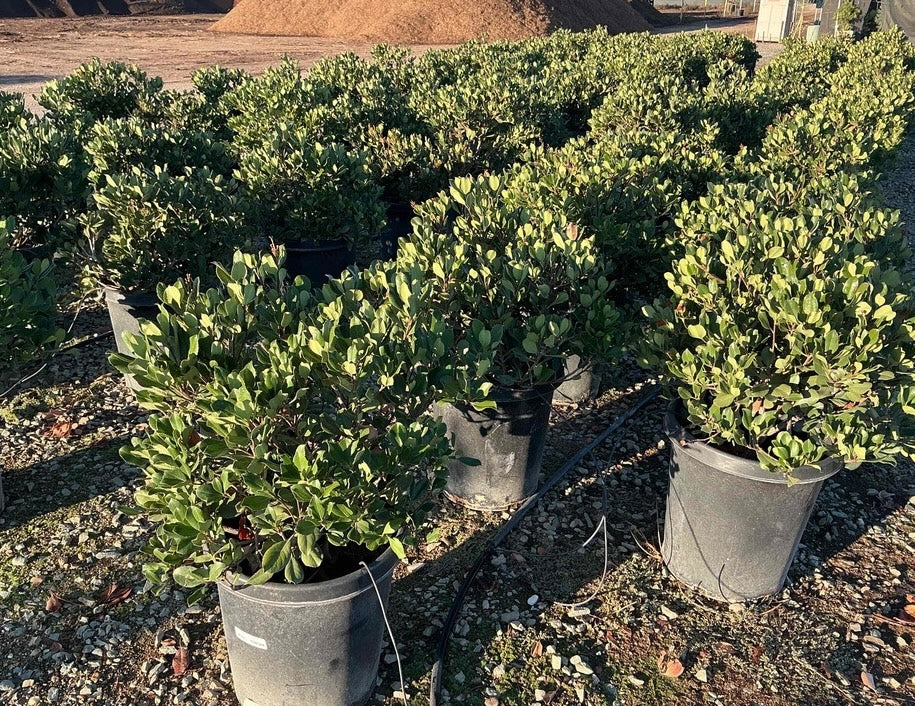
Compact Growth – This shrub naturally grows in a rounded form, typically 4-6 feet tall and wide, making it useful for foundations, shrub borders, low hedges, and smaller garden spaces, and it pairs well with other evergreen privacy shrubs like John Edwards Italian Buckthorn.
-
Salt Tolerance – Rhaphiolepis umbellata is well-suited for coastal areas because of its good salt tolerance, making it a popular choice for seaside landscaping alongside California native shrubs like Ceanothus (California Lilac).
What Makes It Different
Most landscape shrubs either deliver flowers or stay evergreen, but rarely combine both in such a dense, compact, coastal-ready form. Rhaphiolepis umbellata stands out as a flowering evergreen shrub that keeps looking finished even when it is not in bloom.
Rhaphiolepis Umbellata has:
-
Dual-Season Interest – It produces clusters of fragrant white or light pink flowers in the spring, followed by blue-black berries in autumn and evergreen foliage through winter.
-
Heat and Humidity Tolerance – Native to East Asia, including Japan, Korea, and Taiwan, this Rosaceae species handles many mild coastal and Mediterranean climates better than finicky flowering shrubs.
-
Versatile Growing Conditions – Rhaphiolepis umbellata can thrive in various light conditions, from full sun to partial shade, though best flowering occurs in locations with full sun exposure, similar to other evergreen hedge plants like Carolina Cherry Laurel.
Botanical note: the genus Rhaphiolepis comes from Greek words often interpreted as rhaphis meaning needle and lepismeaning scale, a reference tied to floral structure. You may also see related names or references such as Indian hawthorn, dwarf Yedda hawthorn, Rhaphiolepis umbellata minor, integerrima Hook., or ovata on a nursery page, but this product focuses on the classic umbellata form.
How To Grow Rhaphiolepis Umbellata
-
Step 1 – Plant in Well-Drained Location
Choose full sun for optimal flowering or light shade where afternoon heat is intense. Rhaphiolepis umbellata prefers moist, well drained soils and adapts easily to sandy, loamy, or clay soils as long as excellent drainage is present. It cannot tolerate waterlogged conditions, much like many of the privacy and evergreen trees offered in Yardwork’s nursery collection. -
Step 2 – Establish with Regular Watering
Water regularly during establishment, especially through the first growing season. A practical sun-to-light-shade water routine should keep soil evenly moist but never soggy, just as you would when establishing new flowering trees in a California garden. Avoid overhead watering and avoid wetting the leaves, because leaf spot is a common issue with this plant. -
Step 3 – Enjoy Low-Maintenance Beauty
Once established, Rhaphiolepis umbellata becomes drought tolerant, keeps a naturally attractive dome, and rarely needs pruning. If shaping is necessary, prune immediately after the spring flowering to avoid cutting off next year’s buds.
Plant Details
-
Mature Size: Rhaphiolepis umbellata is a dense, broad-leaved evergreen shrub that typically grows to 4-6 feet tall and wide; some varieties or landscape uses may be described in the 4-8 foot range depending on variety and conditions.
-
Growth Rate: Moderate; naturally compact with dense branches and a rounded form.
-
Hardiness Zones: Winter hardy to USDA Zones 7b-10.
-
Light Requirements: Full sun to partial shade; this shrub tolerates light shade, but best flowering occurs in full sun.
-
Soil Needs: Prefers moist, well-drained soils; adapts to sandy, loamy, or clay soils when drainage is excellent.
-
Bloom Time: Spring to early summer.
-
Flower Color: Fragrant white to light pink flowers; some plants appear mostly white, while others show pink tones.
-
Foliage: Glossy dark green, leathery evergreen leaves; new foliage may be bronze-red, and winter foliage may show purplish or burgundy tones.
-
Fruit: Spring flowers transition into blue-black berries in autumn.
-
Coastal Use: Good salt tolerance makes this shrub well-suited for seaside landscaping, where it can be combined with larger drought-tolerant ornamentals like the California Pepper Tree.
-
Deer Note: The shrub’s dense, leathery foliage is appealing to deer, which may require protective fencing in areas where deer browse frequently, especially when planted alongside other ornamental trees like California Pepper and companions in Yardwork’s tree selection.
-
Disease Watch: Rhaphiolepis umbellata is susceptible to Entomosporium leaf spot, which can be managed by ensuring adequate spacing between plants and avoiding overhead watering, the same sound cultural practices recommended for drought-tolerant landscape trees like Engelmann Oak.
Who It’s For
Ideal for:
-
California homeowners who want a low-maintenance, drought tolerant evergreen shrub for year-round curb appeal.
-
Gardeners designing foundation plantings, mixed shrub borders, informal hedges, or compact privacy screens that can be complemented with evergreen shrubs such as Glossy Privet.
-
Coastal properties that need salt-tolerant plants with durable foliage and spring flowers, potentially paired with culinary evergreens like Bay Laurel in protected spots.
-
Busy homeowners who want a plant that naturally keeps a clean, rounded form without regular pruning.
-
Designers looking for a broadleaf evergreen that works in full sun, partial shade, well drained soils, and smaller spaces.
If you want fragrant spring flowers, evergreen structure, and a compact shrub that performs well in many California garden settings, Rhaphiolepis umbellata fits beautifully.
Frequently Asked Questions
How fast does Japanese Hawthorn grow?
Rhaphiolepis umbellata has a moderate growth rate and typically matures into a dense shrub about 4-6 feet tall and wide. It is not an instant screen, but its compact habit and dense branches make it dependable for foundations, borders, and smaller privacy plantings.
Does it need regular pruning?
No. Pruning is rarely needed since the shrub naturally forms an attractive dome. If you need to shape the plant or remove crossing branches, prune immediately after the spring flowering to avoid cutting off next year’s buds.
Will it survive California drought conditions?
Yes, once established, Rhaphiolepis umbellata is drought tolerant and can withstand some drought conditions. For best growth, provide regular watering during establishment and occasional deep watering during extended dry periods. Avoid wetting the leaves when watering to reduce leaf spot risk.
What pests or diseases should I watch for?
The main disease to watch for is Entomosporium leaf spot, especially where foliage stays wet or plants are crowded. Manage it with adequate spacing, good airflow, and no overhead watering. Scale, aphids, spider mites, and similar pests may appear on stressed plants.
Can I plant it near the coast?
Yes. Rhaphiolepis umbellata is well-suited for coastal areas because of its good salt tolerance. It performs especially well in seaside gardens with well drained soils, full sun to light shade, and protection from severe cold winter winds.
Ready to Transform Your Garden?
Choose Rhaphiolepis Umbellata (Japanese Hawthorn) for a polished evergreen foundation, fragrant spring color, and reliable coastal performance in one compact shrub.
Yardwork helps California customers select the right plant for the right location, with California delivery, expert consultation, plant support, and a plant guarantee for added confidence. Free shipping is available for qualifying California orders.
Original: $25.00
-65%$25.00
$8.75More Images
Rhaphiolepis Umbellata (Japanese Hawthorn)
Create Year-Round Beauty with Fragrant Blooms and Evergreen Elegance
Rhaphiolepis umbellata gives California landscapes a compact evergreen shrub with glossy dark green foliage, fragrant white to light pink flowers in spring, and dependable structure through winter.
Also known by the common name Japanese Hawthorn or Yeddo Hawthorn, this broadleaf evergreen shrub is ideal when you want a polished, low-maintenance plant for foundations, borders, coastal gardens, and small privacy screens without constant pruning or heavy water use once established.
Why You’ll Love It
-
Fragrant Spring Blooms – Clusters of fragrant white flowers to soft pink flowers cover the shrub in spring to early summer, then transition into blue-black fruits in autumn.
-
Evergreen Foliage – Dense, leathery, glossy dark green leaves create year-round structure; new growth often emerges bronze or reddish before maturing deep green, and winter foliage may take on a purplish or burgundy cast.
-
Drought Tolerance – Once established, Rhaphiolepis umbellata is drought tolerant and can handle some drought conditions, though it still prefers regular moisture and careful watering that avoids wetting the leaves.
-
Compact Growth – This shrub naturally grows in a rounded form, typically 4-6 feet tall and wide, making it useful for foundations, shrub borders, low hedges, and smaller garden spaces, and it pairs well with other evergreen privacy shrubs like John Edwards Italian Buckthorn.
-
Salt Tolerance – Rhaphiolepis umbellata is well-suited for coastal areas because of its good salt tolerance, making it a popular choice for seaside landscaping alongside California native shrubs like Ceanothus (California Lilac).
What Makes It Different
Most landscape shrubs either deliver flowers or stay evergreen, but rarely combine both in such a dense, compact, coastal-ready form. Rhaphiolepis umbellata stands out as a flowering evergreen shrub that keeps looking finished even when it is not in bloom.
Rhaphiolepis Umbellata has:
-
Dual-Season Interest – It produces clusters of fragrant white or light pink flowers in the spring, followed by blue-black berries in autumn and evergreen foliage through winter.
-
Heat and Humidity Tolerance – Native to East Asia, including Japan, Korea, and Taiwan, this Rosaceae species handles many mild coastal and Mediterranean climates better than finicky flowering shrubs.
-
Versatile Growing Conditions – Rhaphiolepis umbellata can thrive in various light conditions, from full sun to partial shade, though best flowering occurs in locations with full sun exposure, similar to other evergreen hedge plants like Carolina Cherry Laurel.
Botanical note: the genus Rhaphiolepis comes from Greek words often interpreted as rhaphis meaning needle and lepismeaning scale, a reference tied to floral structure. You may also see related names or references such as Indian hawthorn, dwarf Yedda hawthorn, Rhaphiolepis umbellata minor, integerrima Hook., or ovata on a nursery page, but this product focuses on the classic umbellata form.
How To Grow Rhaphiolepis Umbellata
-
Step 1 – Plant in Well-Drained Location
Choose full sun for optimal flowering or light shade where afternoon heat is intense. Rhaphiolepis umbellata prefers moist, well drained soils and adapts easily to sandy, loamy, or clay soils as long as excellent drainage is present. It cannot tolerate waterlogged conditions, much like many of the privacy and evergreen trees offered in Yardwork’s nursery collection. -
Step 2 – Establish with Regular Watering
Water regularly during establishment, especially through the first growing season. A practical sun-to-light-shade water routine should keep soil evenly moist but never soggy, just as you would when establishing new flowering trees in a California garden. Avoid overhead watering and avoid wetting the leaves, because leaf spot is a common issue with this plant. -
Step 3 – Enjoy Low-Maintenance Beauty
Once established, Rhaphiolepis umbellata becomes drought tolerant, keeps a naturally attractive dome, and rarely needs pruning. If shaping is necessary, prune immediately after the spring flowering to avoid cutting off next year’s buds.
Plant Details
-
Mature Size: Rhaphiolepis umbellata is a dense, broad-leaved evergreen shrub that typically grows to 4-6 feet tall and wide; some varieties or landscape uses may be described in the 4-8 foot range depending on variety and conditions.
-
Growth Rate: Moderate; naturally compact with dense branches and a rounded form.
-
Hardiness Zones: Winter hardy to USDA Zones 7b-10.
-
Light Requirements: Full sun to partial shade; this shrub tolerates light shade, but best flowering occurs in full sun.
-
Soil Needs: Prefers moist, well-drained soils; adapts to sandy, loamy, or clay soils when drainage is excellent.
-
Bloom Time: Spring to early summer.
-
Flower Color: Fragrant white to light pink flowers; some plants appear mostly white, while others show pink tones.
-
Foliage: Glossy dark green, leathery evergreen leaves; new foliage may be bronze-red, and winter foliage may show purplish or burgundy tones.
-
Fruit: Spring flowers transition into blue-black berries in autumn.
-
Coastal Use: Good salt tolerance makes this shrub well-suited for seaside landscaping, where it can be combined with larger drought-tolerant ornamentals like the California Pepper Tree.
-
Deer Note: The shrub’s dense, leathery foliage is appealing to deer, which may require protective fencing in areas where deer browse frequently, especially when planted alongside other ornamental trees like California Pepper and companions in Yardwork’s tree selection.
-
Disease Watch: Rhaphiolepis umbellata is susceptible to Entomosporium leaf spot, which can be managed by ensuring adequate spacing between plants and avoiding overhead watering, the same sound cultural practices recommended for drought-tolerant landscape trees like Engelmann Oak.
Who It’s For
Ideal for:
-
California homeowners who want a low-maintenance, drought tolerant evergreen shrub for year-round curb appeal.
-
Gardeners designing foundation plantings, mixed shrub borders, informal hedges, or compact privacy screens that can be complemented with evergreen shrubs such as Glossy Privet.
-
Coastal properties that need salt-tolerant plants with durable foliage and spring flowers, potentially paired with culinary evergreens like Bay Laurel in protected spots.
-
Busy homeowners who want a plant that naturally keeps a clean, rounded form without regular pruning.
-
Designers looking for a broadleaf evergreen that works in full sun, partial shade, well drained soils, and smaller spaces.
If you want fragrant spring flowers, evergreen structure, and a compact shrub that performs well in many California garden settings, Rhaphiolepis umbellata fits beautifully.
Frequently Asked Questions
How fast does Japanese Hawthorn grow?
Rhaphiolepis umbellata has a moderate growth rate and typically matures into a dense shrub about 4-6 feet tall and wide. It is not an instant screen, but its compact habit and dense branches make it dependable for foundations, borders, and smaller privacy plantings.
Does it need regular pruning?
No. Pruning is rarely needed since the shrub naturally forms an attractive dome. If you need to shape the plant or remove crossing branches, prune immediately after the spring flowering to avoid cutting off next year’s buds.
Will it survive California drought conditions?
Yes, once established, Rhaphiolepis umbellata is drought tolerant and can withstand some drought conditions. For best growth, provide regular watering during establishment and occasional deep watering during extended dry periods. Avoid wetting the leaves when watering to reduce leaf spot risk.
What pests or diseases should I watch for?
The main disease to watch for is Entomosporium leaf spot, especially where foliage stays wet or plants are crowded. Manage it with adequate spacing, good airflow, and no overhead watering. Scale, aphids, spider mites, and similar pests may appear on stressed plants.
Can I plant it near the coast?
Yes. Rhaphiolepis umbellata is well-suited for coastal areas because of its good salt tolerance. It performs especially well in seaside gardens with well drained soils, full sun to light shade, and protection from severe cold winter winds.
Ready to Transform Your Garden?
Choose Rhaphiolepis Umbellata (Japanese Hawthorn) for a polished evergreen foundation, fragrant spring color, and reliable coastal performance in one compact shrub.
Yardwork helps California customers select the right plant for the right location, with California delivery, expert consultation, plant support, and a plant guarantee for added confidence. Free shipping is available for qualifying California orders.
Product Information
Product Information
Shipping & Returns
Shipping & Returns
Description
Create Year-Round Beauty with Fragrant Blooms and Evergreen Elegance
Rhaphiolepis umbellata gives California landscapes a compact evergreen shrub with glossy dark green foliage, fragrant white to light pink flowers in spring, and dependable structure through winter.
Also known by the common name Japanese Hawthorn or Yeddo Hawthorn, this broadleaf evergreen shrub is ideal when you want a polished, low-maintenance plant for foundations, borders, coastal gardens, and small privacy screens without constant pruning or heavy water use once established.
Why You’ll Love It
-
Fragrant Spring Blooms – Clusters of fragrant white flowers to soft pink flowers cover the shrub in spring to early summer, then transition into blue-black fruits in autumn.
-
Evergreen Foliage – Dense, leathery, glossy dark green leaves create year-round structure; new growth often emerges bronze or reddish before maturing deep green, and winter foliage may take on a purplish or burgundy cast.
-
Drought Tolerance – Once established, Rhaphiolepis umbellata is drought tolerant and can handle some drought conditions, though it still prefers regular moisture and careful watering that avoids wetting the leaves.
-
Compact Growth – This shrub naturally grows in a rounded form, typically 4-6 feet tall and wide, making it useful for foundations, shrub borders, low hedges, and smaller garden spaces, and it pairs well with other evergreen privacy shrubs like John Edwards Italian Buckthorn.
-
Salt Tolerance – Rhaphiolepis umbellata is well-suited for coastal areas because of its good salt tolerance, making it a popular choice for seaside landscaping alongside California native shrubs like Ceanothus (California Lilac).
What Makes It Different
Most landscape shrubs either deliver flowers or stay evergreen, but rarely combine both in such a dense, compact, coastal-ready form. Rhaphiolepis umbellata stands out as a flowering evergreen shrub that keeps looking finished even when it is not in bloom.
Rhaphiolepis Umbellata has:
-
Dual-Season Interest – It produces clusters of fragrant white or light pink flowers in the spring, followed by blue-black berries in autumn and evergreen foliage through winter.
-
Heat and Humidity Tolerance – Native to East Asia, including Japan, Korea, and Taiwan, this Rosaceae species handles many mild coastal and Mediterranean climates better than finicky flowering shrubs.
-
Versatile Growing Conditions – Rhaphiolepis umbellata can thrive in various light conditions, from full sun to partial shade, though best flowering occurs in locations with full sun exposure, similar to other evergreen hedge plants like Carolina Cherry Laurel.
Botanical note: the genus Rhaphiolepis comes from Greek words often interpreted as rhaphis meaning needle and lepismeaning scale, a reference tied to floral structure. You may also see related names or references such as Indian hawthorn, dwarf Yedda hawthorn, Rhaphiolepis umbellata minor, integerrima Hook., or ovata on a nursery page, but this product focuses on the classic umbellata form.
How To Grow Rhaphiolepis Umbellata
-
Step 1 – Plant in Well-Drained Location
Choose full sun for optimal flowering or light shade where afternoon heat is intense. Rhaphiolepis umbellata prefers moist, well drained soils and adapts easily to sandy, loamy, or clay soils as long as excellent drainage is present. It cannot tolerate waterlogged conditions, much like many of the privacy and evergreen trees offered in Yardwork’s nursery collection. -
Step 2 – Establish with Regular Watering
Water regularly during establishment, especially through the first growing season. A practical sun-to-light-shade water routine should keep soil evenly moist but never soggy, just as you would when establishing new flowering trees in a California garden. Avoid overhead watering and avoid wetting the leaves, because leaf spot is a common issue with this plant. -
Step 3 – Enjoy Low-Maintenance Beauty
Once established, Rhaphiolepis umbellata becomes drought tolerant, keeps a naturally attractive dome, and rarely needs pruning. If shaping is necessary, prune immediately after the spring flowering to avoid cutting off next year’s buds.
Plant Details
-
Mature Size: Rhaphiolepis umbellata is a dense, broad-leaved evergreen shrub that typically grows to 4-6 feet tall and wide; some varieties or landscape uses may be described in the 4-8 foot range depending on variety and conditions.
-
Growth Rate: Moderate; naturally compact with dense branches and a rounded form.
-
Hardiness Zones: Winter hardy to USDA Zones 7b-10.
-
Light Requirements: Full sun to partial shade; this shrub tolerates light shade, but best flowering occurs in full sun.
-
Soil Needs: Prefers moist, well-drained soils; adapts to sandy, loamy, or clay soils when drainage is excellent.
-
Bloom Time: Spring to early summer.
-
Flower Color: Fragrant white to light pink flowers; some plants appear mostly white, while others show pink tones.
-
Foliage: Glossy dark green, leathery evergreen leaves; new foliage may be bronze-red, and winter foliage may show purplish or burgundy tones.
-
Fruit: Spring flowers transition into blue-black berries in autumn.
-
Coastal Use: Good salt tolerance makes this shrub well-suited for seaside landscaping, where it can be combined with larger drought-tolerant ornamentals like the California Pepper Tree.
-
Deer Note: The shrub’s dense, leathery foliage is appealing to deer, which may require protective fencing in areas where deer browse frequently, especially when planted alongside other ornamental trees like California Pepper and companions in Yardwork’s tree selection.
-
Disease Watch: Rhaphiolepis umbellata is susceptible to Entomosporium leaf spot, which can be managed by ensuring adequate spacing between plants and avoiding overhead watering, the same sound cultural practices recommended for drought-tolerant landscape trees like Engelmann Oak.
Who It’s For
Ideal for:
-
California homeowners who want a low-maintenance, drought tolerant evergreen shrub for year-round curb appeal.
-
Gardeners designing foundation plantings, mixed shrub borders, informal hedges, or compact privacy screens that can be complemented with evergreen shrubs such as Glossy Privet.
-
Coastal properties that need salt-tolerant plants with durable foliage and spring flowers, potentially paired with culinary evergreens like Bay Laurel in protected spots.
-
Busy homeowners who want a plant that naturally keeps a clean, rounded form without regular pruning.
-
Designers looking for a broadleaf evergreen that works in full sun, partial shade, well drained soils, and smaller spaces.
If you want fragrant spring flowers, evergreen structure, and a compact shrub that performs well in many California garden settings, Rhaphiolepis umbellata fits beautifully.
Frequently Asked Questions
How fast does Japanese Hawthorn grow?
Rhaphiolepis umbellata has a moderate growth rate and typically matures into a dense shrub about 4-6 feet tall and wide. It is not an instant screen, but its compact habit and dense branches make it dependable for foundations, borders, and smaller privacy plantings.
Does it need regular pruning?
No. Pruning is rarely needed since the shrub naturally forms an attractive dome. If you need to shape the plant or remove crossing branches, prune immediately after the spring flowering to avoid cutting off next year’s buds.
Will it survive California drought conditions?
Yes, once established, Rhaphiolepis umbellata is drought tolerant and can withstand some drought conditions. For best growth, provide regular watering during establishment and occasional deep watering during extended dry periods. Avoid wetting the leaves when watering to reduce leaf spot risk.
What pests or diseases should I watch for?
The main disease to watch for is Entomosporium leaf spot, especially where foliage stays wet or plants are crowded. Manage it with adequate spacing, good airflow, and no overhead watering. Scale, aphids, spider mites, and similar pests may appear on stressed plants.
Can I plant it near the coast?
Yes. Rhaphiolepis umbellata is well-suited for coastal areas because of its good salt tolerance. It performs especially well in seaside gardens with well drained soils, full sun to light shade, and protection from severe cold winter winds.
Ready to Transform Your Garden?
Choose Rhaphiolepis Umbellata (Japanese Hawthorn) for a polished evergreen foundation, fragrant spring color, and reliable coastal performance in one compact shrub.
Yardwork helps California customers select the right plant for the right location, with California delivery, expert consultation, plant support, and a plant guarantee for added confidence. Free shipping is available for qualifying California orders.