Echinocactus Grusonii (Golden Barrel Cactus)
Transform Your Garden with Nature’s Most Striking Architectural Plant
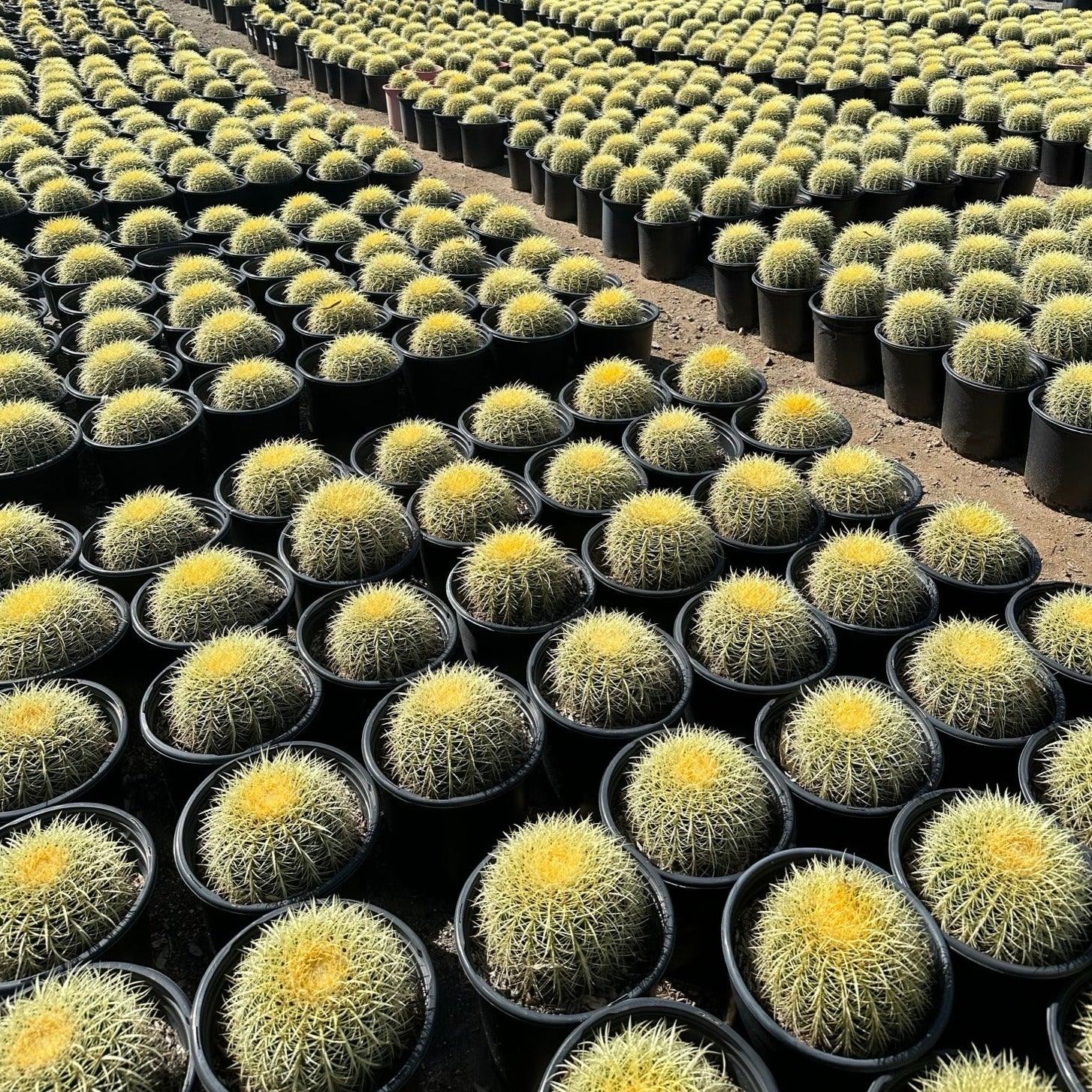
Echinocactus grusonii, commonly known as the Golden Barrel Cactus, turns sunny, dry garden spaces into bold architectural landscapes with its striking round shape, rib structure, and brilliant yellow spines. This golden barrel cactus creates a dramatic focal point in rock gardens, desert landscapes, modern courtyards, and water-wise California planting designs without demanding constant care.
Also called golden ball cactus, golden barrel, mother in law’s seat, or mother in law’s cushion, this wonderful popular plant is valued for its barrel shaped form, long lifespan, and ability to flourish where many plants struggle. With full sun, drained soil, and careful watering frequency, the echinocactus grusonii golden barrel delivers lasting impact with minimal maintenance.
Why You’ll Love It
-
Spectacular Golden Spines – The Golden Barrel Cactus has a spherical, ribbed structure covered in golden-yellow spines, making it a visually striking addition to gardens and landscapes year-round.
-
Extremely Low Maintenance – The golden barrel cactus prefers infrequent care, minimal fertilizer, and a “soak and dry” watering method that helps prevent root rot.
-
Architectural Garden Feature – Its cylindrical cactus form, discreet ring of crown growth, and strong symmetry make it ideal for modern gardens, desert-themed landscapes, and designs with large rocks or lava grit.
-
Long-Lived Investment – This cactus typically grows to a height of 3 feet and can live for several decades, making it a long-term investment for gardeners.
-
Drought Tolerant Champion – The Golden Barrel Cactus flourishes in arid, volcanic desert environments and is ideal for water-wise landscapes in California and other dry-climate regions.
What Makes It Different
Most desert plants add texture, but few deliver the same perfect geometry and sculptural strength as the grusonii golden barrel cactus. While common cacti can look irregular or sprawling, this barrel cactus develops a clean golden ball form that remains visually strong whether planted alone, grouped with other rare plants, or used as a repeating feature in a contemporary garden.
Echinocactus Grusonii (Golden Barrel Cactus) provides:
-
Perfect Spherical Form – Echinocactus grusonii naturally grows into a striking round shape with deep vertical ribs and a balanced barrel shaped profile, requiring no pruning to maintain its form.
-
Distinctive Golden Spination – Its yellow spines create a bright halo effect in direct sun and bright exposure, giving it more visual presence than many other barrel cactus varieties.
-
Mature Size Impact – It typically grows up to 1 to 3 feet tall and 2 to 3 feet wide, with mature specimens potentially reaching up to 6 feet in maturity under exceptional conditions.
How To Grow Echinocactus Grusonii
-
Plant in Well-Draining Location
Choose a full sun location with sandy, well drained soil. Echinocactus grusonii prefers sandy, well-drained soil to prevent root and stem rot, and a suitable potting mix can be made by combining equal parts of perlite, coarse sand, and potting soil. -
Water Sparingly
Watering should follow the “soak and dry” method to prevent root rot, with reduced watering during winter months. Echinocactus grusonii requires infrequent watering, ensuring the soil is moist but not waterlogged, especially during its first season in a new container. -
Watch It Thrive
With direct sunlight, mineral-rich fresh soil, and good airflow, the plant remain compact and strong while slowly becoming a larger, more impressive centerpiece. The Golden Barrel Cactus blooms vibrant yellow flowers in spring or early summer, which attract various pollinators, including bees.
For best results, promote good drainage with lava grit, coarse sand, perlite, gravel, or crushed rock. Use only a little peat or leaf mould if any organic matter is included, because a wet cactus in cold weather is far more likely to develop fungal infections, root rot, or even fungal infections such as stem damage.
Plant Details
-
Size at Maturity: Typically 1 to 3 feet tall and 2 to 3 feet wide; this cactus typically grows to a height of 3 feet, and some mature specimens may reach up to 6 feet in maturity under exceptional conditions.
-
Growth Rate: Slow growing, often about 1 to 2 inches per year in strong sun light and warm conditions.
-
Light Requirements: Full sun and bright, direct sunlight for at least six hours a day; this cactus thrives in bright, direct sunlight for at least six hours a day, and if it receives too much light, it may become pale or yellowish.
-
Cold Tolerance: Can tolerate sporadic light frost when dry, with light frost protection required in colder or wetter locations; light frost protection is recommended if temperatures approach the low 20s°F.
-
Soil Requirements: Highly porous, fast-draining potting medium; the cactus needs a highly porous, fast-draining potting medium to prevent moisture retention, typically made of one-third organic potting soil and two-thirds mineral grit.
-
Fertilizer: Fertilizer requirements for the Golden Barrel Cactus are minimal, with applications suggested only during spring and summer; use a cactus formula or high potassium fertilizer lightly, never a huge dose.
-
Bloom Time: Yellow flowers may appear in spring or early summer on mature plants, often after 15+ years; when each flower dies, a dried flower or small fruiting structure may remain near the crown.
-
Pest Watch: The plant is susceptible to mealybugs, which can hide within its deep vertical ribs; scale insects and spider mite issues may also appear in sheltered or overly humid settings.
-
Safety: Handling the Golden Barrel Cactus should be done using heavy-duty gloves or tools due to its sharp spines.
-
Toxicity & Placement: The Golden Barrel Cactus (Echinocactus grusonii) is generally considered mildly toxic to humans and pets, and its spines can cause injury if touched or mishandled.
-
Handling Risk: The spines of the Echinocactus grusonii can lead to skin irritation or punctures, making it important to handle this cactus with care.
-
Child & Pet Safety: It is advised to keep the Golden Barrel Cactus away from children and pets due to the potential for injury from its sharp spines.
-
Native Habitat: The Golden Barrel Cactus flourishes in arid, volcanic desert environments, with a native habitat in central Mexico, including areas associated with the Rio Moctezuma Valley.
Who It’s For
Ideal for:
-
California homeowners creating water-wise, drought-tolerant landscapes with full sun, direct sunlight, and low irrigation needs
-
Garden enthusiasts who want a golden barrel cactus, golden ball, or barrel cactus with strong architectural structure
-
Busy homeowners who want dramatic garden impact without constant pruning, watering, or seasonal replacement
-
Landscape designers working with rock gardens, modern outdoor spaces, desert travellers’ garden themes, large rocks, lava grit, and other rare plants
-
Collectors who value ethically sourced rare plants prior to purchase and want a long-lived cactus with a distinctive pale green to blue-green body and yellow spines
If you want a bold, drought-wise focal plant for harsh desert sun, this cactus fits your needs. Young plants can tolerate moderate shade or half shade while being slowly hardened into brighter conditions, but mature golden barrel cactus prefers full sun, bright light, and absolutely light, open exposure. Avoid moving a shade-grown plant straight into exceedingly hot direct sun, as sun burning can leave the skin severely scorched.
Frequently Asked Questions
How often should I water my Golden Barrel Cactus?
Use the soak and dry method. Water deeply, then wait until the soil dry condition returns before watering again. During the first season in a new container, keep the soil moist only briefly after watering, never waterlogged. In winter, reduce watering sharply to avoid root rot and fungal infections.
Will it survive California winters?
Yes, in many California climates it can tolerate sporadic light frost when kept dry. Light frost protection required in colder inland areas, wet winter locations, or exposed gardens where cold moisture can damage the plant. A dry cactus is far more resilient than a wet cactus during cold weather.
How long before it reaches full size?
This is a slow-growing cactus. Expect about 1 to 2 inches of growth per year in good conditions, with mature size taking many years. It typically grows to around 3 feet tall over time and can live for several decades, which makes it more of a long-term landscape investment than a fast-fill plant.
Is it safe around children and pets?
Placement matters. The Golden Barrel Cactus is generally considered mildly toxic to humans and pets, and the spines can cause punctures, skin irritation, or injury. Keep it away from children and pets, and do not plant it close to narrow paths, play spaces, or seating edges.
What soil mix does Echinocactus grusonii need?
Use well drained soil with strong mineral content. A suitable potting mix can be made from equal parts perlite, coarse sand, and potting soil, or from one-third organic potting soil and two-thirds mineral grit. Adding texture with lava grit, gravel, and large rocks helps promote good drainage.
Can it grow in shade?
It can tolerate moderate shade for short periods, especially when young or recently moved, but it performs best in full sun and direct sunlight for at least six hours daily. Too little light causes weak growth or an oblong shape, while sudden harsh desert sun after shade can cause sun burning.
Ready to Create Your Desert Oasis?
Stop settling for ordinary garden plants that need constant watering, trimming, and replacement. Choose Echinocactus Grusonii (Golden Barrel Cactus) and bring a bold, sculptural centerpiece into your outdoor space with golden spines, a striking round shape, and decades of low-maintenance beauty.
Yardwork can help you select the right golden barrel, confirm current pot size, plan safe placement, and prepare well drained soil for long-term success. We also offer California delivery options, expert consultation, soil testing services, and landscape design assistance for water-wise gardens, rock gardens, and modern desert landscapes.
Original: $85.00
-65%$85.00
$29.75More Images
Echinocactus Grusonii (Golden Barrel Cactus)
Transform Your Garden with Nature’s Most Striking Architectural Plant
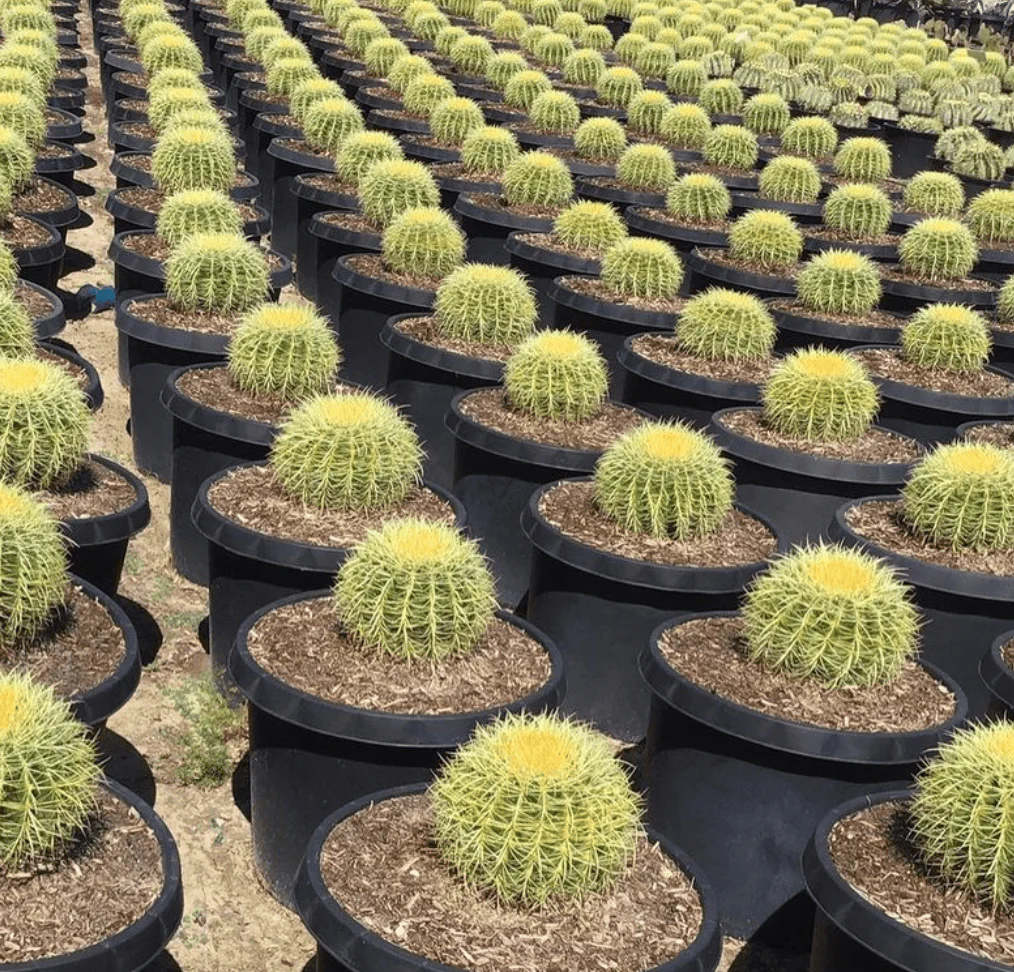
Echinocactus grusonii, commonly known as the Golden Barrel Cactus, turns sunny, dry garden spaces into bold architectural landscapes with its striking round shape, rib structure, and brilliant yellow spines. This golden barrel cactus creates a dramatic focal point in rock gardens, desert landscapes, modern courtyards, and water-wise California planting designs without demanding constant care.
Also called golden ball cactus, golden barrel, mother in law’s seat, or mother in law’s cushion, this wonderful popular plant is valued for its barrel shaped form, long lifespan, and ability to flourish where many plants struggle. With full sun, drained soil, and careful watering frequency, the echinocactus grusonii golden barrel delivers lasting impact with minimal maintenance.
Why You’ll Love It
-
Spectacular Golden Spines – The Golden Barrel Cactus has a spherical, ribbed structure covered in golden-yellow spines, making it a visually striking addition to gardens and landscapes year-round.
-
Extremely Low Maintenance – The golden barrel cactus prefers infrequent care, minimal fertilizer, and a “soak and dry” watering method that helps prevent root rot.
-
Architectural Garden Feature – Its cylindrical cactus form, discreet ring of crown growth, and strong symmetry make it ideal for modern gardens, desert-themed landscapes, and designs with large rocks or lava grit.
-
Long-Lived Investment – This cactus typically grows to a height of 3 feet and can live for several decades, making it a long-term investment for gardeners.
-
Drought Tolerant Champion – The Golden Barrel Cactus flourishes in arid, volcanic desert environments and is ideal for water-wise landscapes in California and other dry-climate regions.
What Makes It Different
Most desert plants add texture, but few deliver the same perfect geometry and sculptural strength as the grusonii golden barrel cactus. While common cacti can look irregular or sprawling, this barrel cactus develops a clean golden ball form that remains visually strong whether planted alone, grouped with other rare plants, or used as a repeating feature in a contemporary garden.
Echinocactus Grusonii (Golden Barrel Cactus) provides:
-
Perfect Spherical Form – Echinocactus grusonii naturally grows into a striking round shape with deep vertical ribs and a balanced barrel shaped profile, requiring no pruning to maintain its form.
-
Distinctive Golden Spination – Its yellow spines create a bright halo effect in direct sun and bright exposure, giving it more visual presence than many other barrel cactus varieties.
-
Mature Size Impact – It typically grows up to 1 to 3 feet tall and 2 to 3 feet wide, with mature specimens potentially reaching up to 6 feet in maturity under exceptional conditions.
How To Grow Echinocactus Grusonii
-
Plant in Well-Draining Location
Choose a full sun location with sandy, well drained soil. Echinocactus grusonii prefers sandy, well-drained soil to prevent root and stem rot, and a suitable potting mix can be made by combining equal parts of perlite, coarse sand, and potting soil. -
Water Sparingly
Watering should follow the “soak and dry” method to prevent root rot, with reduced watering during winter months. Echinocactus grusonii requires infrequent watering, ensuring the soil is moist but not waterlogged, especially during its first season in a new container. -
Watch It Thrive
With direct sunlight, mineral-rich fresh soil, and good airflow, the plant remain compact and strong while slowly becoming a larger, more impressive centerpiece. The Golden Barrel Cactus blooms vibrant yellow flowers in spring or early summer, which attract various pollinators, including bees.
For best results, promote good drainage with lava grit, coarse sand, perlite, gravel, or crushed rock. Use only a little peat or leaf mould if any organic matter is included, because a wet cactus in cold weather is far more likely to develop fungal infections, root rot, or even fungal infections such as stem damage.
Plant Details
-
Size at Maturity: Typically 1 to 3 feet tall and 2 to 3 feet wide; this cactus typically grows to a height of 3 feet, and some mature specimens may reach up to 6 feet in maturity under exceptional conditions.
-
Growth Rate: Slow growing, often about 1 to 2 inches per year in strong sun light and warm conditions.
-
Light Requirements: Full sun and bright, direct sunlight for at least six hours a day; this cactus thrives in bright, direct sunlight for at least six hours a day, and if it receives too much light, it may become pale or yellowish.
-
Cold Tolerance: Can tolerate sporadic light frost when dry, with light frost protection required in colder or wetter locations; light frost protection is recommended if temperatures approach the low 20s°F.
-
Soil Requirements: Highly porous, fast-draining potting medium; the cactus needs a highly porous, fast-draining potting medium to prevent moisture retention, typically made of one-third organic potting soil and two-thirds mineral grit.
-
Fertilizer: Fertilizer requirements for the Golden Barrel Cactus are minimal, with applications suggested only during spring and summer; use a cactus formula or high potassium fertilizer lightly, never a huge dose.
-
Bloom Time: Yellow flowers may appear in spring or early summer on mature plants, often after 15+ years; when each flower dies, a dried flower or small fruiting structure may remain near the crown.
-
Pest Watch: The plant is susceptible to mealybugs, which can hide within its deep vertical ribs; scale insects and spider mite issues may also appear in sheltered or overly humid settings.
-
Safety: Handling the Golden Barrel Cactus should be done using heavy-duty gloves or tools due to its sharp spines.
-
Toxicity & Placement: The Golden Barrel Cactus (Echinocactus grusonii) is generally considered mildly toxic to humans and pets, and its spines can cause injury if touched or mishandled.
-
Handling Risk: The spines of the Echinocactus grusonii can lead to skin irritation or punctures, making it important to handle this cactus with care.
-
Child & Pet Safety: It is advised to keep the Golden Barrel Cactus away from children and pets due to the potential for injury from its sharp spines.
-
Native Habitat: The Golden Barrel Cactus flourishes in arid, volcanic desert environments, with a native habitat in central Mexico, including areas associated with the Rio Moctezuma Valley.
Who It’s For
Ideal for:
-
California homeowners creating water-wise, drought-tolerant landscapes with full sun, direct sunlight, and low irrigation needs
-
Garden enthusiasts who want a golden barrel cactus, golden ball, or barrel cactus with strong architectural structure
-
Busy homeowners who want dramatic garden impact without constant pruning, watering, or seasonal replacement
-
Landscape designers working with rock gardens, modern outdoor spaces, desert travellers’ garden themes, large rocks, lava grit, and other rare plants
-
Collectors who value ethically sourced rare plants prior to purchase and want a long-lived cactus with a distinctive pale green to blue-green body and yellow spines
If you want a bold, drought-wise focal plant for harsh desert sun, this cactus fits your needs. Young plants can tolerate moderate shade or half shade while being slowly hardened into brighter conditions, but mature golden barrel cactus prefers full sun, bright light, and absolutely light, open exposure. Avoid moving a shade-grown plant straight into exceedingly hot direct sun, as sun burning can leave the skin severely scorched.
Frequently Asked Questions
How often should I water my Golden Barrel Cactus?
Use the soak and dry method. Water deeply, then wait until the soil dry condition returns before watering again. During the first season in a new container, keep the soil moist only briefly after watering, never waterlogged. In winter, reduce watering sharply to avoid root rot and fungal infections.
Will it survive California winters?
Yes, in many California climates it can tolerate sporadic light frost when kept dry. Light frost protection required in colder inland areas, wet winter locations, or exposed gardens where cold moisture can damage the plant. A dry cactus is far more resilient than a wet cactus during cold weather.
How long before it reaches full size?
This is a slow-growing cactus. Expect about 1 to 2 inches of growth per year in good conditions, with mature size taking many years. It typically grows to around 3 feet tall over time and can live for several decades, which makes it more of a long-term landscape investment than a fast-fill plant.
Is it safe around children and pets?
Placement matters. The Golden Barrel Cactus is generally considered mildly toxic to humans and pets, and the spines can cause punctures, skin irritation, or injury. Keep it away from children and pets, and do not plant it close to narrow paths, play spaces, or seating edges.
What soil mix does Echinocactus grusonii need?
Use well drained soil with strong mineral content. A suitable potting mix can be made from equal parts perlite, coarse sand, and potting soil, or from one-third organic potting soil and two-thirds mineral grit. Adding texture with lava grit, gravel, and large rocks helps promote good drainage.
Can it grow in shade?
It can tolerate moderate shade for short periods, especially when young or recently moved, but it performs best in full sun and direct sunlight for at least six hours daily. Too little light causes weak growth or an oblong shape, while sudden harsh desert sun after shade can cause sun burning.
Ready to Create Your Desert Oasis?
Stop settling for ordinary garden plants that need constant watering, trimming, and replacement. Choose Echinocactus Grusonii (Golden Barrel Cactus) and bring a bold, sculptural centerpiece into your outdoor space with golden spines, a striking round shape, and decades of low-maintenance beauty.
Yardwork can help you select the right golden barrel, confirm current pot size, plan safe placement, and prepare well drained soil for long-term success. We also offer California delivery options, expert consultation, soil testing services, and landscape design assistance for water-wise gardens, rock gardens, and modern desert landscapes.
Product Information
Product Information
Shipping & Returns
Shipping & Returns
Description
Transform Your Garden with Nature’s Most Striking Architectural Plant
Echinocactus grusonii, commonly known as the Golden Barrel Cactus, turns sunny, dry garden spaces into bold architectural landscapes with its striking round shape, rib structure, and brilliant yellow spines. This golden barrel cactus creates a dramatic focal point in rock gardens, desert landscapes, modern courtyards, and water-wise California planting designs without demanding constant care.
Also called golden ball cactus, golden barrel, mother in law’s seat, or mother in law’s cushion, this wonderful popular plant is valued for its barrel shaped form, long lifespan, and ability to flourish where many plants struggle. With full sun, drained soil, and careful watering frequency, the echinocactus grusonii golden barrel delivers lasting impact with minimal maintenance.
Why You’ll Love It
-
Spectacular Golden Spines – The Golden Barrel Cactus has a spherical, ribbed structure covered in golden-yellow spines, making it a visually striking addition to gardens and landscapes year-round.
-
Extremely Low Maintenance – The golden barrel cactus prefers infrequent care, minimal fertilizer, and a “soak and dry” watering method that helps prevent root rot.
-
Architectural Garden Feature – Its cylindrical cactus form, discreet ring of crown growth, and strong symmetry make it ideal for modern gardens, desert-themed landscapes, and designs with large rocks or lava grit.
-
Long-Lived Investment – This cactus typically grows to a height of 3 feet and can live for several decades, making it a long-term investment for gardeners.
-
Drought Tolerant Champion – The Golden Barrel Cactus flourishes in arid, volcanic desert environments and is ideal for water-wise landscapes in California and other dry-climate regions.
What Makes It Different
Most desert plants add texture, but few deliver the same perfect geometry and sculptural strength as the grusonii golden barrel cactus. While common cacti can look irregular or sprawling, this barrel cactus develops a clean golden ball form that remains visually strong whether planted alone, grouped with other rare plants, or used as a repeating feature in a contemporary garden.
Echinocactus Grusonii (Golden Barrel Cactus) provides:
-
Perfect Spherical Form – Echinocactus grusonii naturally grows into a striking round shape with deep vertical ribs and a balanced barrel shaped profile, requiring no pruning to maintain its form.
-
Distinctive Golden Spination – Its yellow spines create a bright halo effect in direct sun and bright exposure, giving it more visual presence than many other barrel cactus varieties.
-
Mature Size Impact – It typically grows up to 1 to 3 feet tall and 2 to 3 feet wide, with mature specimens potentially reaching up to 6 feet in maturity under exceptional conditions.
How To Grow Echinocactus Grusonii
-
Plant in Well-Draining Location
Choose a full sun location with sandy, well drained soil. Echinocactus grusonii prefers sandy, well-drained soil to prevent root and stem rot, and a suitable potting mix can be made by combining equal parts of perlite, coarse sand, and potting soil. -
Water Sparingly
Watering should follow the “soak and dry” method to prevent root rot, with reduced watering during winter months. Echinocactus grusonii requires infrequent watering, ensuring the soil is moist but not waterlogged, especially during its first season in a new container. -
Watch It Thrive
With direct sunlight, mineral-rich fresh soil, and good airflow, the plant remain compact and strong while slowly becoming a larger, more impressive centerpiece. The Golden Barrel Cactus blooms vibrant yellow flowers in spring or early summer, which attract various pollinators, including bees.
For best results, promote good drainage with lava grit, coarse sand, perlite, gravel, or crushed rock. Use only a little peat or leaf mould if any organic matter is included, because a wet cactus in cold weather is far more likely to develop fungal infections, root rot, or even fungal infections such as stem damage.
Plant Details
-
Size at Maturity: Typically 1 to 3 feet tall and 2 to 3 feet wide; this cactus typically grows to a height of 3 feet, and some mature specimens may reach up to 6 feet in maturity under exceptional conditions.
-
Growth Rate: Slow growing, often about 1 to 2 inches per year in strong sun light and warm conditions.
-
Light Requirements: Full sun and bright, direct sunlight for at least six hours a day; this cactus thrives in bright, direct sunlight for at least six hours a day, and if it receives too much light, it may become pale or yellowish.
-
Cold Tolerance: Can tolerate sporadic light frost when dry, with light frost protection required in colder or wetter locations; light frost protection is recommended if temperatures approach the low 20s°F.
-
Soil Requirements: Highly porous, fast-draining potting medium; the cactus needs a highly porous, fast-draining potting medium to prevent moisture retention, typically made of one-third organic potting soil and two-thirds mineral grit.
-
Fertilizer: Fertilizer requirements for the Golden Barrel Cactus are minimal, with applications suggested only during spring and summer; use a cactus formula or high potassium fertilizer lightly, never a huge dose.
-
Bloom Time: Yellow flowers may appear in spring or early summer on mature plants, often after 15+ years; when each flower dies, a dried flower or small fruiting structure may remain near the crown.
-
Pest Watch: The plant is susceptible to mealybugs, which can hide within its deep vertical ribs; scale insects and spider mite issues may also appear in sheltered or overly humid settings.
-
Safety: Handling the Golden Barrel Cactus should be done using heavy-duty gloves or tools due to its sharp spines.
-
Toxicity & Placement: The Golden Barrel Cactus (Echinocactus grusonii) is generally considered mildly toxic to humans and pets, and its spines can cause injury if touched or mishandled.
-
Handling Risk: The spines of the Echinocactus grusonii can lead to skin irritation or punctures, making it important to handle this cactus with care.
-
Child & Pet Safety: It is advised to keep the Golden Barrel Cactus away from children and pets due to the potential for injury from its sharp spines.
-
Native Habitat: The Golden Barrel Cactus flourishes in arid, volcanic desert environments, with a native habitat in central Mexico, including areas associated with the Rio Moctezuma Valley.
Who It’s For
Ideal for:
-
California homeowners creating water-wise, drought-tolerant landscapes with full sun, direct sunlight, and low irrigation needs
-
Garden enthusiasts who want a golden barrel cactus, golden ball, or barrel cactus with strong architectural structure
-
Busy homeowners who want dramatic garden impact without constant pruning, watering, or seasonal replacement
-
Landscape designers working with rock gardens, modern outdoor spaces, desert travellers’ garden themes, large rocks, lava grit, and other rare plants
-
Collectors who value ethically sourced rare plants prior to purchase and want a long-lived cactus with a distinctive pale green to blue-green body and yellow spines
If you want a bold, drought-wise focal plant for harsh desert sun, this cactus fits your needs. Young plants can tolerate moderate shade or half shade while being slowly hardened into brighter conditions, but mature golden barrel cactus prefers full sun, bright light, and absolutely light, open exposure. Avoid moving a shade-grown plant straight into exceedingly hot direct sun, as sun burning can leave the skin severely scorched.
Frequently Asked Questions
How often should I water my Golden Barrel Cactus?
Use the soak and dry method. Water deeply, then wait until the soil dry condition returns before watering again. During the first season in a new container, keep the soil moist only briefly after watering, never waterlogged. In winter, reduce watering sharply to avoid root rot and fungal infections.
Will it survive California winters?
Yes, in many California climates it can tolerate sporadic light frost when kept dry. Light frost protection required in colder inland areas, wet winter locations, or exposed gardens where cold moisture can damage the plant. A dry cactus is far more resilient than a wet cactus during cold weather.
How long before it reaches full size?
This is a slow-growing cactus. Expect about 1 to 2 inches of growth per year in good conditions, with mature size taking many years. It typically grows to around 3 feet tall over time and can live for several decades, which makes it more of a long-term landscape investment than a fast-fill plant.
Is it safe around children and pets?
Placement matters. The Golden Barrel Cactus is generally considered mildly toxic to humans and pets, and the spines can cause punctures, skin irritation, or injury. Keep it away from children and pets, and do not plant it close to narrow paths, play spaces, or seating edges.
What soil mix does Echinocactus grusonii need?
Use well drained soil with strong mineral content. A suitable potting mix can be made from equal parts perlite, coarse sand, and potting soil, or from one-third organic potting soil and two-thirds mineral grit. Adding texture with lava grit, gravel, and large rocks helps promote good drainage.
Can it grow in shade?
It can tolerate moderate shade for short periods, especially when young or recently moved, but it performs best in full sun and direct sunlight for at least six hours daily. Too little light causes weak growth or an oblong shape, while sudden harsh desert sun after shade can cause sun burning.
Ready to Create Your Desert Oasis?
Stop settling for ordinary garden plants that need constant watering, trimming, and replacement. Choose Echinocactus Grusonii (Golden Barrel Cactus) and bring a bold, sculptural centerpiece into your outdoor space with golden spines, a striking round shape, and decades of low-maintenance beauty.
Yardwork can help you select the right golden barrel, confirm current pot size, plan safe placement, and prepare well drained soil for long-term success. We also offer California delivery options, expert consultation, soil testing services, and landscape design assistance for water-wise gardens, rock gardens, and modern desert landscapes.